 Collections
  Magazine
  Exhibitions
  ITA version













Nan Goldin's Sirens: Addiction and the Echo of Homer's Odyssey


In Homer’s Odyssey, the Sirens are not defined by their appearance, but by their voice: an invisible force capable of seducing, disorienting, and ultimately destroying those who listen. Their song promises knowledge and transcendence, yet leads only to loss and death. This ancient myth finds a contemporary resonance in Sirens (2019–2020), a video installation by Nan Goldin that reinterprets the Sirens’ call as the seductive pull of addiction. By weaving together classical mythology, memory, and cinematic imagery, Goldin transforms the Homeric Sirens into a metaphor for modern dependency—an unseen force that erodes identity while offering the illusion of power and escape.
Nan Goldin’s exhibition This Will Not End Well in Milan
Nan Goldin’s work is currently featured in This Will Not End Well, an extensive retrospective held at Pirelli HangarBicocca in Milan until February 15th, 2026. The exhibition traces her career through six large-scale video installations that intertwine images, sound, and memory, reaffirming Goldin’s position as one of the most uncompromising voices in contemporary photography.
Each installation occupies a separate pavilion, creating a fragmented spatial structure that mirrors the artist’s biography. Visitors move through dark, silent environments, entering and exiting discrete narrative spaces that function as parts of a single body. Though physically divided, the works collectively reconstruct Goldin’s lived experience, shaped by loss and survival.
Within one of these pavilions is Sirens (2019–2020), a work directly inspired by Homer’s Odyssey. Here, myth is treated as a psychological structure rather than a symbolic reference. Goldin draws on the figure of the Sirens to represent addiction as a form of invisible seduction—an attraction that operates without a visible source, much like the Sirens’ song in the epic poem.
In Sirens, seduction does not rely on physical presence. It unfolds through sound and sensation. Addiction, like the Homeric call, offers relief and transcendence while quietly leading toward self-annihilation. Goldin strips the Sirens of their bodies, restoring them to a disembodied force that acts through desire and loss of control.
Nan Goldin: Intimacy, Community, Loss
In the early 1970s, Nan Goldin moved from Washington, D.C. to Boston, where she lived in a shared house with a group of drag queens. Immersed in a community shaped by marginality and chosen families, she began using photography as a tool of proximity and endurance. In 1973, at the age of twenty, she presented her first exhibition at Project Inc., a non-profit alternative art space in Cambridge.
Goldin rose to prominence in the early 1980s with a photographic language defined by immediacy and emotional exposure. The Ballad of Sexual Dependency (1981–2022) became emblematic of her approach, portraying friends and lovers in moments marked by desire, violence, addiction, and vulnerability. These themes form the core of her work, through which Goldin forced visibility onto lives often excluded from representation.
Her close ties to the LGBT community meant that the AIDS epidemic of the 1980s deeply affected her personal life. Many of those she photographed were lost to the disease. As a result, Goldin’s images also function as acts of remembrance, bearing witness to a generation shaped by trauma and disappearance.
Sirens and the song of dependency in Nan Goldin
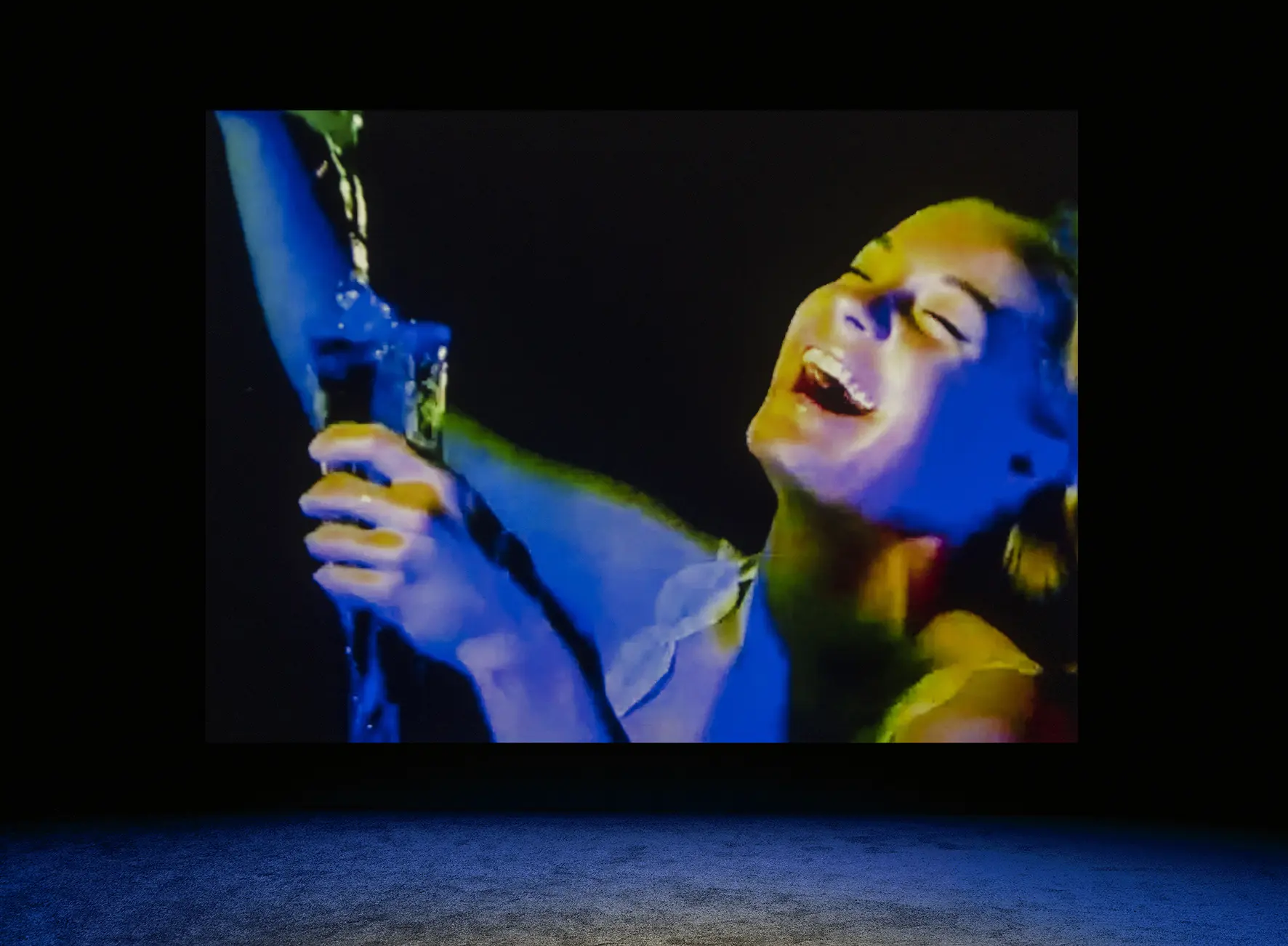
Sirens is a sixteen-minute immersive video work composed entirely of recontextualised footage drawn from more than thirty films produced between the late 1940s and the 1980s. By abandoning her own photographic archive, Goldin transforms addiction into a collective and cinematic experience.
The soundtrack, composed by Mica Levi, is central to the work’s effect. Sounds produced by blowing into glass bottles evoke marine calls, echoing through a dark and undefined space. The Sirens take shape as pure sound, detached from any stable image. The hypnotic sequence draws the viewer into a perceptual loop that mirrors the mechanics of dependency, suspended between attraction and collapse.

If Sirens embodies the call of addiction, Memory Lost (2019–2021) confronts its aftermath. Built from Goldin’s personal archive of photographs and videos from the 1980s and 1990s, the work documents underground communities living in precarious interiors: apartments, clubs, and bars.
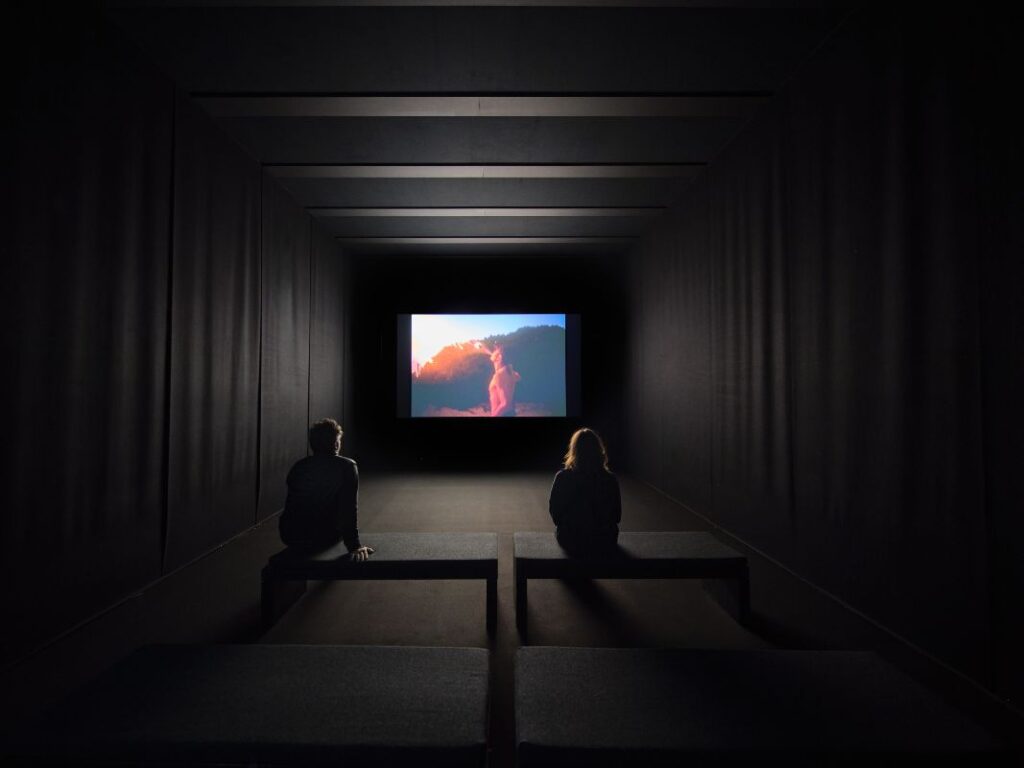
Mica Levi’s soundtrack returns, combining music with answering-machine messages and recorded testimonies. The result is a fragmented narrative that resists clarity. Goldin has described this period of her life as one of loss—of time, memory, and mental stability. Memory Lost gives form to what addiction erases.
The Sirens Without a Body
To understand the conceptual power of Goldin’s Sirens, it is necessary to return to Homer’s Odyssey.
To the Sirens first shalt thou come, who bewitch all men, whosoever shall come to them. Whoso draws nigh them unwittingly and hears the sound of the Sirens’ voice, never doth he see wife or babes stand by him on his return, nor have they joy at his coming; but the Sirens enchant him with their clear song, sitting in the meadow, and all about is a great heap of bones of men, corrupt in death, and round the bones the skin is wasting.
When thinking about sirens, the images that come to mind are those of beautiful women with the upper half of their bodies human and a fish-like tail. The half-human, half-fish women are sensual, enticing, graceful, and young, with an intoxicating presence that no man can resist. However, many people aren’t aware that the physical depiction we often imagine didn’t come to fruition until many years after the first reference to Sirens. The icon of a siren is nothing but the artistic yet symbolic necessity of formally representing these creatures.
Within the Odyssey, sirens do not have bodies. Homer offers no details about their physical appearance. They are neither attractive nor monstrous – they simply are not visible. Existing merely through their voices, these “singing demons” lure and trap their prey. Their lethal charm does not require visibility; it lurks in the sound. Those with the misfortune of getting close enough to hear their call, find their destiny and lose themselves. They never return home and eventually die.
The victims’ fate is crudely described. Their bodies lay to decay among the bones and the remains of those who came before them. In a heap of decomposition and silence. Homer did not explain the cause of their death – whether it came through starvation, through enchantment, or simply through abandonment. However, he affirms the outcome: the Sirens’ voices dissolve life.
Sirens on screen: from Camerini to Nolan
Cinema has repeatedly given the Sirens a body. In Ulysses (1954), directed by Mario Camerini and starring Kirk Douglas, the Sirens appear as floating female figures whose call takes the form of Penelope’s voice. While visually distant from Homer, the mechanism remains intact: seduction operates through sound and emotional recognition.

This dialogue will soon be renewed with Christopher Nolan’s The Odyssey, scheduled for release in July 2026. Shot entirely in IMAX and featuring a high-profile cast including Matt Damon, Anne Hathaway, Tom Holland, Zendaya, Robert Pattinson, and Elliot Page, the film has already been framed as one of the most anticipated cinematic events of the year—once again returning the Sirens to the collective imagination.

From Odysseus to Nan Goldin: The Song of Seduction
In Homer’s Odyssey, the Sirens seduce through promise. Their song offers knowledge and certainty, a way out of doubt and vulnerability. To listen means abandoning the human condition and surrendering to a voice that claims total truth. The result is loss: the journey ends, the body remains, life dissolves into silence.
Nan Goldin translates this structure into the present. In Sirens, the call no longer promises divine knowledge, but emotional suspension. Addiction takes the place of myth: an unseen force that draws the subject in, offering relief and intensity while gradually eroding memory and identity. As in Homer, the Sirens do not need a body. Their presence unfolds through sound and repetition.
Come here, Odysseus, you of many riddling words, you great glory to the Achaean name,
stop your ship so that you may hear our two voices.
No man has ever yet sailed past this isle in his dark ship
without staying to hear the sweet sound of the voices that come from our mouths;
and he who listens will not only experience great pleasure before returning home,
but will also be far more knowledgeable than before.
For we know all that happened at wide Troy —
all the sufferings caused by the gods for the Argives and Trojans —
and we know everything that happens upon the fertile earth.
By immersing the viewer in this call, Sirens removes any safe distance. The experience unfolds from within, turning attention into exposure. Seduction and collapse follow the same rhythm, making it difficult to separate attraction from damage.
This Will Not End Well names this condition with precision. From ancient myth to contemporary images, the Sirens persist wherever the desire to escape pain overrides the need to remain present. Their song changes form, but its effect remains the same.
This Will Not End Well – date, place, tickets
Pirelli HangarBicocca, Via Chiese 2, Milan.
Thursday, Friday, Saturday, and Sunday
From 10:30 AM to 8:30 PM (last entry approximately one hour before closing).
Free Entry
Tag