 Collections
  Magazine
  Exhibitions
  ITA version













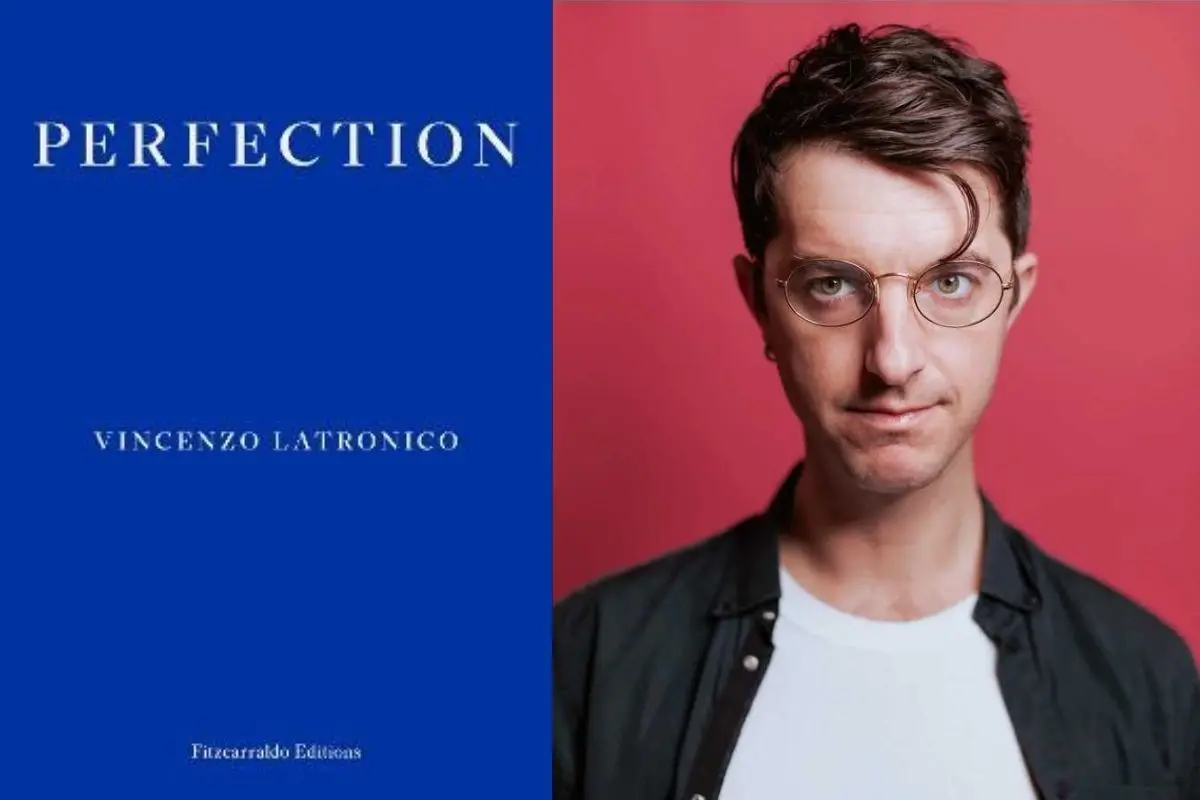
Perfection by Vincenzo Latronico Review | Inside the Millennial Maze


Length
Perfection (Le perfezioni – Fitzcarraldo Editions) is a novel steeped in unresolved tensions and contradictions, a self-contained vicious circle. Its precise, sharply focused depiction of middle-class European millennials’ lives and aspirations gives it the polish of an ethnographic gem. Moreover, they signal Vincenzo Latronico’s breakout moment, as he rises among the new voices shaping European literature.
The forty-year-old Italian writer and translator’s key insight was to reimagine Georges Perec’s Things. In that avant-garde novel, the focus shifts from characters to objects, revealing the psychological toll of consumer culture. But while Perec viewed those objects through the lens of glossy magazines, Latronico turns to a different filter. His characters’ possessions are refracted through the digital platforms that shape today’s visual culture. Think Airbnb. Think Instagram. The result is one of the first literary works to successfully capture a trace of our digital lives.
Perfection, published in 2022, was shortlisted for the Strega Prize. Thanks to Sophie Hughes‘ translation, it ran for the International Booker Prize 2025, reaching its final stage.
The Pursuit of Perfection
The subject of Latronico’s novel is a second-person plural protagonist: a couple of designers, Anna and Tom. Early pioneers of digital nomadism, they moved to Berlin, seeking a more vibrant and stimulating lifestyle. They curated their lives with care, chasing beauty, meaning, and the feeling of being exactly where they were supposed to be. In the early to mid-2010s, Berlin continued to attract crowds with low rents, wild parties, and a vibrant cultural scene. For Anna and Tom, like many young Europeans, it embodied a kind of utopian dream, a promise of freedom and authenticity.
In Latronico’s words, freedom and authenticity are not inner qualities of the self. They are social constructions resulting from a highly sophisticated process of polishing one’s life. Therefore, authenticity and freedom depend on one’s ability to shape and project a coherent image of the self in a world of differences. A world where a car is blue or red, a person is heterosexual or queer. In this regard, a perfect life would match the image that one has created in their mind.
These are the assumptions underlying the liberal concept of identity. However, the question that Latronico, a former philosophy student, addresses is another one. How does consumer culture shape the way we build and display the ideal image of our lives and identities?

Digital Consumerism
Latronico describes Anna and Tom through their objects and the places they inhabit, rather than their inner lives. Their bodies and thoughts remain blurred, almost flattened, always in the background of the narrative. There is not a single line of dialogue; this reinforces the distance between the reader and the characters.
The novel is divided into sections named after verb tenses: Present, Imperfect, Remote, and Future. Each section shifts Latronico’s narrative stance toward the story and its temporal focus. For example, the first chapter— Present —is entirely dedicated to a vivid and meticulous description of Anna and Tom’s house. Here, Latronico’s style is pedantic, obsessive in its refusal to let any detail slip out of focus. The space is curated down to the smallest item: a modular Scandinavian sofa in muted grey, hand-thrown ceramic mugs resting on a reclaimed oak coffee table.
As the distance between the narrator and the narrative material grows, Present becomes Imperfect. The perspective gradually zooms out, revealing new layers of meaning. The opening chapter does not describe Anna and Tom’s actual apartment, but rather its digital representation—the carefully curated images posted online to rent it out. Its apparent perfection is merely a ruse to attract potential tenants. It presents an idealised image that never quite matches the reality, especially when Anna and Tom rush through their daily routines.
The plants would be permanently caked in a thick layer dust , which polish only seemed to attract more quickly
Perfection, page 19.
Later on, Latronico reveals that the images Anna and Tom consume online shape the apartment’s aesthetic, effectively closing the circle. Digital ideals model their living spaces and lives, feeding back into the cycle of representation and imitation. This defines their generational condition: a life filtered through images, sustained by loops of consumption and display.
Peeking Through the Cracks of Perfection
Latronico’s narrator avoids direct moral or critical commentary, delegating reflection to the reader. This descriptive method has its merits, allowing details to emerge without interference or excessive interpretation. However, the novel sometimes feels flat due to its reluctance to dig deeper, limiting both the emotional and conceptual impact. Perfection often remains on the surface, observing without honestly confronting the forces it gestures toward. In this regard, a comparison with masterpieces of the past— such as Dickens’ Great Expectations or Delillo‘s Underworld—feels misplaced. Latronico trades Dickens’ moral contradictions and DeLillo’s historical depth — key traits of classic social novels — for a more aesthetic posture.
This narrative stance becomes particularly evident in the portrayal of Anna and Tom, whose trajectory mirrors the novel’s overall restraint. Latronico could have described their gradual disenchantment with Berlin in more psychological detail, sacrificing the stiffness of his method. Instead, he tackles their anxiety and identity crisis with caution, as if incapable or unwilling to cut a swathe through them. His focus stays on the main transformation that Berlin undergoes, pushing the less affluent part of its population to the margins: gentrification. Yet, Latronico’s restrained descriptiveness proves effective in capturing the imperceptible shifts within the city and the helplessness of those who inhabit it. Anna and Tom remain suspended in a loop, the pursuit of perfection never truly questioned, only endlessly deferred. Like many in their generation, they chase an ideal that promises fulfilment, but delivers detachment.
Ultimately, Perfection deserves attention for how it distils a generational malaise into precise, crystalline images. Its subtlety reveals a quiet violence beneath the polished surfaces we too often mistake for stability. It is a novel that speaks to an entire generation, capturing their restless search for meaning amid persistent uncertainty.
Tag