 Collections
  Magazine
  Exhibitions
  ITA version












The Met Gala 2026 theme is Fashion is Art, a concept that highlights a long-standing dialogue between fashion and visual culture. From Salvador Dalí to Christian Dior, designers have continuously drawn inspiration from art, transforming paintings, sculptures and artistic movements into wearable creations.
As the Met Gala returns on the first Monday of May, this year’s theme offers a lens into how deeply art has shaped fashion history and what we might expect on the red carpet.
Met Gala 2026 Theme Fashion is Art: What it Means
The Met Gala takes place every year on the first Monday of May and opens the Costume Institute’s spring exhibition – the museum’s department dedicated to fashion as a cultural subject. The 2026 exhibition, titled Costume Art, presents nearly 400 objects: garments and works of art placed side by side to demonstrate that the dressed body has always been at the centre of art history.
The Met Gala 2026 arrives just days after The Devil Wears Prada 2 release, in a surprising blend between fiction and reality. This year’s dress code is emblematic: Fashion is Art. A title that, in reality, affirms something the great couturiers had already understood long ago.
Designers Inspired by Art: from Dalí to Dior
Fashion and art have always spoken to one another, not in an imitation but a continuous dialogue made of borrowings, responses, and provocations.
Elsa Schiaparelli and Salvador Dalí
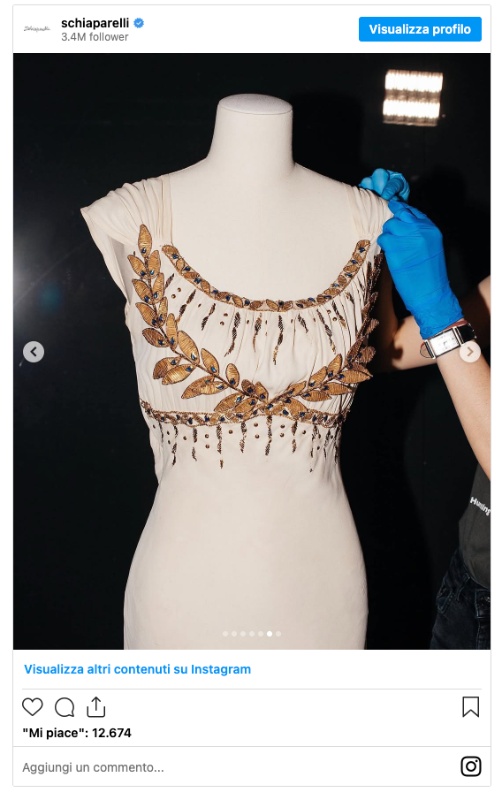
In the 1930s, Elsa Schiaparelli and Salvador Dalí worked together as accomplices. The boundary between the two disciplines did not blur – it vanished. The lobster dress, the shoe hat, the telephone bag: wearable Surrealist objects in which the body becomes canvas, and the canvas becomes body. Neither asked the other to stay in their lane.
Christian Dior and Impressionism
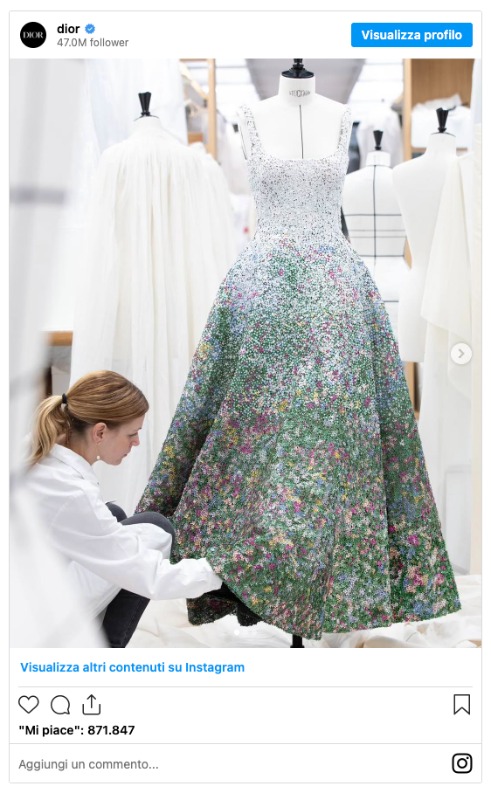
Christian Dior was born in Granville, Normandy, in 1905, the same land that had inspired Claude Monet and the great Impressionist masters. That light, those flowering gardens, those landscapes shaped his creative vision from childhood.
In 1947, Dior presented the New Look – full skirts, nipped waists, a corolla-shaped silhouette – bringing the Impressionists’ flower-woman to the runway. Flowers were more than decoration: they were structure, philosophy, the designer’s way of translating into clothing what painters translated into color. A testament that still lives today in the maison’s latest collections.
Yves Saint Laurent and Mondrian
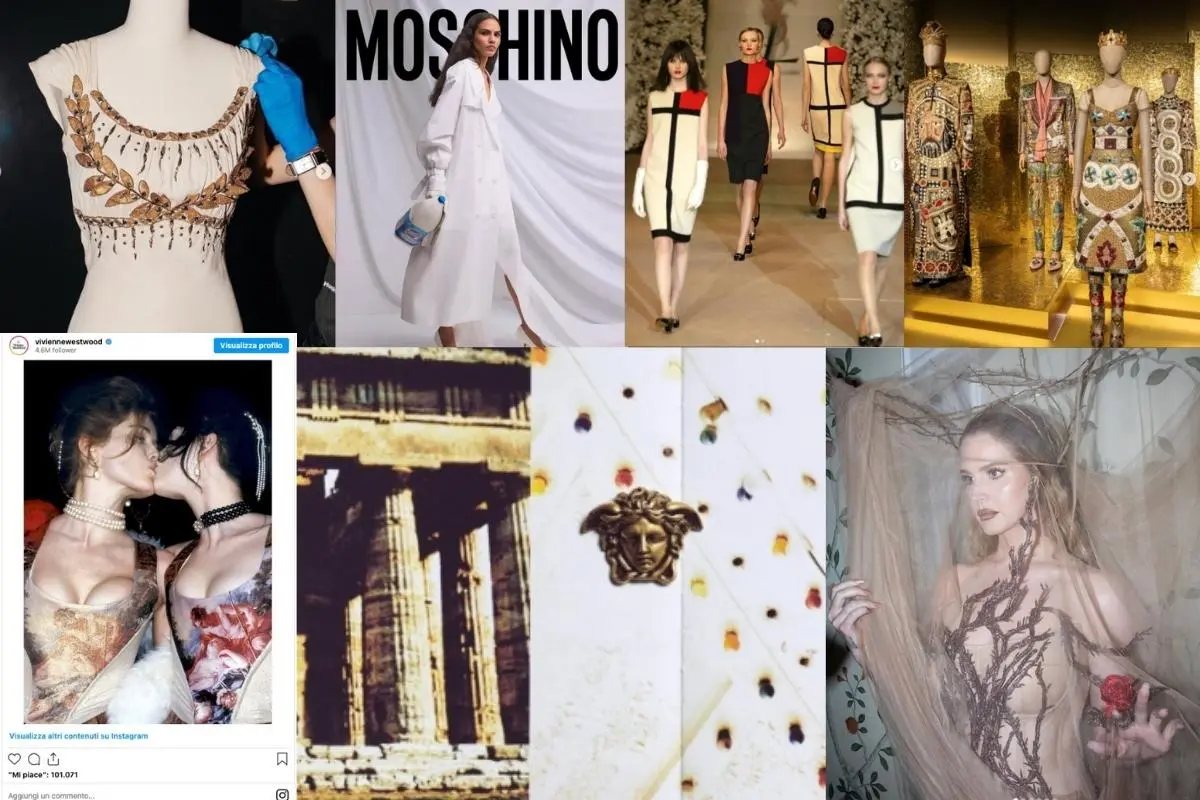
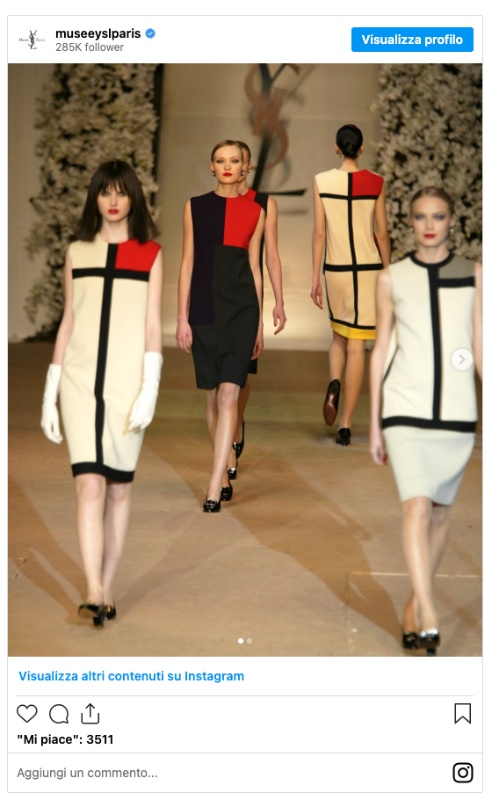
In 1965, Yves Saint Laurent presented a dress that remains instantly recognisable today: Piet Mondrian‘s geometry applied to the female form. No decoration, no ornament – only colour as pure form. In this dialogue, the garment ceases to be clothing and becomes chromatic architecture. With Saint Laurent, Mondrian’s geometry ceased to be painting and became structure, carrying the avant-garde out of museums.
Versace and the Soul of Magna Graecia
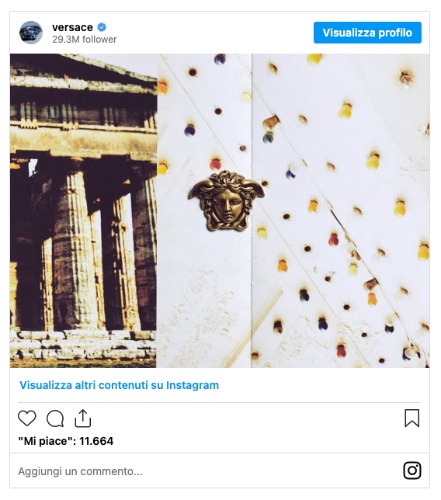
Gianni Versace was Calabrian and viewed antiquity as an inexhaustible source. The Medusa logo is inspired by the Medusa Rondanini, a Greco-Roman artefact of extraordinary visual power.
Versace transformed it into silk, gold, and Baroque prints, turning a classical icon into a global brand.
Moschino and Andy Warhol
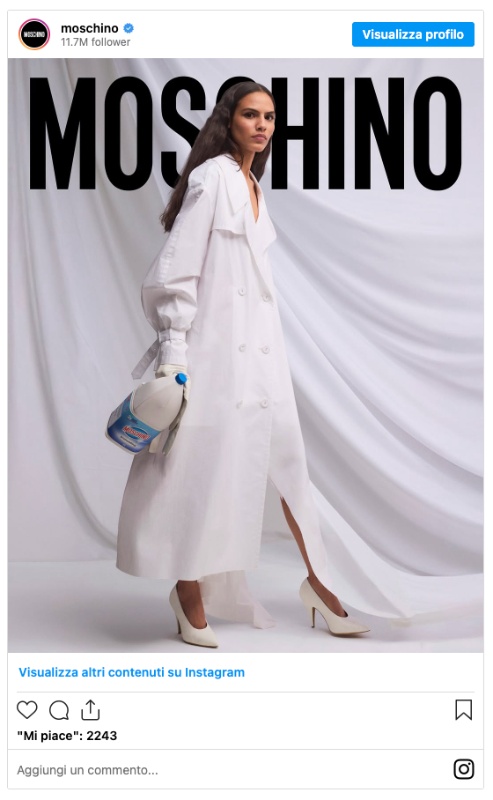
Franco Moschino built his aesthetic around pop irony. His dialogue with Andy Warhol was natural: both deconstructed the image of consumerism, multiplied it, and turned it into a fetish. Fashion became a critique of fashion itself. Moschino did not quote Warhol: he reasoned like him, using the same tools and the same irreverence toward the system that housed them.
Alexander McQueen and Surrealism
Alexander McQueen looked to art as a repertoire of disturbances: his shows were performances, his garments instruments for interrogating the body and violent beauty. This legacy lives on through Seán McGirr, who, for Lana Del Rey‘s look at the 2024 Met Gala, drew on the tormented fragility of Alberto Giacometti‘s sculptures.
In this dialogue, the dress becomes a surrealist structure: an architecture of branches and veils that, paired with clogs reminiscent of the iconic Armadillo Shoes, seems on the verge of taking root in the ground, celebrating a beauty that is, above all, a visual unease.
Dolce & Gabbana and Byzantine Mosaics
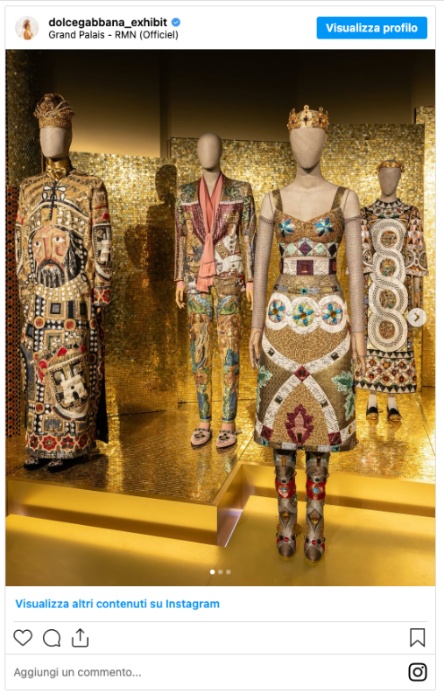
Domenico Dolce‘s Sicilian roots are evident in every collection the duo has created. In 2013, the runway was transformed into a sacred space: the mosaics of the Cathedral of Monreale became the starting point for a reflection on art as devotion. Besides being a visual quotation, this was an act of cultural belonging. Here, fashion reinterprets medieval art, drawing it out of the naves of a Norman church and into the present.
Vivienne Westwood and Art History as Wardrobe
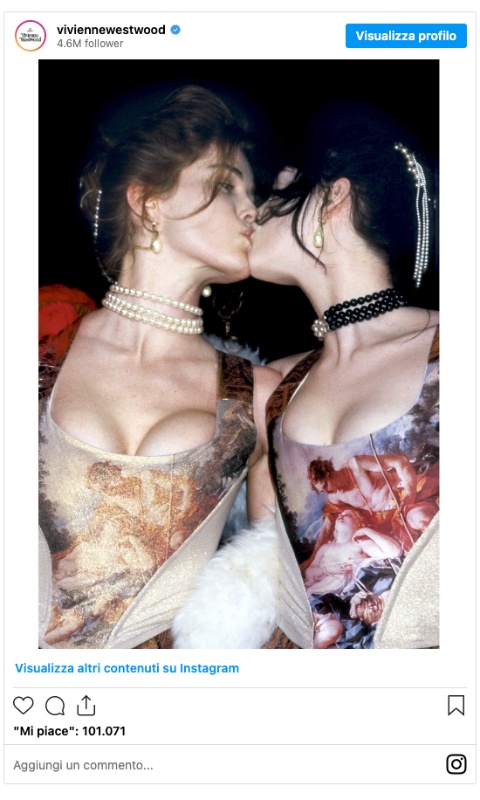
Westwood did not just admire art: she wore it. Every collection was a journey through time, from the 18th-century France of Watteau and Boucher to the Victorian era, from classical Greece to the Rococo. The 1981 Pirate collection marked the turning point: punk energy evolved into learned inquiry, inspired by painting and the history of costume.
From that moment on, every show became a visual narrative – fashion as an intellectual act, as a cultural stance. Westwood, who passed away in 2022, left a legacy that goes far beyond clothing: she proved that dressing can be an act of thought.
The Body Sculpted Through History
“What links every curatorial department and every single gallery in the museum is fashion, or the dressed body,” explains Andrew Bolton, curator of the Costume Institute. From May 10th, the Costume Art exhibition will inaugurate the Met’s grand new exhibition spaces.
The journey spans 5,000 years of history to reveal the deep bond between clothing and art. Visitors will see period textiles and a dialogue between ancient marbles and avant-garde cuts. Each pairing challenges classical canons to illuminate human fragility. This inquiry elevates the garment to a total work of art, one capable of shaping the body’s identity with its many shades.
And as the Met Gala 2026 brings Fashion is Art onto the red carpet, that same dialogue moves from the museum into the present, turning each look into a living extension of art history.