 Collections
  Magazine
  Exhibitions
  ITA version












After the Hunt | Luca Guadagnino and the Risk of Not Taking a Side


Runtime
What happens when ambition collides with personal ethics? In his latest film, After the Hunt, Luca Guadagnino sheds light on this conflict and the contentious compromises inherent in elite academic structures. The Italian director, producer, and screenwriter continues to build on his nuanced exploration of the complexities of human relationships as seen in I Am Love (2009), Bones and All (2022), and Queer (2024). This time, however, he addresses a more sensitive subject: the personal and institutional consequences of exposing sexual abuse and the subsequent collapse of academic authority.
After the Hunt, based on a screenplay by first-time writer Nora Garrett, is a psychological thriller that transforms the “he said, she said” narrative into an intricate investigation of subjectivity, power, and contested truth. Featuring a top-tier cast, the film is a slow-burning, emotionally charged character study designed to provoke self-reflection. It compels audiences to examine their biases and moral assumptions.
Although Guadagnino considers interpreting his film as merely about #MeToo to be “a bit of a lazy way to describe it. It’s a passé way of thinking,” After the Hunt still reflects a post-#MeToo world. Clearly, it captures the light and shadow that define today’s political and cultural atmosphere. As the characters struggle to balance personal interests with a sense of justice, the film’s hesitation in taking a clear stance becomes a double-edged sword. While it truthfully depicts inner conflict and psychological complexity, After the Hunt never quite hits the mark, ultimately softening the thriller’s momentum.
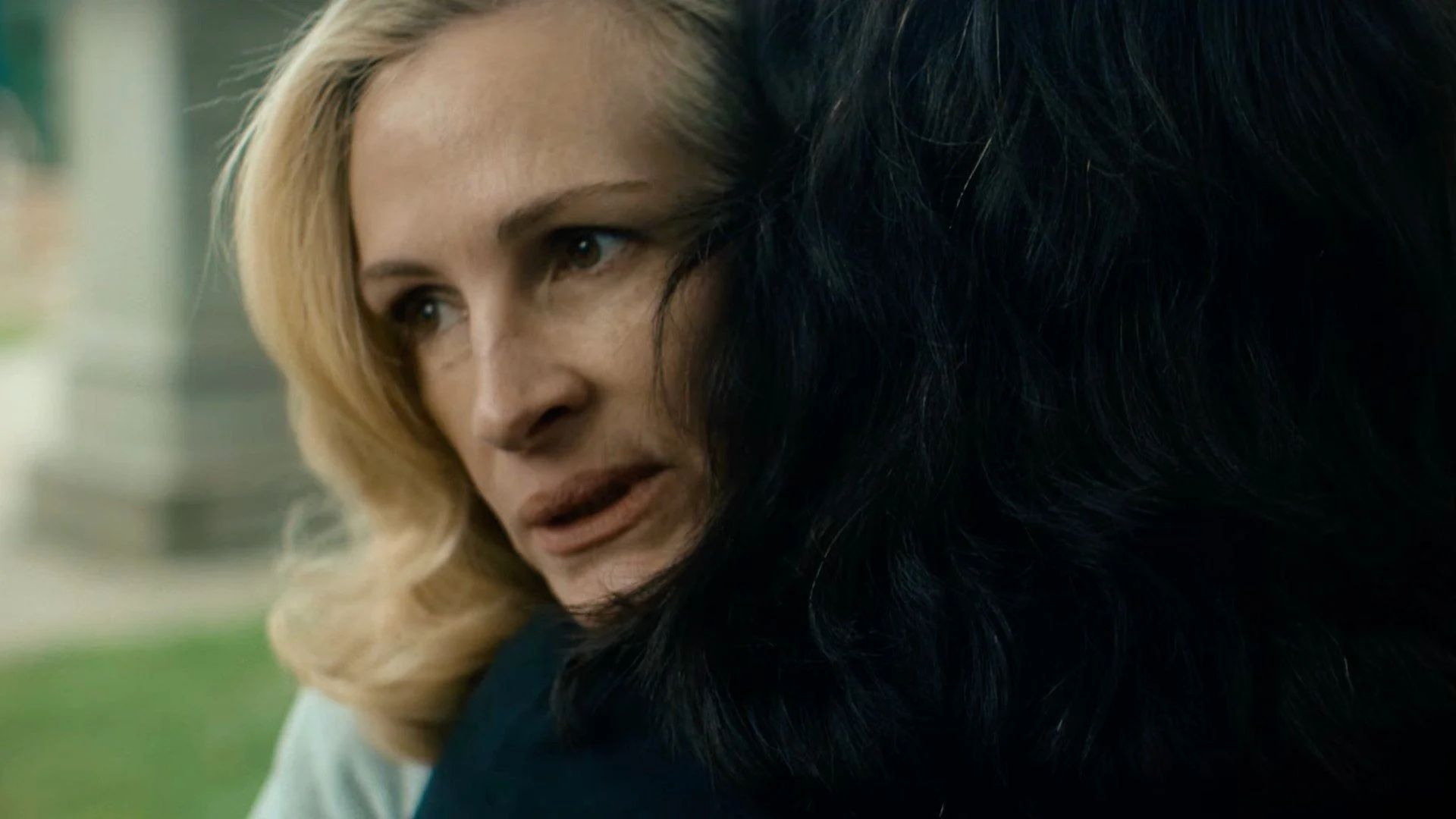
The film premiered out of competition at the 82nd Venice International Film Festival, where it received a standing ovation. Julia Roberts‘s performance garnered particular acclaim. Following its international theatrical release by Amazon MGM Studios and Sony Pictures Releasing International, After the Hunt is now available for streaming on Prime Video.

- A Campus Accusation and the Fragility of Belief
- In the Shadow of #MeToo: Who Gets to Be Believed?
- A Divisive Reception and the Limits of Moral Neutrality
- Imprinting Doubt: The Cinematography of After the Hunt
- Spaces of Isolation and the Film’s Psychological Soundscape
- Complicity Without Resolution
A Campus Accusation and the Fragility of Belief
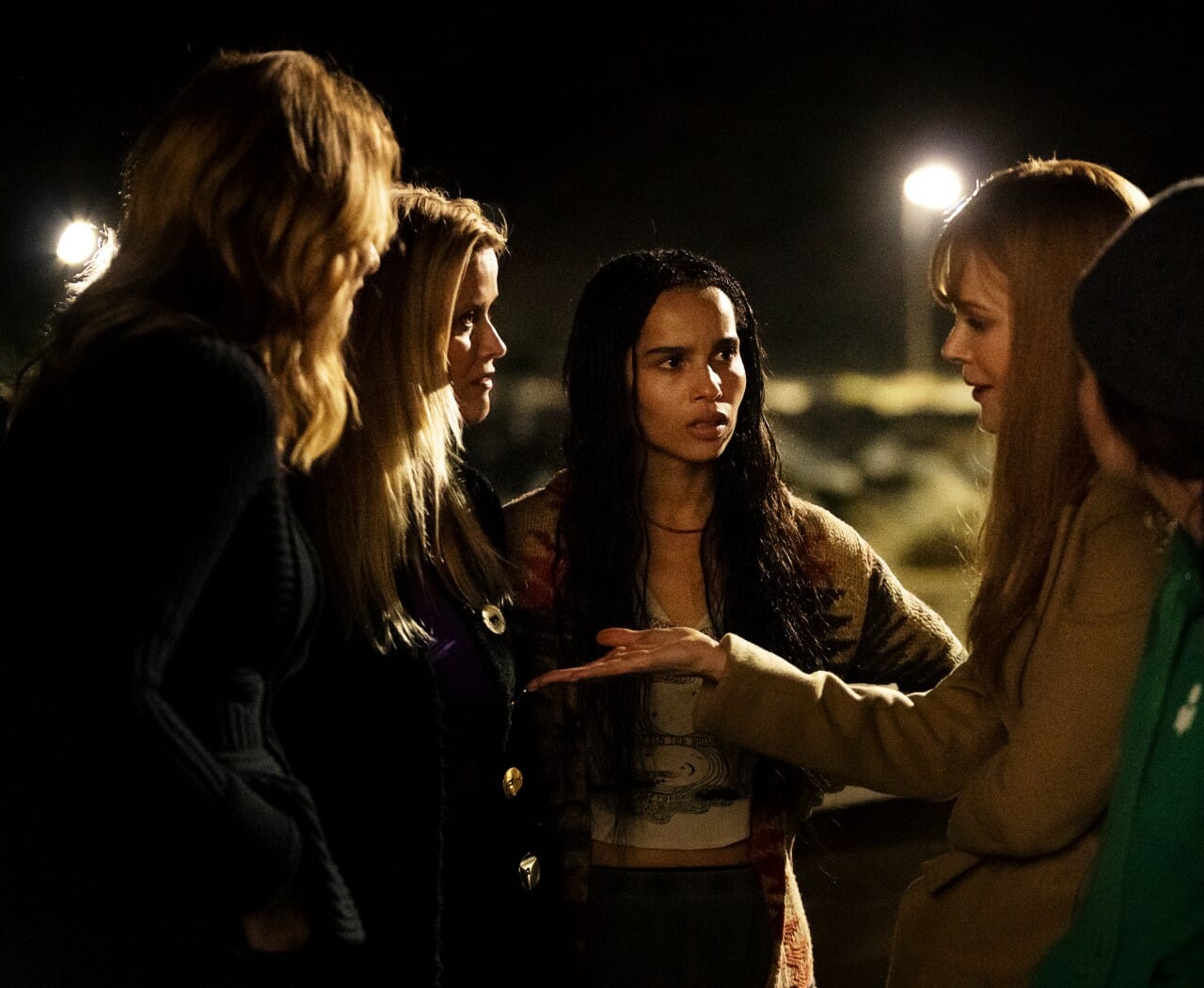
Set at Yale in 2019, After the Hunt follows Alma Imhoff (Julia Roberts), a respected and ambitious philosophy professor. When her brilliant Ph.D. student and protégé Maggie Resnick (Ayo Edebiri, breakout star of FX’s series The Bear) confesses that she was sexually assaulted by Alma’s colleague, friend, and tenure rival Hank Gibson (Andrew Garfield), Alma must grapple with profound ethical dilemmas. The film opens with a non-diegetic ticking clock, a motif that recurs throughout and signals the approaching moment of reckoning. From the beginning, Alma exhibits subtle signs of a mysterious ailment. This soon manifests as a stomach ulcer – a clear metaphor for her repressed childhood trauma resurfacing when Maggie’s story hits close to home.

After the Hunt explores how two generations navigate an elitist, patriarchal system and the risks they take in the name of survival, resistance, and self-respect. Furthermore, Guadagnino also delves into how characters process and confront trauma from abuse and how these experiences shape their identities. Unlike a typical “whodunit,” the film reveals how our choices about whom to believe reflect who we are.
Guadagnino explores moral ambiguity by withholding clear judgment and presenting the story from multiple perspectives. As the story unfolds from multiple viewpoints, viewers are guided more by empathy and doubt rather than harsh resentment. Through elliptical dialogue, moments of silence, and shallow-focus shots that linger on the characters’ faces to emphasize their uncertainty, Guadagnino shifts the viewer’s attention toward understanding and/or forgiveness rather than assigning blame.
Although this approach aims to generate tension and maintain a plot-driven narrative, the film remains subdued. By lingering in moral and relational gray areas, the film never commits to a decisive turn. The director certainly succeeds in capturing the characters’ humanity and flawed nature, but this introspective focus often comes at the expense of dramatic urgency.
In the Shadow of #MeToo: Who Gets to Be Believed?
After securing a prominent position in a male-dominated field, Alma finds herself at a crossroads. She gradually slides into a downward spiral as she struggles to balance loyalty with her personal beliefs. This adds another layer to a theme Guadagnino often examines: two characters in delicate balance until a third character disrupts it. Does Alma genuinely believe Maggie, or is she only on her side to hijack Hank’s bid for tenure? “What are you saying happened?” is Alma’s best attempt at comforting her pupil, subtly deeming Maggie an unreliable narrator.
The opening dinner scene at Alma’s house foreshadows the ideological fault lines that will later shape the characters’ choices. In this scene, the characters debate whether cancel culture has gone too far and begun targeting straight white cis men. In response to Maggie’s accusation, Hank alleges that she plagiarized her essay from Italian philosopher Giorgio Agamben, attempting to undermine her credibility. He claims that Maggie’s identity as a Black queer woman shields her from criticism and casts any opposition as discriminatory. He emphasizes that her parents are key financial supporters of Yale.
As the latest addition to the cinematic tradition of exploring the aftermath of abuse, After the Hunt contributes to the ongoing #MeToo discourse. It follows in the footsteps of films such as Emerald Fennell‘s Promising Young Woman (2020), Todd Field‘s Tár (2022), and Eva Victor‘s Sorry, Baby (2025). However, while cinema has often served as a powerful medium for sparking conversation and making social statements, After the Hunt takes a different approach from films that center the narrative around the victim’s truth. Maggie’s story is scrutinized, questioned, and sometimes discredited here, forcing the audience to confront the ambiguity of belief and the complexity of moral judgment.
A Divisive Reception and the Limits of Moral Neutrality
Although After the Hunt earned widespread praise for its actors’ powerful performances, it received harsh criticism from some reviewers. According to David Fear, writing for Rolling Stone, Guadagnino “has broken his winning streak,” producing a chaotic muddle disguised as social commentary. The film’s cryptic atmosphere and Alma’s elliptical behavior are intended to build suspense and intrigue. However, they fall flat, leading to a five-year flash-forward that feels predictable rather than surprising. Peter Bradshaw’s review in The Guardian called the film an “overlong, overwrought #MeToo campus accusation drama,” arguing that its narrative and directorial choices backfired, failing to deliver the intended message.
The film’s commentary on woke culture operates on two levels. First, it critiques the younger generation for growing tired of tolerating abuse and misconduct. Second, it scrutinizes those who continue to make such claims. In the press notes, Guadagnino himself said, “As an author, you cannot judge your characters. I always like deep imperfections in movie characters. And I wanted the audience to be equally invested in every single person on the screen.” However, at a time when taking a side often feels essential, endorsing this narrative may feel uncomfortable and ethically inappropriate.
Moreover, After the Hunt received attention on social media when Italian journalist Federica Polidoro seemingly bypassed actress Ayo Edebiri during a press interview. Polidoro asked a question, claiming that the #MeToo and Black Lives Matter movements were now “over,” and speculated on how this might affect Hollywood after what she described as the “politically correct era.” Edebiri, initially excluded from the conversation, spoke up to emphasize that protests and activism are far from over. This uncomfortable exchange strikingly mirrors the reality depicted in the film, highlighting how minorities still struggle to claim space and be heard, even from a position of relative privilege.
Imprinting Doubt: The Cinematography of After the Hunt
Alfred Hitchcock once asked, “How can you imprint a shadow of doubt onto every frame of a movie?” This question reflects Guadagnino’s approach in crafting After the Hunt. To bring his vision to life, Guadagnino turned to American cinematographer Malik Hassan Sayeed, marking Sayeed’s return to feature filmmaking after 25 years. From the beginning of his career, Guadagnino sought Sayeed out. He was drawn not only to Sayeed’s work on Spike Lee‘s Clockers (1995) and Stanley Kubrick‘s Eyes Wide Shut (1999), but also to his unmatched visual sensitivity and ability to translate psychological nuance into immersive cinematography.
Once again, Guadagnino tells the story through imagery as much as through dialogue. When crafting the film’s visual style, he aimed to evoke the 1980s aesthetic, using only technology available before 1988. The team chose to use a single focal length throughout the film, shooting it entirely on 35mm film with a 1.85:1 aspect ratio. Guadagnino had previously employed this approach in Call Me by Your Name (2017), achieving a clean, precise visual effect. The consistent use of lenses and film stock creates a cohesive and grounded effect. This helps invite the audience to step into the film and engage with the story as impartial observers. Sayeed embraced the decision, noting that the constraints of limited resources feel theatrical: “We find our proscenium, know how to move, how to capture. The constraints sharpen intuition, and that becomes the heartbeat of how we shoot.”
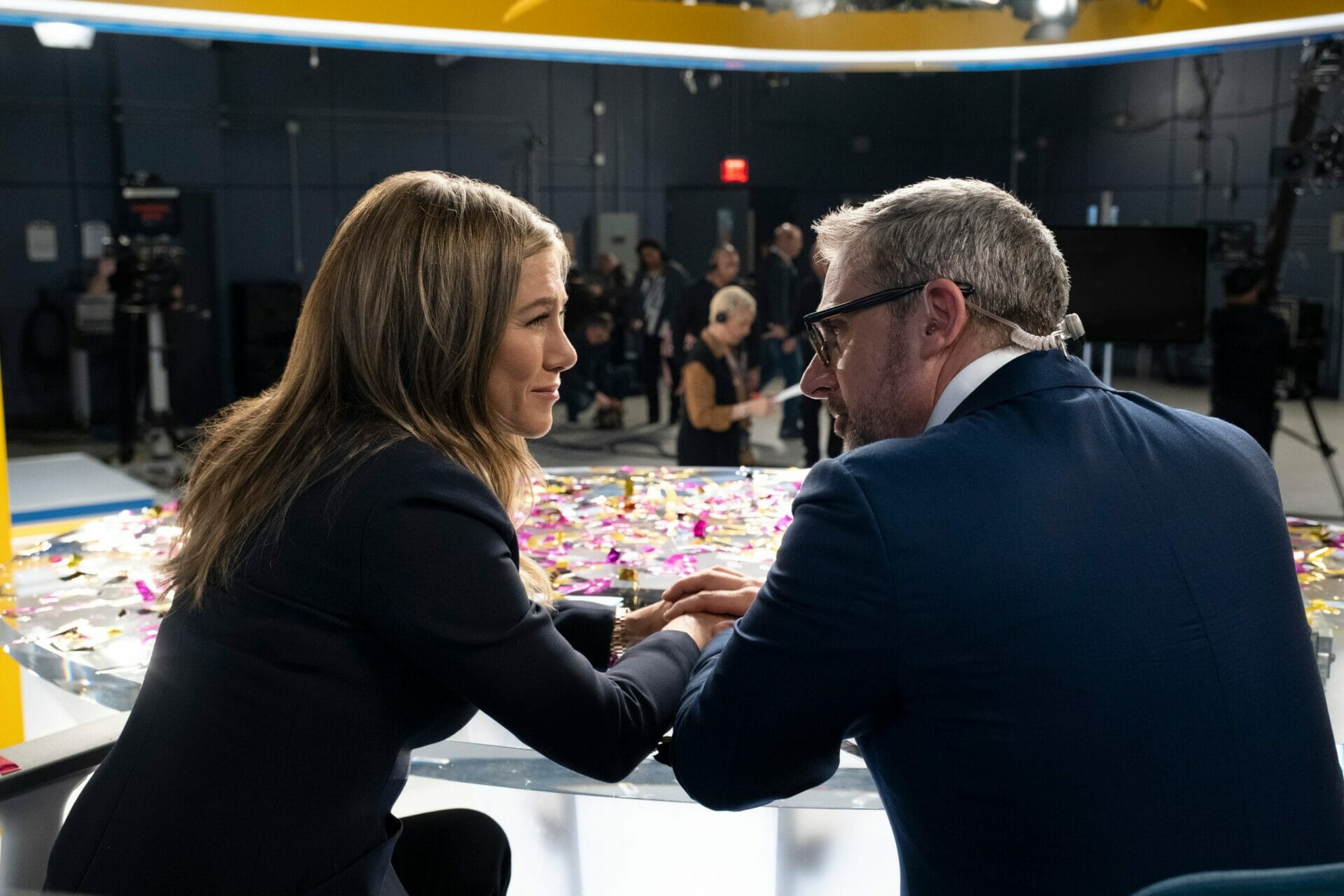
Lighting plays a key role in heightening the film’s emotional tension. Sayeed uses warm, natural tones for interior lighting and contrasts them with hard, direct exterior lighting to visually convey the harsh gaze of public scrutiny. Overall, this amplifies the psychological realism. The lighting establishes mood and shapes the audience’s perception of moral ambiguity and relational tension.
Spaces of Isolation and the Film’s Psychological Soundscape
Thanks to the work of production designer Stefano Baisi, the team was able to film in London. Baisi successfully recreated the architecture, style, and atmosphere of an Ivy League university, such as Yale. Cambridge University provided essential filming locations, including Alma’s classroom and office. However, Baisi’s most notable accomplishment was designing the apartment of Alma and her psychiatrist husband, Frederik (Michael Stuhlbarg). It functions as their sanctuary and visually reflects their story. Every detail, from the home décor to the cookware, conveys the couple’s emotional isolation, particularly Alma’s. Meanwhile, the camera remains deliberately static, reinforcing the sense of confinement and introspection.
The music also heightens the film’s tension and psychological impact. Following Call Me by Your Name and Suspiria (2018), Guadagnino once again collaborates with Trent Reznor and Atticus Ross to create a soundtrack that permeates the narrative with a constant sense of unease and doubt. Contemporary compositions by American composer and conductor John Adams further enhance this effect, adding layers to the narrative texture and punctuating its key moments.
Complicity Without Resolution
Although After the Hunt is flawed and controversial, Guadagnino succeeds in sparking debate, for better or worse. While attempting to address themes such as generational conflict, class tension, and racial dynamics, the film sometimes leaves some narrative gaps that invite criticism. Yet, within its limited runtime, After the Hunt offers a striking reflection of our complex, slippery, and morally compromised society.
After the Hunt does not offer comfort or closure. Rather, it insists that doubt, tension, and reflection linger long after the credits roll. Who are we if not the values that guide us and the decisions we make? Guadagnino never picks a side, and perhaps neither do we. The story refuses to resolve itself, leaving viewers complicit and wandering through the same moral gray zone as the characters. Ultimately, the audience becomes a mirror of the film’s ambiguity, striking proof of Guadagnino’s daring vision.
Tag