 Collections
  Magazine
  Exhibitions
  ITA version












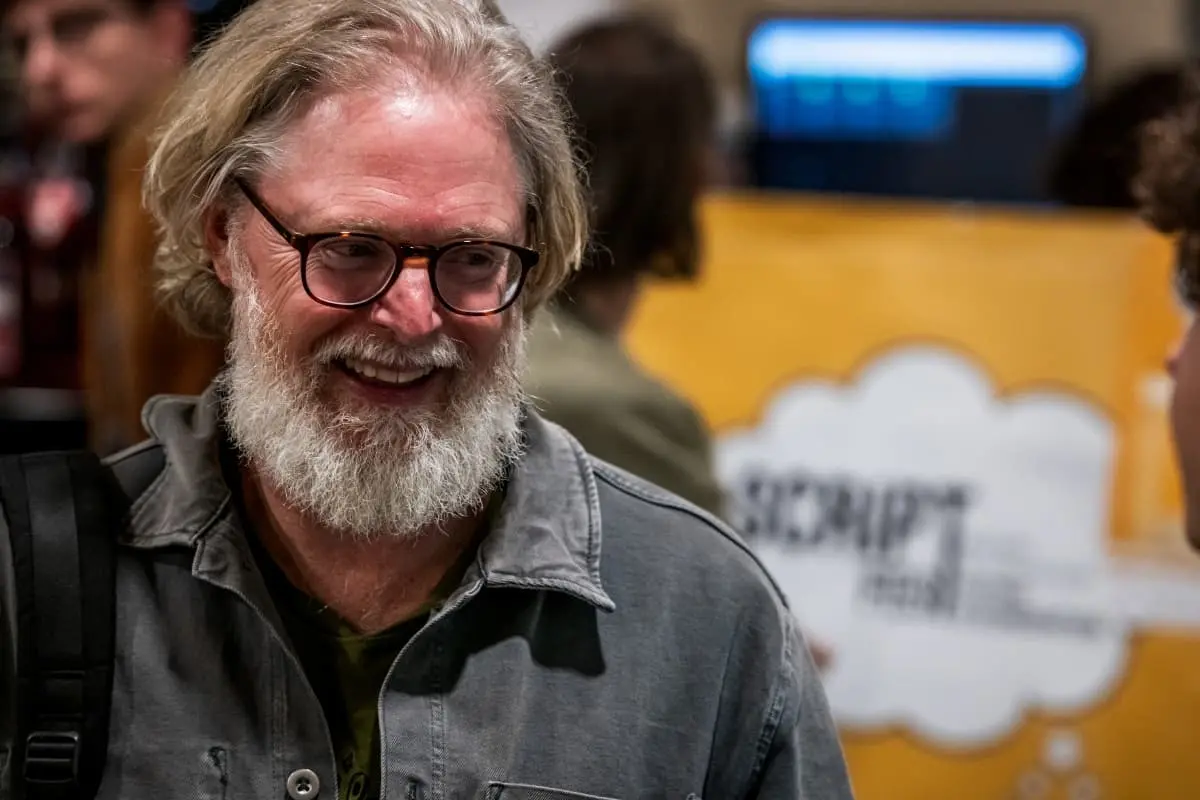
At 59, Australian screenwriter, playwright, and TV producer Tony McNamara has built a career defined by a distinctive approach to screenwriting across film and television. Best known for his collaboration with Yorgos Lanthimos on The Favourite (2018) and Poor Things (2023), both Academy Award–nominated for their screenplays, McNamara has also shaped the small screen with The Great, the comedy-drama starring Elle Fanning.
Meeting him in Northern Italy at the first Script Fest in Bra, McNamara reflects on the differences between film and television, his creative dialogue with Yorgos Lanthimos, and the evolving role of the screenwriter in an industry shaped by streaming and shifting audience habits. From the discipline of craft to the influence of other art forms, the conversation moves across authorship, collaboration, and the challenge of writing stories in a culture that increasingly asks to be guided through them.

McNamara on Film, television and working with Yorgos Lanthimos
You’ve worked extensively in both film and television. Do you approach them differently?
Yes, quite differently. In television it’s much more my show, my vision. I produce it, cast it, hire the team, and shape it as closely as possible to what I want. With films, instead, I’m writing a story that a director will then interpret and turn into their own vision. I enjoy both. I’m very interested in seeing what directors do with a story, especially when it’s something I wouldn’t have done myself.
You’ve collaborated several times with Yorgos Lanthimos. What defines your creative relationship?
We connected very quickly and share a similar sensibility. We understand each other almost intuitively—I have a sense of what he’s looking for. And for a writer, working with a genius director is always a good thing.
The craft of screenwriting and Tony McNamara’s advice to young writers
What is the most rewarding aspect of being a screenwriter? And what needs improvement in the profession?
The best part is that it’s a creative, enjoyable job. Every project is different, and you’re constantly learning. You build your craft over decades, and you have to keep getting better. I also like that it’s collaborative: you start alone, but then you work with directors, designers, and other creative people. As for improvements, I think the industry could offer more opportunities to young writers. It’s very hard to get started.
What advice do you most often give to emerging writers?
Don’t worry about the business—focus on the craft. Writing is something you have to learn over time. If you enjoy the process of getting better, the work will come. There are many decent writers, but not that many truly great ones.
Is there an aspect of screenwriting that’s overlooked or underappreciated?
By the public, definitely. Many people don’t even realize someone writes films—they think actors improvise or directors invent everything. Even in my own family, that was the assumption. Within the industry, it varies. Some people respect the craft, others don’t. Because everyone can write, there’s a tendency to underestimate how complex and difficult it actually is.
McNamara’s influences beyond cinema: art, literature and genre
At Hypercritic we’re interested in cross-pollination between art forms. What inspires your writing outside of cinema?
I’ve always loved theatre, but I’m particularly drawn to contemporary dance. It’s non-narrative, or at least it approaches narrative differently. I’m fascinated by how it uses the body, music, and movement to tell stories. I also look at painting and music. When we were working on Poor Things, Yorgos even sent me a piece of contemporary dance as a reference—it was more about capturing a feeling than directly translating it.
Are there artists you look up to, even outside your field?
Absolutely. I admire painters like Francis Bacon and Caravaggio, and writers like Margaret Atwood and Joan Didion.
Which films or screenplays inspired you early on?
There are many scripts I wish I’d written. The Coen Brothers were a big influence, as was Francis Ford Coppola. The Godfather is an obvious one, but even earlier work like Patton is incredibly strong. I also admire Eric Roth—he’s had a long career and consistently writes brilliant, very different films.
Do you have a favorite genre?
Crime, definitely. It’s my favorite to watch—The Godfather, Fargo, Miller’s Crossing. But I’d never write it. I know I’m not good at it.
Streaming, audience habits and what inspires Tony McNamara today
There’s been discussion, including from Matt Damon, about how streaming platforms are changing storytelling. Have you noticed this?
Yes, I think he’s right. There’s increasing pressure to verbally explain what’s happening, rather than showing it. Traditionally it was “show, don’t tell.” Now there’s a sense that audiences might be distracted—on their phones, for example—so scripts are pushed to constantly remind viewers of the plot. As a writer, that’s frustrating, because drama should communicate things without needing explicit explanation.
Have you watched anything recently that inspired you?
I just watched One Battle After Another. I’m a huge fan, so that’s what’s inspiring me at the moment. Paul Thomas Anderson is an exceptional filmmaker.
Tony McNamara’s work on Star Wars and his passion for cinema from the ’70s
You’re currently working on a Star Wars project with Taika Waititi. How do you approach such an established universe?
It’s really about Taika’s vision. He has a very distinct tone—fun, light, playful. I also worked with George Lucas years ago, so I understand the world quite well. The goal is to make something that feels fresh but, above all, fun.
If you could go back in time, which era of cinema would you want to work in?
Probably Hollywood in the early ’70s—Hal Ashby, Coppola. It seemed like a very free, experimental moment. Films like Harold and Maude or Patton came out of that period. From what I hear, it was a wild and exciting time.
We’re here at the first edition of this Script Festival. What are you enjoying most?
Meeting Italian writers, talking, exchanging experiences. You realize how universal writing is—no matter where you’re from, the challenges are similar. There are differences between industries, but at the core, we’re all just telling stories.