 Collections
  Magazine
  Exhibitions
  ITA version













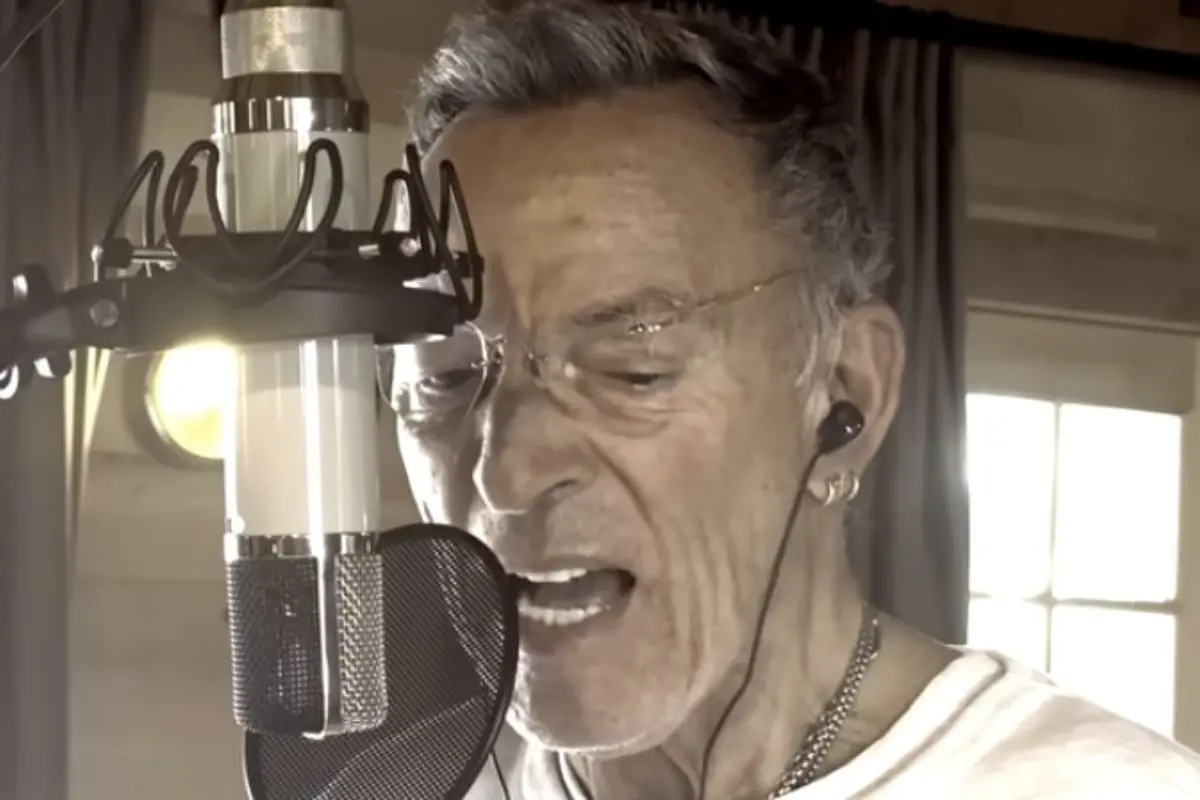
“I wrote this song on Saturday, recorded it, and released it in response to the state terror unfolding in the city of Minneapolis. It’s dedicated to the people of Minneapolis, to our innocent immigrant neighbors, and to the memory of Alex Pretti and Renee Good.” With this message posted on his social channels, Bruce Springsteen once again turns music into an act of political resistance.
Since Donald Trump’s return to the White House for a second term, the relationship between the President of the United States and the New Jersey rocker has devolved into open warfare. Streets of Minneapolis is Springsteen’s latest cry for freedom – an explicit accusation aimed at the violence carried out in Minnesota by ICE and federal immigration enforcement agencies.

A song born on the road – and in protest
During his 2025 tour, which coincided with Trump’s political comeback, Springsteen repeatedly used his live shows – both in the U.S. and abroad – to denounce what he openly called “state terror.” He was hardly alone: artists, filmmakers, and cultural figures across America publicly took a stand against the administration’s immigration policies.
Streets of Minneapolis was born in that climate of urgency. Written, recorded, and released almost immediately, the song feels deliberately raw – less polished than necessary, but emotionally direct, as if speed itself were part of the message.
The title inevitably recalls Streets of Philadelphia, Springsteen’s iconic 1990s song about AIDS, isolation, and social abandonment. That track, written for Jonathan Demme’s Philadelphia, gave voice to a national trauma at a time when fear and stigma surrounded the epidemic. Then, as now, Springsteen used a single city as a symbol for a much larger American wound.

From AIDS to ICE: the evolution of a protest voice
Back in the 1990s, Streets of Philadelphia was inspired in part by the loss of a close friend to AIDS – a disease that was still poorly understood and deeply stigmatized. It was a song about invisibility, neglect, and institutional indifference.
Today, Streets of Minneapolis follows the same moral trajectory. The target has shifted – from a health crisis to state violence – but the impulse remains the same: bearing witness. The song responds directly to the killing of Alex Pretti and Renee Good during clashes involving federal immigration forces. Their deaths are not treated as collateral damage, but as names that must be spoken, remembered, and mourned.
The meaning of Streets of Minneapolis
Musically, the track is classic Springsteen: a restrained ballad built around harmonica, steady rhythm, and a melody that echoes his earlier work. This is the sound of the Boss returning to familiar territory- the America of working-class stories, moral conflict, and broken promises.
But the stakes are higher now. What’s on trial in Streets of Minneapolis is freedom itself.
As in many Springsteen songs, there’s a lone observer walking through the city, taking in the scene. This time, the journey moves from the struggling neighborhoods of Philadelphia to the frozen streets of Minneapolis. Fire and ice coexist: literal sub-zero temperatures and the metaphorical flames of anger, fear, and repression.
The arrival of Border Patrol units – described not as protectors, but as occupiers – transforms the city into hostile territory.
Lyrics as indictment
Through the winter’s ice and cold,
down Nicollet Avenue
a city aflame fought fire and ice
’neath an occupier’s boots…
Springsteen contrasts the brutal cold of Minnesota winters with the image of a city “aflame,” suggesting that violence doesn’t need heat to burn. When he refers to “King Trump’s private army from the DHS,” the language is deliberately provocative, framing federal agents not as law enforcement but as instruments of power unchecked by accountability.
The second verse shifts focus to the people:
Against smoke and rubber bullets
in the dawn’s early light
citizens stood for justice
their voices ringing through the night…
Here, the protagonists are ordinary citizens who stand their ground despite tear gas, rubber bullets, and freezing temperatures. The imagery is stark: “bloody footprints where mercy should have stood.” The song refuses abstraction, ending the verse by naming the dead – Alex Pretti and Renee Good- ensuring they are not erased from the narrative.
A message of solidarity – and accusation
In the final section, Springsteen addresses the city directly: “Our Minneapolis, I hear your voice crying through the blood-soaked haze.” It’s a gesture of solidarity, but also of alignment – placing himself squarely on the side of the protesters.
He then turns his anger toward what he calls the “lies” used to justify the violence. Phones, whistles, and citizen-recorded videos are framed as tools of truth, standing against official narratives pushed by Trump-era figures such as Stephen Miller and Kristi Noem.
The song closes with a chant that has echoed through protests across the city:
“ICE out, ICE out.”
It’s not subtle. It’s not meant to be.
Springsteen vs Trump: a long-standing feud
Springsteen has long used his platform to criticize Trump and his administration. During a show in Manchester in May 2025, as part of his Land of Hope and Dreams tour, he delivered one of his harshest statements yet:
“My home is the America I love – the America I’ve written about for 250 years. It’s now in the hands of a corrupt, incompetent, and treacherous administration.”

Trump fired back on Truth Social with personal insults, dismissing Springsteen as “overrated” and attacking his political views in increasingly crude terms. The clash between the two figures – symbols of opposing Americas – had been building since Trump’s first term, but the 2024–2025 election cycle marked a complete rupture.
Springsteen openly supported Kamala Harris, appearing at her rallies and calling Trump “a tyrant.” In October 2025, he formally endorsed Harris, saying she embodied “the America I write and sing about.”
The outcome of that election is now history. But Streets of Minneapolis makes one thing clear: for Springsteen, the fight – for memory, truth, and freedom – is far from over.