 Collections
  Magazine
  Exhibitions
  ITA version














What Is Pluribus Really About? Vince Gilligan’s Dystopia of Collective Happiness


By
Everyone’s happy. And it’s a nightmare.
Vince Gilligan, the mind behind Breaking Bad and Better Call Saul, returns with a new TV show, Pluribus. The idea is as simple as it is disturbing. In this new Apple‘s show, on air from 2025, Gilligan builds a perfect world where everyone seems to be happy, where anger, selfishness, and competition have disappeared. And it feels completely wrong.

The paradox is right here: viewers usually think of dystopias as violent, oppressive worlds, full of control and fear. Pluribus does the opposite. Imagine a dystopia made of smiles, kindness, and harmony. And perhaps, precisely for this reason, no one is truly free anymore.
- The Hero who doesn’t want to save the world
- Individuality vs. Collectivity
- The right to be Unhappy
- Slow Burn
- What is all about
- The Dictatorship of Kindness
Carol Sturka and the Reluctant Hero at the Center of Pluribus
[Mild spoilers ahead]
A signal from space contains a genetic sequence that, once recreated in a laboratory, leads to the spread of a virus capable of altering human behavior. Within a short time, most of humanity merges into a collective consciousness in which people become perpetually happy. Wars, violence, and conflict rapidly disappear, and what initially appears to be an alien infection begins to resemble a utopian transformation. Only a handful of individuals are immune, including the protagonist, the writer Carol Sturka (Rhea Seehorn). While the Joining tries to understand why the virus does not affect the remaining immunes, Carol finds herself constantly accompanied by Zosia (Karolina Wydra), a representative of the collective consciousness tasked with studying her and, eventually, persuading her to join the rest of humanity.
The world that emerges after this event is not a destroyed world, but a better one: wars, hunger, and violence disappear. In this sense, Pluribus does not depict a classic apocalypse, but a sort of utopia that resembles the end of the world.
Carol is not a traditional heroine: she is angry, sullen, and deeply unhappy even before the world changes. Vince Gilligan wrote the character with the actress in mind and, speaking about the series, explained that he likes characters who step up “despite being afraid, lonely, and sad, and would prefer someone else take on that responsibility.”
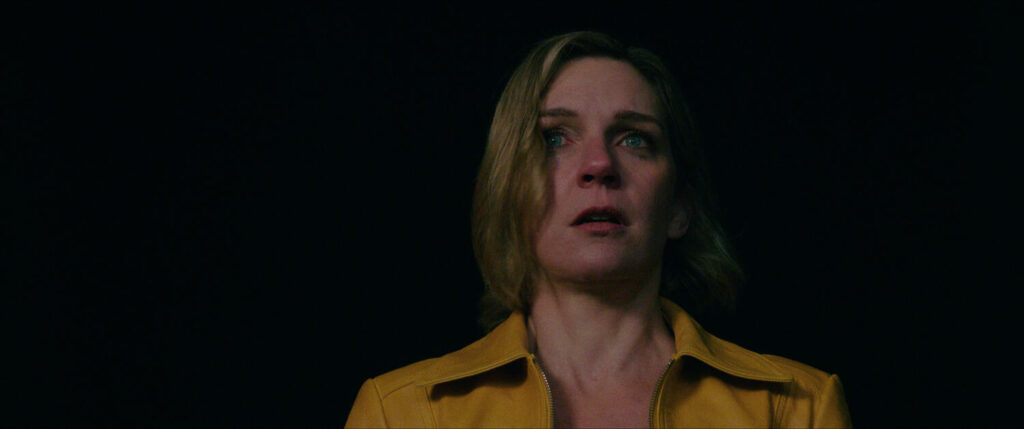
In The Cinematic Experience podcast, Carol is also compared to the figure of the reluctant hero, an archetype that spans literature and popular culture, from Hamlet to contemporary characters like Shinji Ikari from Neon Genesis Evangelion. Like these characters, Carol doesn’t seek the role assigned to her or possess the qualities of a classic hero, yet she is forced to confront a mission she’d rather avoid.
Carol is a profoundly isolated figure, observing the new world without truly finding her place within it. Her condition stems not only from being one of the few immune to the virus, but from a loneliness that seems to precede the events of the series. Therefore, more than a story of survival or resistance, Pluribus seems to be built around her perspective and the way she confronts a reality that suddenly no longer belongs to her.
How Pluribus Explores Individuality vs. Collective Consciousness
The central theme of Pluribus is the conflict between individuality and collectivity. The collective mind is not a tyrant, but at the same time, it cannot conceive of anyone (like Carol or another of the eleven immunes) not wanting to be part of it. And this is precisely what makes the situation disturbing: being an individual slowly becomes something wrong.
One of the most significant scenes in the series involves an immune girl, Kusimayu (Darinka Arones), who voluntarily joins the collective. Before the change, she affectionately caresses a goat; after entering the collective mind, she simply lets it go, walking away even as the animal tries to follow her. The Joining claims to love everyone, but when you love everything and everyone equally, you wonder if you’re still truly loving. Interpersonal relationships lose nuance when a romantic or sexual relationship with a neighbor is treated the same as one with someone on the other side of the world. If everything has the same value, then nothing has any value anymore.

The Philosophical Ideas Behind Pluribus
Philosophers have wrestled with a similar question for centuries. It recalls, at least in part, Aristotle, for whom friendship and affection always arise from particular relationships between concrete individuals, not from an indiscriminate. If everything is the same, there is no longer any choice, and without choice, individual love does not exist either.
Many modern philosophers have also reflected on the conflict between the individual and the masses: Nietzsche, for example, criticized herd mentality and the forms of conformism that tend to standardize individuals and repress differences. In this sense, the collective mind of Pluribus does not destroy humanity with violence, but with standardization. Everyone becomes good, but no one is unique anymore.
Why Pluribus Defends the Right to Be Unhappy?
One of the most original aspects of Pluribus is the idea that we must not cancel sadness, anger, and frustration: they are fundamental parts of human identity, what makes humanity free. The philosopher Jean-Paul Sartre argued that human beings are condemned to be free, and this freedom brings with it anxiety, fear, and uncertainty. Without these emotions, therefore, there is no freedom.
In Pluribus, the immune system represents not only biological resistance, but also philosophical resistance: it represents the right to be imperfect, angry, sad, and lonely. In a world where happiness is mandatory, being unhappy becomes an act of freedom and rebellion.
This concept also recalls Aldous Huxley‘s novel Brave New World, in which the perfect society eliminates pain and conflict but also freedom, art, and individuality. At one point, one of the characters claims the right to be unhappy because, without suffering, there is no possibility of being truly human.

The loss of individuality manifests itself not only in human relationships, but also in the way the Joining views the world. The collective mind seems incapable of formulating authentic preferences or personal judgments: Shakespeare and Carol’s worst novel are greeted with equal enthusiasm. It can’t separate what’s relevant from what’s less so; it has no scale of values, no real “personal” opinion.
One gets the feeling that no member of the community ever fully delves into the matter, because they might find something painful, which should be avoided. Thus, we remain in a constant limbo of superficiality, where they say they’re doing good for the world, yet never truly live it.
Why Pluribus Uses a Slow-Burn Storytelling Style
If the themes of Pluribus are unusual for a science fiction show, its style is even more so. The show, as mentioned, has a mostly slow pace, based not on cliffhangers but on dialogue and its silences. It’s what we often call a slow burn: a story that unfolds slowly, building tension rather than continually trying to surprise the viewer.
This pace is a deliberate choice in direction and writing. Gilligan, after years of highly narrative, tension-driven shows like Breaking Bad and Better Call Saul – as well as writing episodes for TV series like The X-Files – does the opposite: he doesn’t want to give all the answers; he doesn’t want to rush things. He wants the viewer to wonder about his work.
The direction and photography also contribute to creating this suspended atmosphere. The world is almost artificial, as if it had become a set (curated by Denise Pizzini and Ashley Michelle Marsh). When the series follows Carol at night, the lights become harsher, the atmosphere more noirish, and suddenly Carol finds herself confronted by coyotes trying to eat the corpse she’s just buried in her garden.
It’s as if two different worlds exist, further expressing the differences between the “alien” world and that of the “immune” ones.
Rhea Seehorn does an excellent job of bringing the story of Pluribus and Carol to the screen. Her screen presence carries entire episodes in which she’s almost entirely alone, and her almost desperate comic verve makes the atmosphere sad, but not as sad as it would be if the focus were on the drama and not Carol’s dark humor.
Dave Porter‘s music goes hand in hand, creating a mostly suspended atmosphere, similar to that of other works in which the action isn’t the focus, contrasting with moments that aren’t apocalyptic, but rather lighthearted. As in works like Severance, it is often repetitive, accompanying the scenes and contributing to a constant feeling of isolation.
What Is Pluribus Really About? Themes and Meanings Explained
It’s difficult to watch Pluribus without thinking of the contemporary world. The collective mind Gilligan imagined can be read as a metaphor for many different realities: the internet, social networks, artificial intelligence, or, more generally, an increasingly interconnected global culture. It’s no coincidence that the title recalls the Latin expression E pluribus unum, “out of many, one.”
However, Vince Gilligan carefully avoided pointing to a single possible interpretation. “I really, really want people to engage with Pluribus any way they want to,” he stated, adding that he often hears readings of the series that he hadn’t even thought of. Rather than a work built around a specific message, Pluribus therefore seems conceived as a space open to reflection.
Precisely for this reason, many viewers have seen the collective mind as a reflection of the risk of homogenization. A society in which everyone shares the same thoughts, values, and goals appears peaceful and harmonious, but risks leaving little room for dissent, creativity, and individual differences. In an era where algorithms, digital platforms, and artificial intelligence systems increasingly standardize experiences and content, the parallel is almost inevitable.

How the Structure of Pluribus Shapes Its Story
Even the very structure of the series seems to point in this direction. Gilligan clarified that Pluribus “is not a mystery-box show,” and provocatively added that viewers might already know everything they need to know about the plot and the mystery. The interest of the series, therefore, lies not so much in the search for a definitive explanation, but in observing the consequences of this new reality and the questions it raises.
It is perhaps precisely this openness that makes Pluribus such a controversial work. Gilligan seems less interested in providing answers than in presenting the viewer with a thought experiment, leaving them free to decide whether Joining represents a liberation, a threat, or something that completely defies both definitions.
The promotional campaign also seems to reflect this desire to transform Pluribus into a participatory experience. As explained in the podcast The Cinematic Experience, Apple actually published an excerpt of Carol’s romantic novel in the series and activated dedicated phone numbers for the characters. Calling the protagonist’s number allows you to listen to her voicemail, while the Joining number allows you to connect with the voice of the collective conscience. This extension of the narrative world invites viewers to further immerse themselves in Gilligan’s imagined universe.
The Dictatorship of Kindness in Pluribus
Today, there are already societies in which a portion of individual freedom is sacrificed for the so-called collective good. Systems in which the state knows everything about its citizens, monitors them, and in exchange guarantees security, economic growth, and services. The implicit pact is simple: less freedom, less chaos.
If we take this reasoning to its extreme, we arrive at dictatorships.
The collective mind of Pluribus is not a classical dictatorship; it is a dictatorship without a dictator, yet the result is similar: people cease to be individuals and become part of a larger system that decides for them what is right and what is wrong. The difference is that in dictatorships, people obey out of fear, while in Pluribus, they obey because they are happy. A dictatorship of kindness.
The loss of freedom doesn’t always happen through force. Sometimes it happens when someone promises to eliminate pain, conflict, and loneliness. Through propaganda. This is why Pluribus isn’t really about aliens, viruses, or science fiction. It’s about a very human temptation: to give up on oneself for the sake of something more secure.
Would we, too, be willing to give it up if there really were a world where everyone was happy?
Tag