 Collections
 Magazine
 Exhibitions
 ITA version







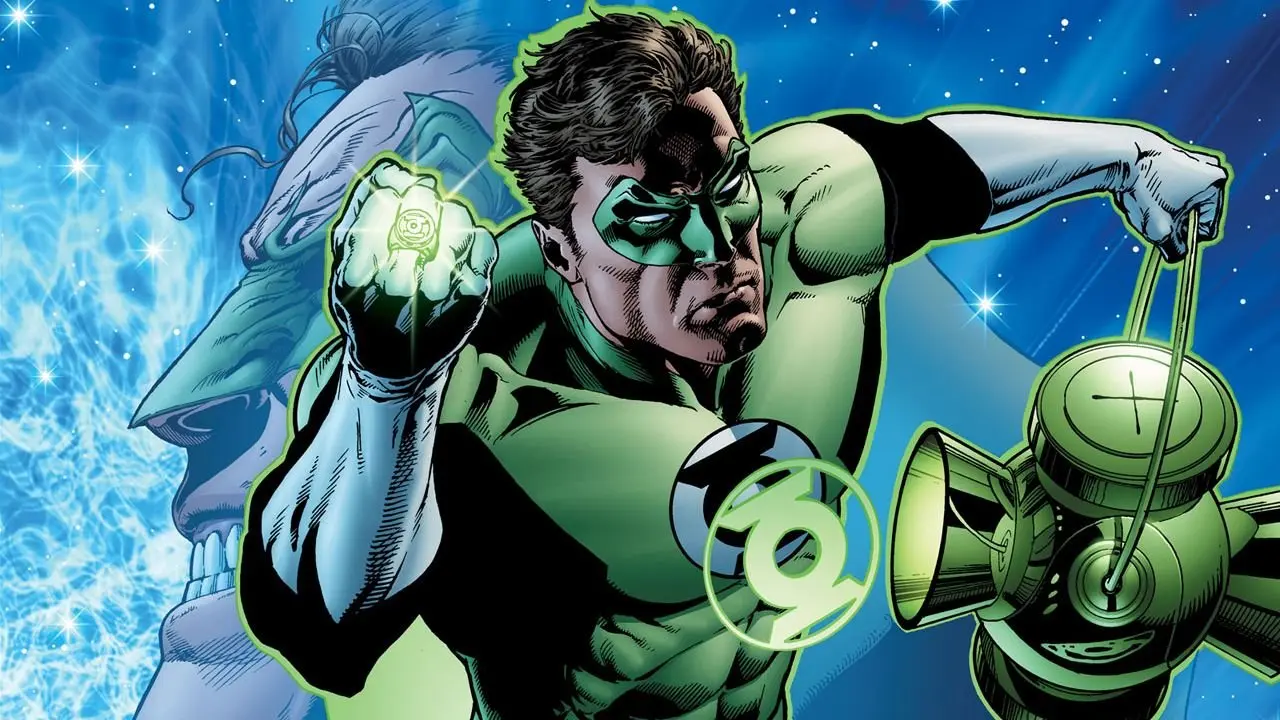
Green Lantern: Rebirth | How Geoff Johns Brought Hal Jordan Back


By
In brightest day, in blackest night,
No evil shall escape my sight.
Let those who worship evil’s might,
Beware my power: Green Lantern’s light!The Green Lantern Corps Oath
Some characters seem destined never to fall. Hal Jordan, a long-standing member of the Green Lantern Corps, was for decades one of the DC Universe’s most prominent heroes, and his fall created one of the deepest rifts in the character’s publishing history.
With Green Lantern: Rebirth, writer Geoff Johns took on the task of healing that rift, bringing back to center stage a hero whose journey had seemingly come to an end.
Published by DC Comics between 2004 and 2005, this miniseries is a concerted effort to redefine Hal Jordan, reclaiming his past while laying the groundwork for the title’s future. Beyond its superhero trappings, the work offers a profound reflection on guilt, trauma, and the possibility of starting over after losing oneself.
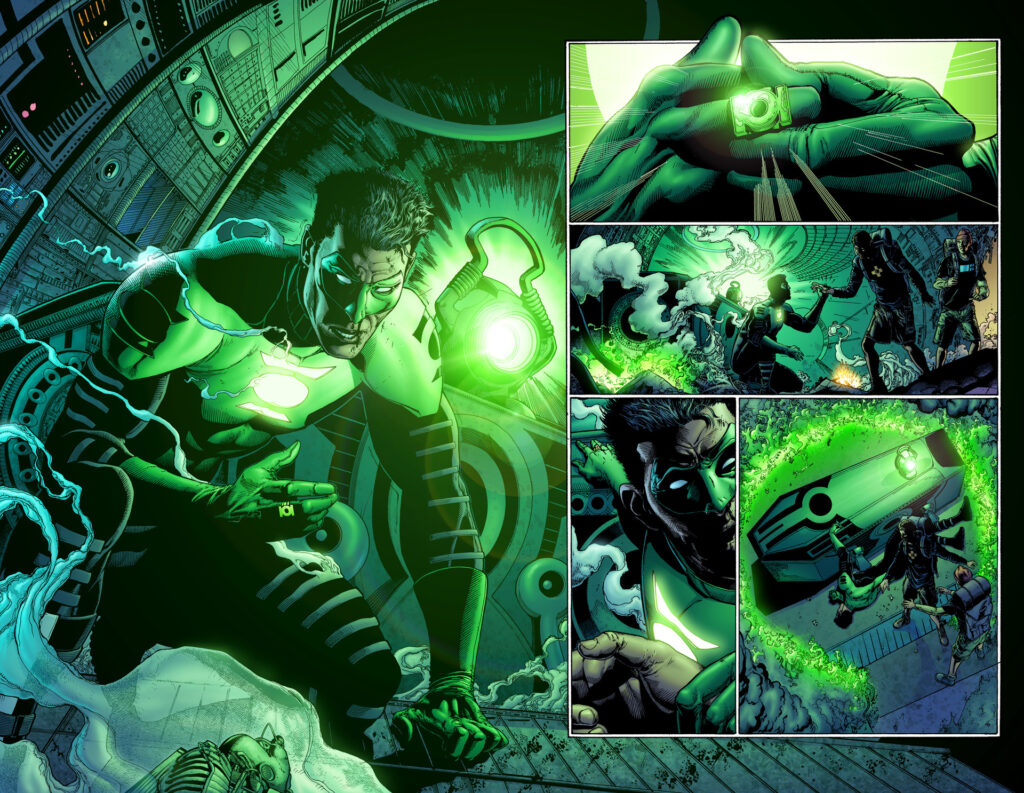
Hal Jordan’s Fall: The Story Behind Emerald Twilight
To understand the significance of Rebirth, one must step back and examine the state of the Green Lantern title before Geoff Johns arrived
Hal Jordan’s editorial story took a dramatic turn in 1994 with Emerald Twilight, a story arc written by Ron Marz that transformed the hero into a threat to the entire universe. Devastated by the destruction of Coast City, Hal succumbed to despair, becoming the entity known as Parallax and wiping out most of the Green Lantern Corps. His arc ended with his sacrifice in The Final Night (1996), paving the way for Kyle Rayner, the new ring-bearer.
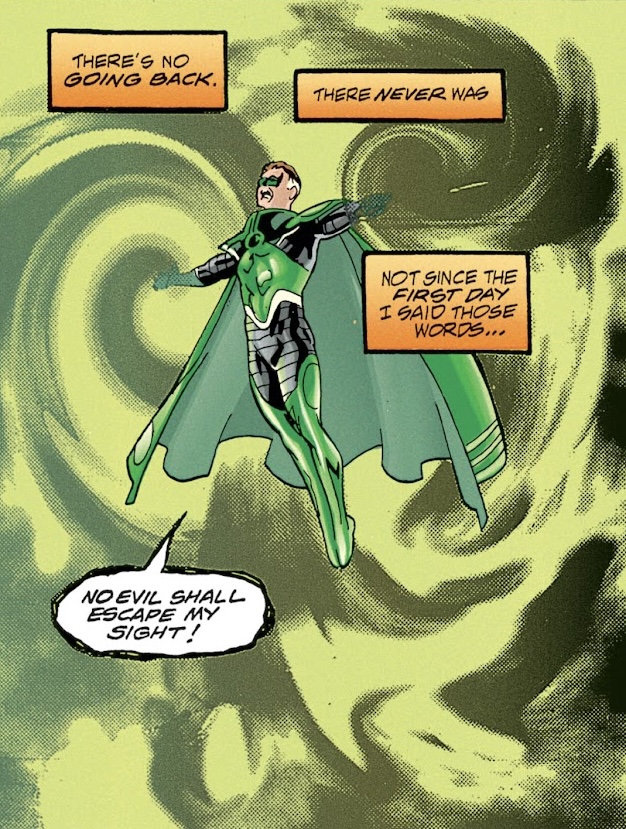
Replacing Hal was part of a deliberate editorial strategy: revitalize a struggling title by introducing a younger character who could attract new readers. At least at first, the approach seemed to work. In an interview published in Wizard #82 (June 1998), Kevin Dooley, the title’s editor at the time, stated that sales had increased by 300% following Emerald Twilight. Kyle was thus able to forge his own identity and remain the series’ protagonist for over a decade.
However, this decision was not universally well-received. Many long-time readers could not accept that Hal Jordan had been turned into an antagonist and stripped of his role. The backlash eventually even coalesced into H.E.A.T. (Hal’s Emerald Advancement Team), a fan movement that campaigned for Jordan’s return and rehabilitation. Through petitions, online drives, and even a full-page advertisement in Wizard magazine, the group gathered nearly two thousand signatures. The backlash even directly involved Ron Marz and Kevin Dooley, who became targets of personal insults and, in some instances, actual threats.
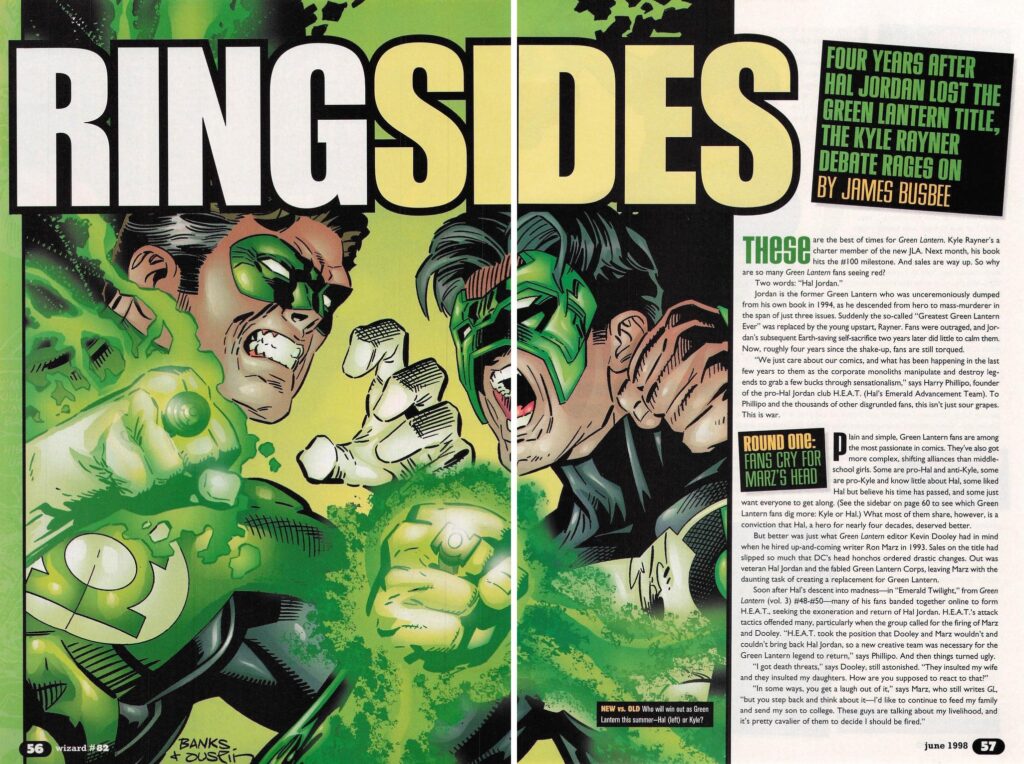
The situation was explored in depth by Wizard magazine, which in 1998 chronicled the conflict between the supporters of Hal and those of Kyle, a rivalry that, as Marz himself would later recall, went well beyond the bounds of typical editorial criticism.
In 2004, with Rebirth, Geoff Johns had to face how to bring Hal Jordan back to center stage without erasing a decade of history built around Kyle Rayner.
How Geoff Johns Brought Hal Jordan Back as Green Lantern
Green Lantern: Rebirth opens with a series of inexplicable events. Hal appears to have returned to Earth, even though his lifeless body still rests on the Moon. Meanwhile, various members of the Green Lantern Corps begin to lose control of their powers. Kyle Rayner, the only Green Lantern on Earth, finds himself caught up in dangers that seem to revolve around the return of his predecessor. Above all, there is talk of the arrival of a new yet old threat: Parallax, though not in the form everyone remembers.
With Green Lantern: Rebirth, Geoff Johns set out to bring Hal Jordan back to the center of the DC Universe without disregarding the events of the preceding decade. The miniseries does not merely resurrect the character; it seeks to reconstruct and reinterpret the reasons behind his fall.
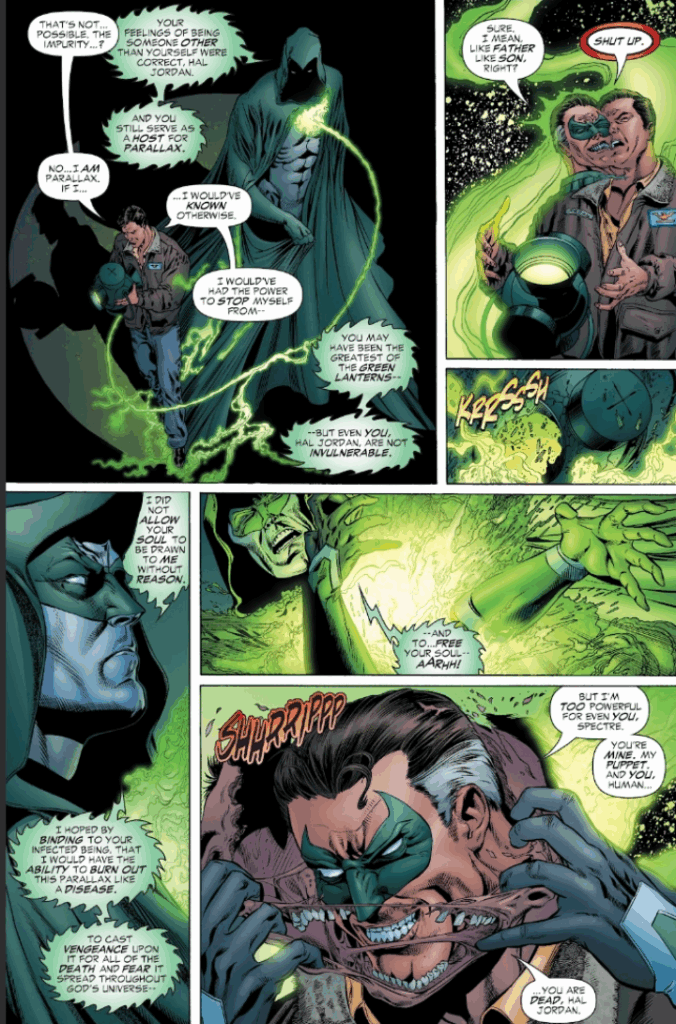
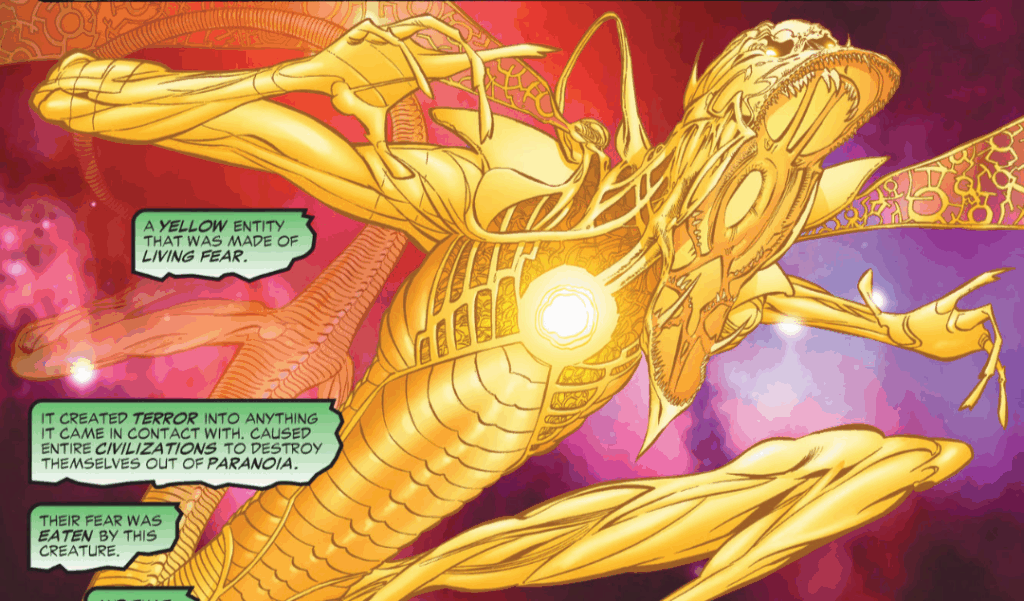
The narrative solution Johns chose is both ambitious and controversial: Parallax is not simply the identity Hal assumed after his descent into darkness, but rather a cosmic, yellow entity, the embodiment of fear, that infiltrated his ring and gradually took possession of the hero, exploiting the grief and vulnerability that followed the destruction of Coast City. This also provides a new explanation for the Green Lantern rings’ long-standing weakness toward the color yellow, linking it directly to the presence of Parallax within the Central Power Battery. The manipulations of Sinestro and the role of the Spectre, who took in Hal’s soul with the goal of freeing it from the entity’s influence, complete the picture.
Hal’s liberation from Parallax, his return to life, and his final confrontation with Sinestro culminate this restorative endeavor. But Johns, in addition to restoring the previous status quo, also restores the Green Lantern Corps to a central position, laying the groundwork for its reconstruction and development in the years that followed.
Rebirth, therefore, aims to mend a mythology that had become increasingly fragmented. As Johns himself later explained, the project was about reclaiming the entire Green Lantern universe. It was, in effect, a rebirth, not just for an individual, but for the entire comic book series.
Parallax: Fear and the Psychology of Trauma
Beyond its superhero trappings, Green Lantern: Rebirth can be a metaphor for psychological trauma and its aftermath. Hal Jordan’s fall is preceded by devastating experiences: as a child, he witnesses the death of his father, a test pilot, and as an adult, he loses Coast City, along with thousands of its inhabitants. Both events fuel a profound sense of helplessness and an intense fear of losing what he holds dear once again.
His transformation into Parallax thus serves as a symbolic representation of an internal depression. Hal loses control over his own powers, a metaphor for his fractured relationship with himself and his core values. His journey echoes certain aspects of post-traumatic stress disorder: the guilt, the anger, and the inability to process a loss that continues to shape his present reality.
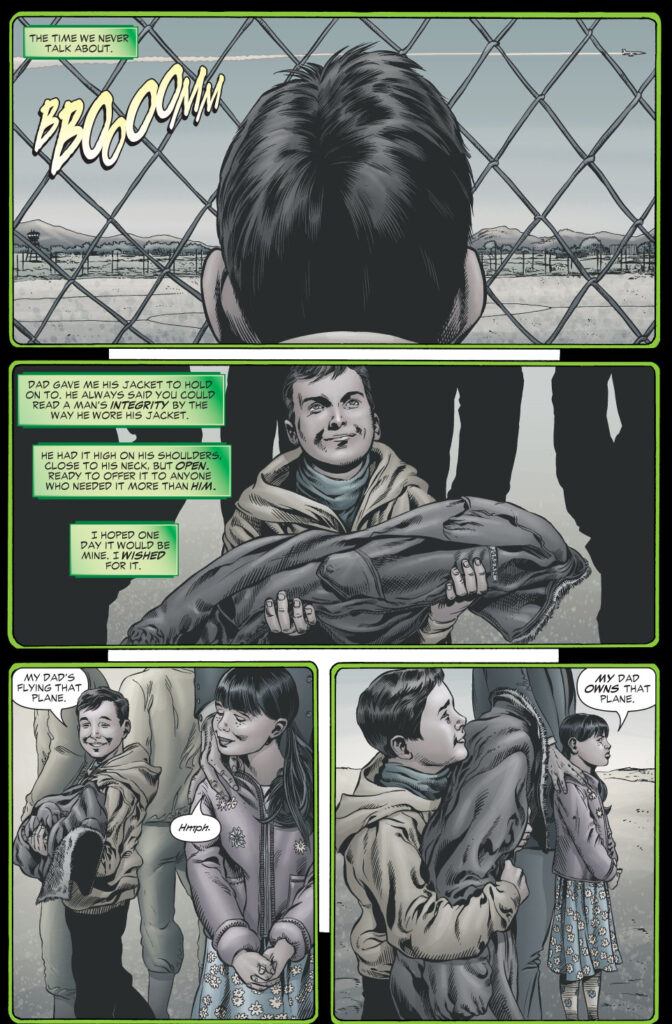
Geoff Johns transforms these emotions and traumas by personifying them as Parallax, the embodiment of fear. Fear is thus a concrete, tangible enemy, one capable of seizing mental control, much like the internal battles a person might face in real life.
Consequently, Hal’s rebirth centers on reclaiming his ring and reconstructing his identity.
This raises a question regarding the relationship between trauma and responsibility. While his suffering helps the readers understand the reasons behind his fall, to what extent can it justify the atrocities he committed? By reframing Parallax as an entity that manipulated Hal, the latter’s has less personal responsibility. In this way, the hero’s return becomes possible without requiring a full reckoning with the monstrous nature of his past actions.
So, now that Hal has returned, is everything simply fine as it is?
No, trauma does not automatically erase individual responsibility, just as suffering does not render one innocent. Understanding why Hal became Parallax does not necessarily absolve him. His redemption must also involve acknowledging the consequences of his actions and confronting those who paid the price. Simply putting the ring back on is not enough to reclaim one’s identity, just as being a victim does not preclude one from having been, in turn, responsible for others’ suffering.
It is precisely within this tension that Rebirth avoids a simple reset that would return everything to the way it was before. Hal remains the man who, years earlier, made mistakes and committed atrocities, yet he is still granted rehabilitation.
Much like in the TV series Daredevil: Born Again, where Matt Murdock confronts his own wounds, his past errors, and the ghosts of his history, to envision a different future, he must first come to terms with what has transpired, accept it, and find the courage to begin anew.
Ultimately, the opportunity for a fresh start lies in acknowledging the past and learning to live alongside it.
Ethan Van Sciver’s Art: Bringing the Green Lantern Universe to Life
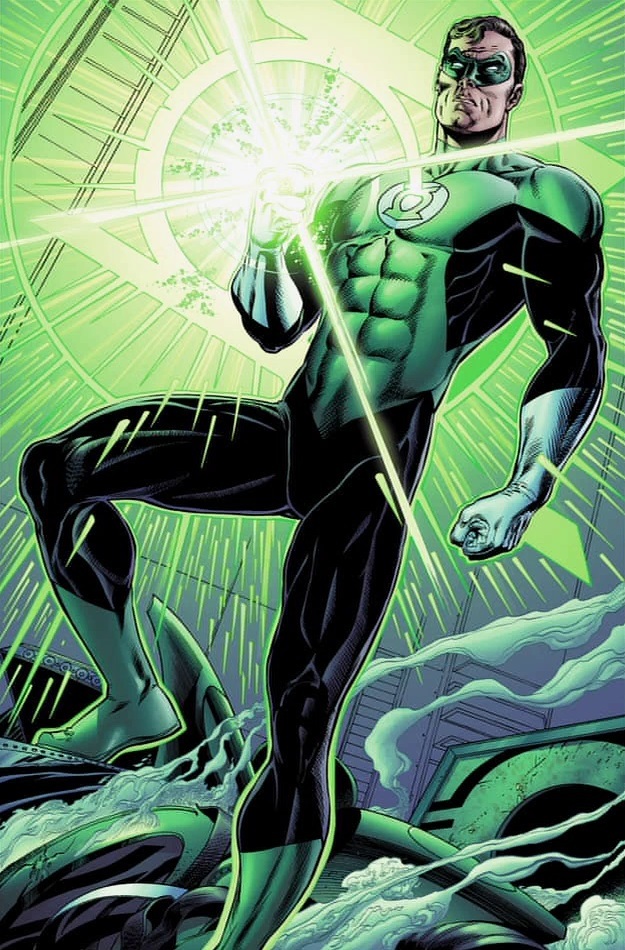
Ethan Van Sciver is the driving force behind the rebirth of Green Lantern, and his work is central to the miniseries. His drawing style is highly detailed, with a strong emphasis on the characters’ physicality.
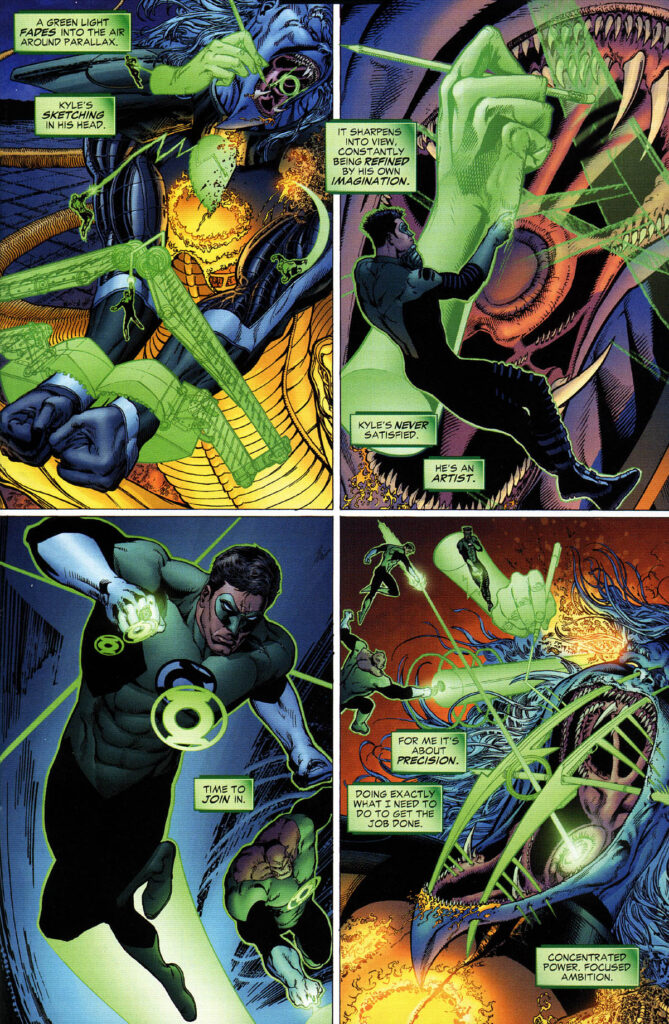
This makes his handling of action sequences especially effective: the Lanterns’ powers are spectacular visual constructs, with energy manifestations from their rings filling the panels and amplifying the characters’ sense of power. Furthermore, Van Sciver highlights the story’s cosmic scale, alternating between intense close-ups and broader compositions that capture the grandeur of the Corps and its adversaries.
His style, at times bordering on hyper-realistic in its attention to detail, lends a solemn tone to Green Lantern: Rebirth, while maintaining the high-octane spectacle characteristic of the superhero genre.
Green Lantern: Rebirth and Its Legacy in the DC Universe
More than twenty years after its publication, Green Lantern: Rebirth remains a pivotal turning point in the character’s publishing history. Geoff Johns brought Hal Jordan back to the center of DC mythology, a move that, while relying on questionable narrative choices to justify Hal’s fall, paved the way for one of the franchise’s most significant developments, which would later culminate in Blackest Night.
Today, the return of Hal Jordan carries added significance due to Lanterns, the HBO TV show about the Green Lantern Corps, starring Kyle Chandler as Hal Jordan and Aaron Pierre as John Stewart, another ring bearer. While not a direct adaptation of Rebirth, Johns’ work serves as an essential touchstone for understanding Hal’s role within the character’s broader mythology.
In anticipation of the new series, the name H.E.A.T., the movement from the 1990s, has even resurfaced across social media and online communities. Some fans have jokingly revived the name and the group’s original grievances, illustrating that the old rift has never been entirely forgotten. While this does not constitute a formal revival of the organization, this little event speaks to the enduring, strong connection between the character and a segment of his audience.
Tag