 Collections
  Magazine
  Exhibitions
  ITA version













Adolescence | Netflix’s Awarded Crime Drama Exploring Fatherhood and Violence


Seasons
Runtime
There’s an exact moment in life when a child becomes unrecognizable and unpredictable, and that moment is adolescence. Unpredictably, a mother can discover that her sweet child has gotten a novel piercing or a tattoo. A father can surprise his little daughter kissing her first boyfriend… or find his boy has become a killer.
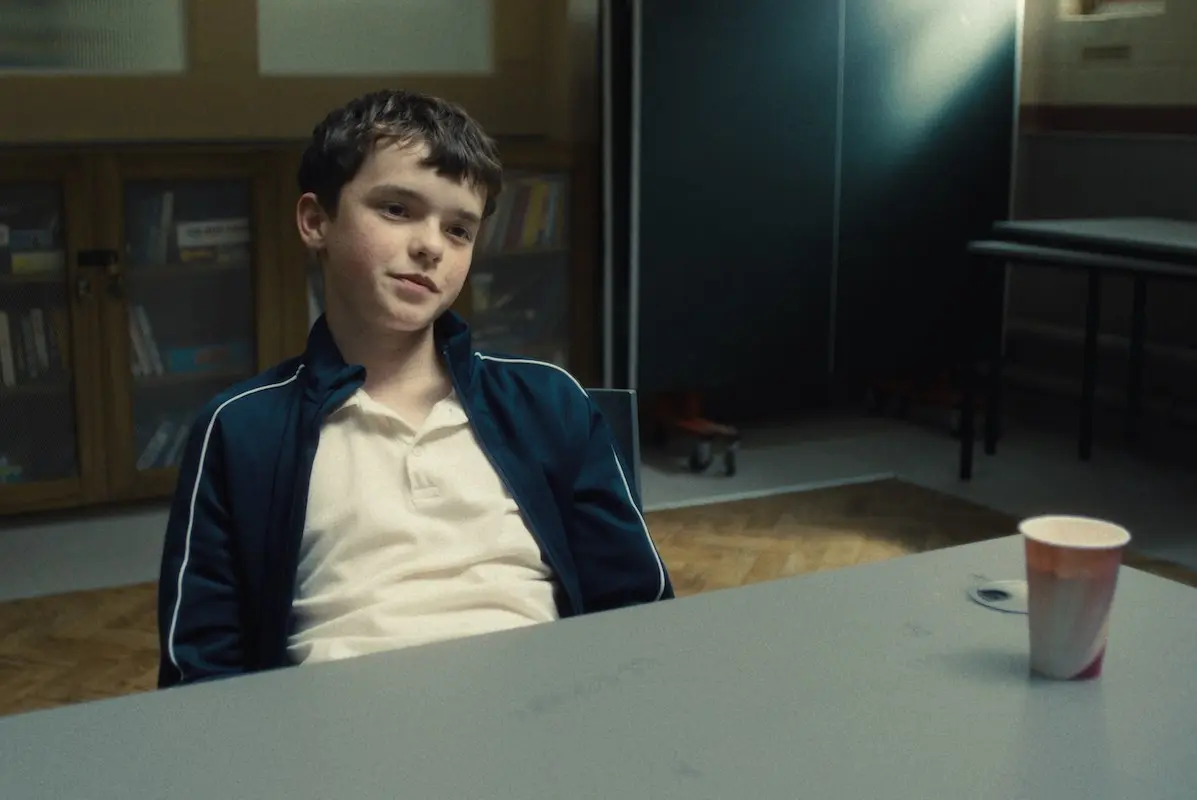
Created by Jack Thorne and Stephen Graham, the British miniseries Adolescence was distributed by Netflix in March 2025. In four episodes, director Philip Barantini follows the development of the accusation against the protagonist until his trial. The psychological crime drama sheds light on the genesis of violence against women, and in general, of chauvinism. The narrative adopts a peculiar point of view, however, as two fathers investigate with different motivations, focusing on the parents’ sense of guilt regarding how their children grew up.

The show has proven to be a great audience success since its debut, and critics have praised its high technical level. Despite being accused of promoting conspiracy theories (as reported by The Independent), it also received several awards and nominations, including nine Primetime Emmy Awards. Besides gaining the accolades for Outstanding Limited or Anthology Series and Outstanding Lead Actor (Stephen Graham), Adolescence also established a new record, as 15-year-old Owen Cooper became the youngest actor to obtain an Emmy for Outstanding Lead Actor in a Limited or Anthology Series or Movie.
Adolescence on Netflix | The Morning of the Teen Murder Case
13-year-old Jamie Miller (Owen Cooper) is still in bed when the police burst into his house looking for him. They led him to the police station: his schoolmate Katie Leonard was stabbed, and he is accused of the killing. Still upset, his parents (Stephen Graham and Christine Tremarco) and his older sister (Amélie Pease) follow their car. Jamie is in shock, crying and shaking, and goes on repeating that he is innocent. Yet, he shows himself to be collaborative, asks his father to serve as a tutor, and accepts examinations and questioning.
In charge of the inquiry is Inspector Luke Bascombe (Ashley Walters), who also has a son in Jamie’s school, and Sergeant Misha Frank (Faye Marsay). As they investigate in the school, they discover a deeper (and darker) truth about the crime and who committed it; all while the Millers try to face the crisis, and the spouses question themselves about their possible mistakes.

Inside Adolescence | Exploring Teenage Minds and Psychological Crime
The crime genre is typically characterized by fast-paced cross-cutting, resulting in a compelling and thrilling narrative. Yet, each one of the four episodes that compose Adolescence is based on just one long take. The camera follows the development of the action, keeping a close eye on the character in the spotlight. Still, the rhythm is far from slower, as brilliant dialogues leave no downtime. The screenplay’s forcefulness is also granted by the dry, basic, and though likely interpretation. Close-up shots also play a vital role in highlighting microexpressions, especially with the psychologist Briony Ariston (Erin Doherty), whose facial expressions raise questions about her true feelings. Essential gestures, never embittered conduct, and whispered acting, typical of British actorial technique, pervade the interpretation of any actor, including the protagonist (in his very first role). The frequent use of close shots highlights even the slightest reaction and expression, instilling a sense of reality.
From a narrative perspective, the show shares some similarities with Mindhunter. Most of the investigation occurs through interrogations and conversations with psychologists, enhancing the mental introspection. As the police get incontestable evidence of Jaimie’s guilt, the investigation moves away from being an investigation of a felon. Instead, the focus immediately goes on the reason that pushed him to kill, right in his twisted ideas.
Besides the crime storyline, though, as the title suggests, the series offers an immersive experience into a teenager’s mind. Jamie and other secondary characters fully represent the life period when one is neither an adult nor a child, and no place feels safe, and nothing seems alright. Between mood swings and ambivalent behavior, nobody seems able to understand them, and nothing appears too extreme.
Adolescence Long-Takes | Following the Investigation in Real Time
Admittedly, the show isn’t the first to opt for long-takes in crime dramas. One of the most famous examples is Hitchcock‘s Rope, even though the film isn’t an actual unique long-take. As was the case back in 1948, cinematographic film didn’t allow for the realization of limitless long-takes; the film hides gaps with black screens. As Hitchcock employs these techniques to follow the homicide, Adolescence chases the investigation, taking the breath away as it pursues the truth.
Any episode was possible with high technology, starting from the choice of a manageable camera, such as the DJI Ronin 4D. The device also enabled the realization of the final minutes of episode 2, when the camera passes through a window and the cameraman’s hands directly land on a drone to accomplish an aerial shot.

An accurate preparation of the entire cast was also necessary. First, suitable locations were selected to accommodate camera movements and the troupe’s presence, as well as all the required sets. The shot of each episode was preceded by three weeks of rehearsals: not only actors, but also technicians, took part in multiple rehearsals, in which they performed the episode, from the first minutes to the whole hour. In many scenes, cameramen and technicians acted as extras, allowing them to appear freely. The screenplay was adapted several times to fit in, thanks to Jack Thorne‘s helpfulness, as well as the staging. Finally, the episode was shot more than ten times, and minor errors just became part of the narrative. Only in the end did the best shot become the broadcast episode.
So, as the fast-paced cutting triggers the urgency to run and follow the unfolding events, long takes take the audience’s hand to accompany them through a poignant story. Furthermore, this choice represents a meeting point between cinema and live performance, instilling a sense of “here and now”. So, as in real life, one can do nothing but be prepared and do their best to face adversities.

Jack Thorne and Stephen Graham | Acting, Social Themes, and Teenage Violence
Sometimes, television serves as a vehicle to spread awareness about underrepresented issues. When a “plague” of shaken baby syndrome spread through the USA, House, M.D.‘s authors realised an episode about it to raise awareness. At first glance, in addition to its artistic value, Adolescence is a new show that discusses violence against women and feminicide, themes already explored in numerous stories, from Thelma & Louise to the Millennium trilogy and the miniseries Maid. Yet, Graham not only addresses the issues of today’s time and social media world, but also offers insight into the male perspective.
As Criminal Minds performed a descent into the serial killer’s mad mind, so Adolescence gives access to the proselytes of incel culture‘s beliefs. Most of them are male, heterosexual, white people, deeply convinced they’ll never have relationships, nor sexual intercourse, due to the excessive power women have in partner choice. Therefore, they feel authorized to hate, rape, torture, or even kill them. It’s a subculture that flourishes online, primarily on blogs and websites like Reddit and 4chan, among individuals who consider themselves losers. The main stream split then into secondary theories, as the RedPill and the BlackPill ideology. The names drew inspiration from the Matrix saga, but were given a disturbed interpretation.
The show sharply enlights the phenomenon, displaying how deeply it can affect teenagers’ minds. Especially the ones like Jamie: shy, bullied boys, who convince themselves to disgust girls. It also portrays the secret codes incels have devised to communicate on social networks, making their language unintelligible to those unfamiliar with their theories. Although Gahram didn’t start creating the show with a social aim, Adolescence is the kind of show that can denounce the still too little-known drama of misogyny. So, to keep the focus on the killer’s mind, neither the victim nor the crime has nearly any screen time.
Fatherhood and Guilt in Adolescence | Exploring Uncommitted Sins
In the HBO miniseries The Night Of, the protagonist seems to be the only one who has forgotten the crime he committed. Exactly to the opposite, Jamie is the only one who knows precisely what happened, is lucid and aware, and yet proves to be a great liar until the end. The self-portrait he painted depicts an innocent, shy child, and he preserves this image for everyone to see. If it weren’t for the proofs, nobody would think he’s capable of such violence.

Despite revolving around a teenage murder case, the real protagonist of Adolescence is a father, or better, two fathers’ voices. Jaime’s father stays by his side throughout the investigation; yet, he confesses he feels guilty for what’s happening, and asks himself what he did wrong with the boy. Similarly, Inspector Bascombe discovers, day after day, the universe his son lives in, and keeps questioning his role as a parent. They have to face that their children are nearly strangers to them, but they’ve no role in their possible mistakes. As Jack Thorne affirms in The Guardian, Graham had two firm points at the beginning:
He wanted to talk about young male violence towards women, and he had two stipulations: he wanted to do it in a series of single shots, and he didn’t want to blame the parents.
The last episode, in particular, reflects on how the same familiar context can lead to the growth of two children so different. But more than giving answers, the show’s strength lies in posing questions, as fathers continually ask themselves when something goes wrong.
How much can weigh an uncommitted sin?
Tag