 Collections
  Magazine
  Exhibitions
  ITA version













The Last of Us: Why HBO’s Best Video Game Adaptation Is About Humanity, Not Zombies


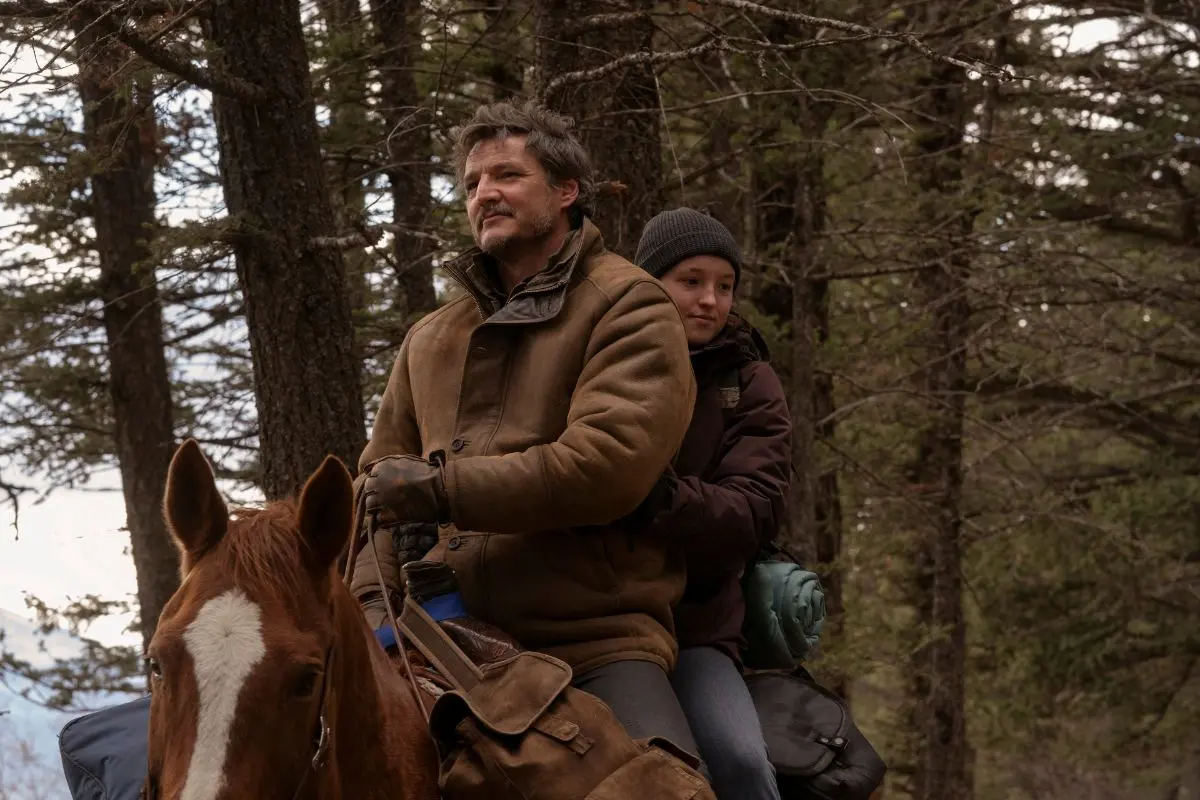
After the controversial 11th season of The Walking Dead and a lengthy list of movies alike, what else was left for the audiovisual industry to tell about zombie apocalypses? According to Craig Mazin (mostly renowned for Chernobyl) and Neil Druckmann (head of the video game developer Naughty Dog), a lot. They deemed a particular video game a subject worth the effort. The Last of Us, released in 2013 and born from a long-cherished intuition of Druckmann himself, combined high-tension combat against swarms of monstrous creatures with engaging human introspection and moral issues. Even though Sony initially picked the game for a movie adaptation, Mazin and Druckmann believed it was better suited for TV.
In the end, the show’s first season premiered on HBO in January 2023, marking the platform’s most-watched debut since 2010 after House of the Dragon. The leading performances of Pedro Pascal and Bella Ramsay, and the consistent technical execution captured both the audience and critics, earning the show 9 Emmy Awards out of 33 nominations. The second season, released in 2025 and starring Isabella Merced and Kaitlyn Dever in supporting roles, has raised more diverging opinions. Looking forward to the third season, The Last of Us has, until now, managed to revive a clichéd narrative trope, making of zombie invasion a means to explore how human relations can still make a difference at the end of the world.

A World Shaped by Infection: Surviving in The Last of Us
It is 2003, and the world is about to change forever. A brain infection caused by the Cordyceps fungus rapidly spreads from Indonesia to the whole planet, turning human beings into zombie-like creatures. Twenty years later, the pandemic has wiped out mankind, whose last representatives survive in militarized settlements trying to keep the “infected” out through strict isolation. Among them is Joel (Pedro Pascal), who lost his daughter when the infection broke out and now scrapes by smuggling goods to and from Boston with his partner, Tess (Anna Torv).
By a series of concurrent events, he runs into Ellie (Bella Ramsay), an irreverent teenager held captive by the Fireflies, an insurrectionary group resisting the ruling regime. The girl has been attacked by an infected individual, but she seems immune to the fungus. For this reason, the riots maintain that she could be a crucial resource in the search for a cure. Therefore, they persuade Joel to take Ellie outside the quarantine zone and to reach the Fireflies’ headquarters in Salt Lake City. The journey the two characters embark on will reveal an apocalyptic version of the USA, featuring warring factions, abandoned cities, and deathly threats at every turn.
From Video Game to HBO Series: Adapting The Last of Us
Transposing video games to big- and small-screen products can be a fairly tricky process. Many attempts of this kind, involving, for instance, Minecraft, Halo, and Tomb Raider franchises, yielded poor outcomes that failed to convey the spirit of the source material. This is not the case with HBO’s The Last of Us, widely endorsed by critics and described by Stephen Kelly (BBC) as “the best video game adaptation ever”. The appointment of Neil Druckmann, creator of the video game, as co-director and screenwriter grounded the adaptation in artistic and stylistic consistency. Indeed, the news that the Israeli will step down from the show’s artistic leadership – albeit keeping an unspecified supervising role – can only raise concerns about the upcoming third season.
Adapting the first part of the game series and the DLC Left Behind, the first season of the show “amplifies what a phenomenal piece of storytelling the game was in the first place” (RogerEbert.com), leaning towards “character and storytelling instead of action“. The development of the bond between Ellie and Joel is indeed the main addition to the original work, driven by the solid performances of Pedro Pascal and Bella Ramsey. Also, the TV format enabled creators to unravel the backstory of the protagonists and the history of the fungal infection – information that gamers could infer from diaries and letters scattered throughout the game universe – through dedicated flashbacks. A striking example is the episode Long, Long Time, which explores the touching side story of Bill (Nick Offerman) and Frank (Murray Bartlett) and was defined by Keith Phipps (Vulture) as “an extraordinary hour of television by any standards”.
Crafting the Apocalypse: Direction, Cinematography and Sound
As executive producer Craig Mazin highlighted, the shift in medium also allowed creators to break free from the constraints of a character-centred point of view. In some cases, the show accurately reproduces the gameplay; for instance, the first episode adopts the same subjective perspective as the game in the scene where Joel and his daughter drive across the zombie-infested city. Most of the time, though, directors range across different filmmaking techniques to modulate the feeling they convey to viewers. Long and establishing shots frame abandoned cities and buildings overgrown with vegetation, while close-ups create intimacy during introspective scenes.
Ksenia Sereda’s cinematography significantly contributes to the wide array of emotions and settings that Joel and Ellie experience, skilfully balancing color, depth, and light – an IndieWire article provides a thorough technical interpretation of this aspect. The use of light holds a particular importance as a symbol of hope, as clearly stated in the Fireflies’ often-repeated motto:
When you’re lost in the darkness, look for the light.
If flashback shots feature bright tones, the main storyline tends to use more desaturated, dull visuals, culminating in scenes where the only light slicing through the absolute darkness is the protagonists’ trembling flashlights.
Sound also played a decisive role in enhancing the immersiveness of the many environments in which the show unfolds, as well as in characterising the different types of infected. In addition, Gustavo Santaolalla and David Flaming cunningly linked the melancholic main title theme to the fact that Joel plays the guitar, one of the last gestures of humanity that still belong to him and that he will pass on to Ellie.

When Society Falls Apart: The Moral Landscape of The Last of Us
The opening scene of the show’s first episode is a variation on the game. It’s 1968, and two epidemiologists on TV are speculating about the fearful implications of a fungus spillover in humans. If a spectator in 2013 had considered this a purely fictional discussion, in 2023, just three years after Covid-19 emerged, the perspective of a global pandemic did not sound so whimsical. Of course, as many scientific blogs quickly clarified, the hypothesis presented in The Last of Us is unrealistic at best. Nonetheless, viewers inevitably feel familiar with the strict containment measures, deserted cities, and, above all, the progressive dehumanisation of society. The spread of infection, indeed, blows up all social structures and value systems, taking men and women back to a subsistence regime and bringing out their most primordial drives.
Ellie and Joel’s crossing of the US from east to west is actually a journey across an unknown territory, as it once was for the pioneers, where the last remnants of deviant and frightened mankind are often a greater threat than the hordes of infected. The struggle for survival is relentless and ongoing, and the characters face it without armour – not even plot armour. So, spectators would be wise not to grow too attached: no one has a guaranteed ticket to the final season.
Joel and Ellie: The Relationship That Holds The Last of Us Together
Leaving aside the technical aspects, what truly anchors The Last of Us is the story of how a teenager and a middle-aged man become essential to each other in a hostile, torn-apart world. Ramsay and Pascal, who already met on the set of Game of Thrones, make a couple with intense chemistry and convey a wide range of emotions to the audience, switching seamlessly from dramatic takes to dumb jokes. As the actors reported, the creators asked them not to play the video game to perform their roles without any bias or preconceptions. Indeed, their interpretation results in more nuanced and relatable characters: Joel is deaf in one ear and generally appears much more vulnerable and reflective of his age, while Ellie features a sassy attitude and alternates acts of recklessness and moments of fragility.
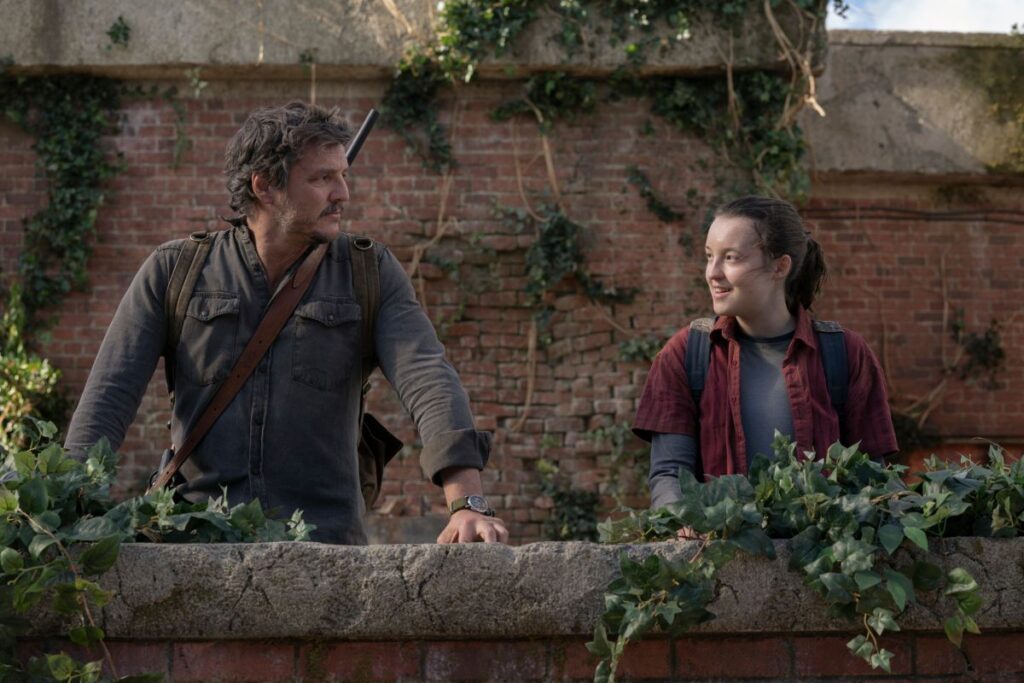
The long and treacherous journey across the country compels them to build a bond of trust and face their traumas. This is hard for Joel, who, after losing his daughter, gave up on living as well, but also for the girl, who, being born after the pandemic, never knew anything else than uncertainty and fear. Like Eleven and Hopper from Stranger Things, Ellie and Joel will face ups and downs as they develop a father-daughter relationship, giving their existence a new purpose: to look after each other and, if possible, save humanity from extinction.
Tag