 Collections
  Magazine
  Exhibitions
  ITA version












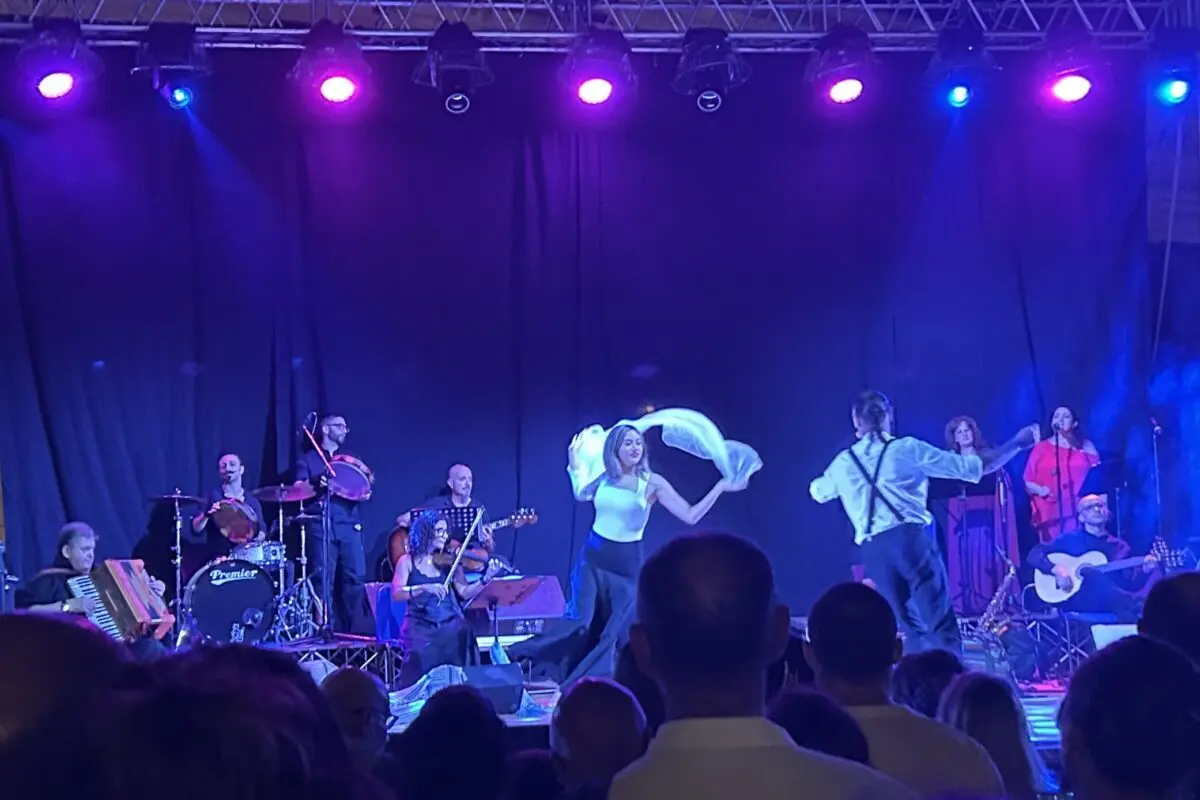
Pizzica means “stinging” in Italian. It refers to a tarantula’s bite that was believed to cause a cultural-bound illness called tarantism. This condition caused – especially in women – depression, catatonia, and physical pain. Dancing was the cure for it. Pizzica became the name for both the music and the dancing, and it spread widely across Southern Italy, especially in Salento (Apulia) and Basilicata. The exorcism meant becoming the tarantula and acting like it to shake off its venom.
Tarantism as an anthropological phenomenon
Anthropologist Ernesto de Martino wrote about tarantism in The Land of Remorse: A Study of Southern Italian Tarantism (1961; translated into English in 2005). This work is an ethnography, namely an anthropological treatise that combines theory with fieldwork observations. He found out that tarantism was most likely not caused by a spider’s bite. It was rather the manifestation of one’s own suffering. The word remorse (“rimorso”) has a double entendre in Italian; it means both “regret” and “bitten again”. What follows is the author’s explanation:
In the crisis of tarantism, there is instead an unresolved conflict in which the individual presence has remained imprisoned; lost to resolving remembrance, it returns cropping up as a closed, ciphered symptom removed from any power of decision or choice. In the crisis of tarantism, remorse does not lie in the memory of a wretched past, but in the impossibility of remembering it in order to settle it; masked as a neurosis, the remorse keeps the sufferer in its bondage.
The musical-chroreutical ritual is then an act of gaining back control over one’s own suffering.
Pizzica today: a living tradition in Southern Italy
To this day, pizzica has become a folklore element for some. Tourists consider it an exotic dance. For most of them, it is just the cherry on top of the cake made of food, trulli, olive trees, and beaches. However, pizzica has not stopped singing about poverty and work exploitation. Therefore, it still keeps its intended purpose: to point out society’s suffering.
One of the most famous examples of this contemporary twist on traditional pizzica is Caparezza‘s Vieni A Ballare In Puglia (“Come dance in Apulia”). Under the guise of a happy chorus, the rest of the lyrics call out death in the workplace. He points out that while tourists go there to have fun, there are people dying and the government does nothing about it. “Turista tu balli e tu canti, io conto i defunti di questo paese” (“tourist, [while] you’re singing and dancing, I’m counting the dead of this country”).
The band Taricata and its take on Pizzica
Taricata (it means “roots” in local dialect) is an ensemble from San Vito dei Normanni, a small town near Ostuni. Mario Leo, the oldest member and composer, is 92 years old! And he still sings with so much passion and energy. “Attacca, maestro!” (“Start, maestro!”) is his catchphrase.
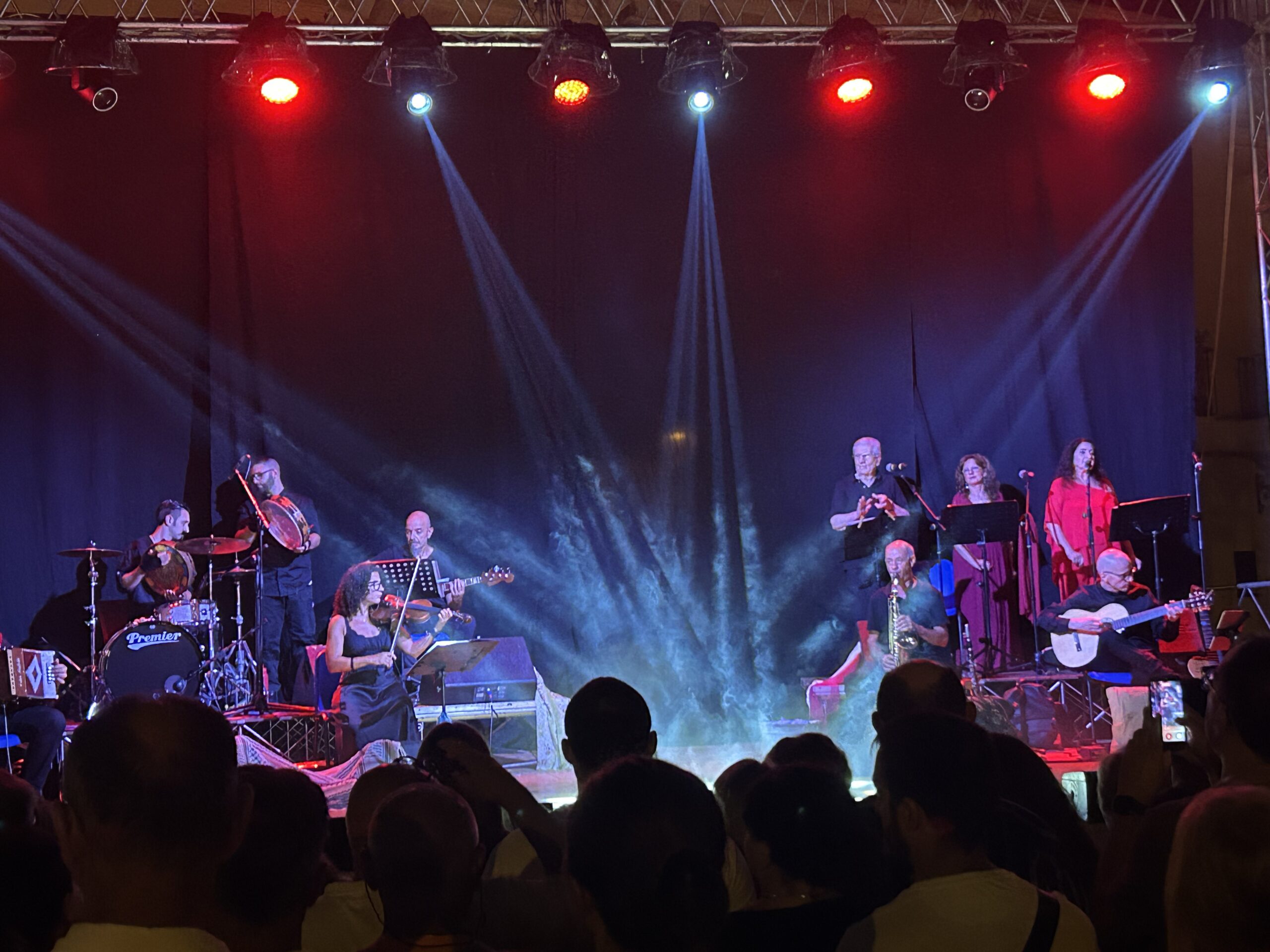
Band members: Mario Ancora (accordion), Mario Leo (vocalist and castanets), Silvana Gagliani (vocalist), Gina Ancora (vocalist), Stefania Ancora (vocalist and dancer), Fabio di Viesto (guitar), Daniel Bulgaru (clarinet and saxophone), Isabella Benone (violin), Francesco Salonna (bass), Andrea Platania (drums and tambourine), Francesco Massaro (tambourine)
Taricata was founded in 1977 and is a well-known ensemble in the entire Salento region. When Hypercritic’s writer attended their concert on August 15, San Vito’s square was crowded: their hometown loves them dearly. Beyond making locals proud, Taricata is a cultural association dedicated to keeping pizzica alive.
The ensemble covers both traditional pizzica songs and composes its own. Taricata shows that tradition still matters today. Roots are important, as the band’s name suggests. However, a tree grows upwards and uses its roots’ sustenance to become its own thing.