 Collections
  Magazine
  Exhibitions
  ITA version













All of Us Strangers Review | Andrew Scott and Paul Mescal’s Queer Ghost Story About Memory and Love


Runtime
Directed by acclaimed British filmmaker Andrew Haigh, All of Us Strangers (2023) is an intimate supernatural romance that explores the enduring power of love. Through themes such as family, love, grief, memory, and emotional disconnection, the filmmaker reflects on experiences that define what it means to be human. The result is a poignant queer fantasy drama that elegantly and melancholically walks the line between the present and the past, reality and imagination. The film suggests that taking refuge among ghosts can sometimes become the only way to survive.
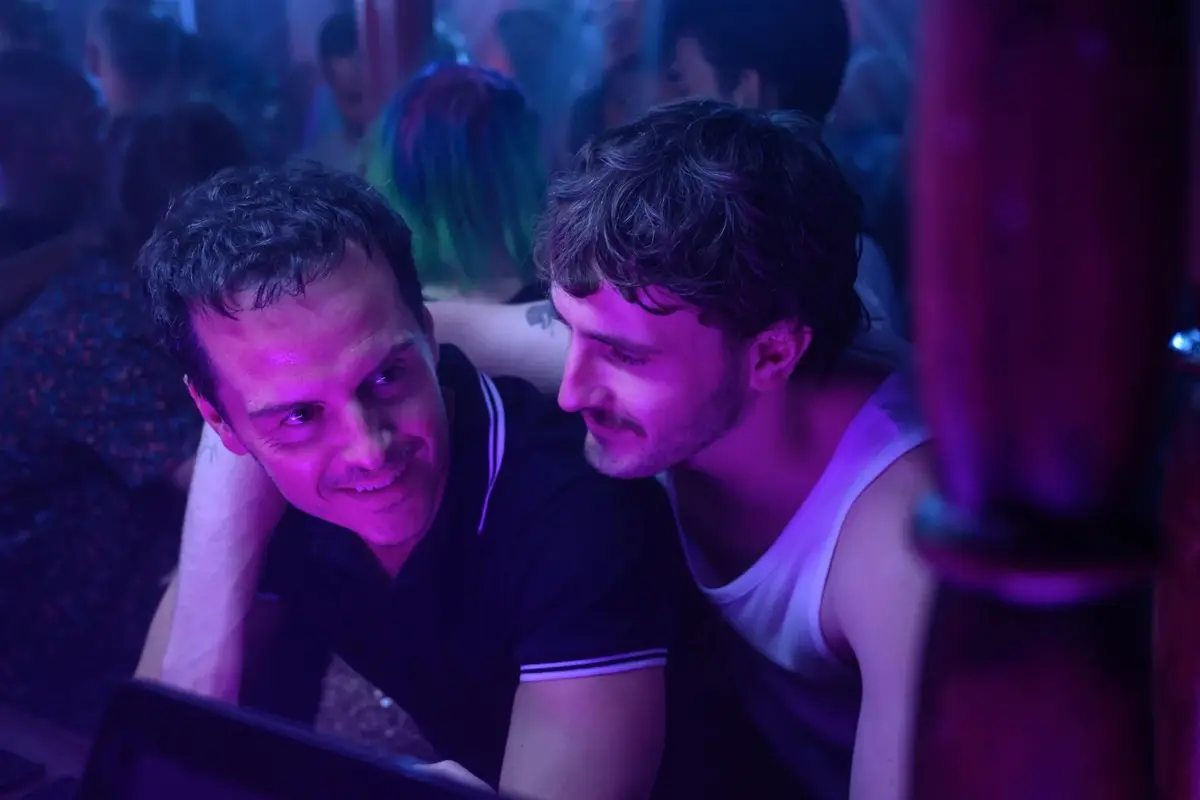
The film is loosely based on Taichi Yamada‘s 1987 novel Strangers. It is the second film adaptation of the novel, after the 1988 Japanese film The Discarnates. The film premiered at the 50th Telluride Film Festival. It tells the story of a lonely man, played by Andrew Scott, living in a new, deserted apartment building in London. His life changes when he meets a mysterious neighbor played by Paul Mescal.
Searchlight Pictures distributed All of Us Strangers, which was a huge hit with critics and audiences alike. The film won numerous awards and nominations, including a spot on the National Board of Review of Motion Pictures‘ list of the Top 10 Independent Films of 2023 and six BAFTA Award nominations.

- Overcoming Fears
- Between Neon Colors and Intimate Dialogues
- Club Music Meets Eerie Melodies
- Alone. Isolated. Estranged.
- In the Eyes of Others
- When “What If?” Becomes a Safe Harbor
Andrew Scott’s Adam and the Ghosts of His Past
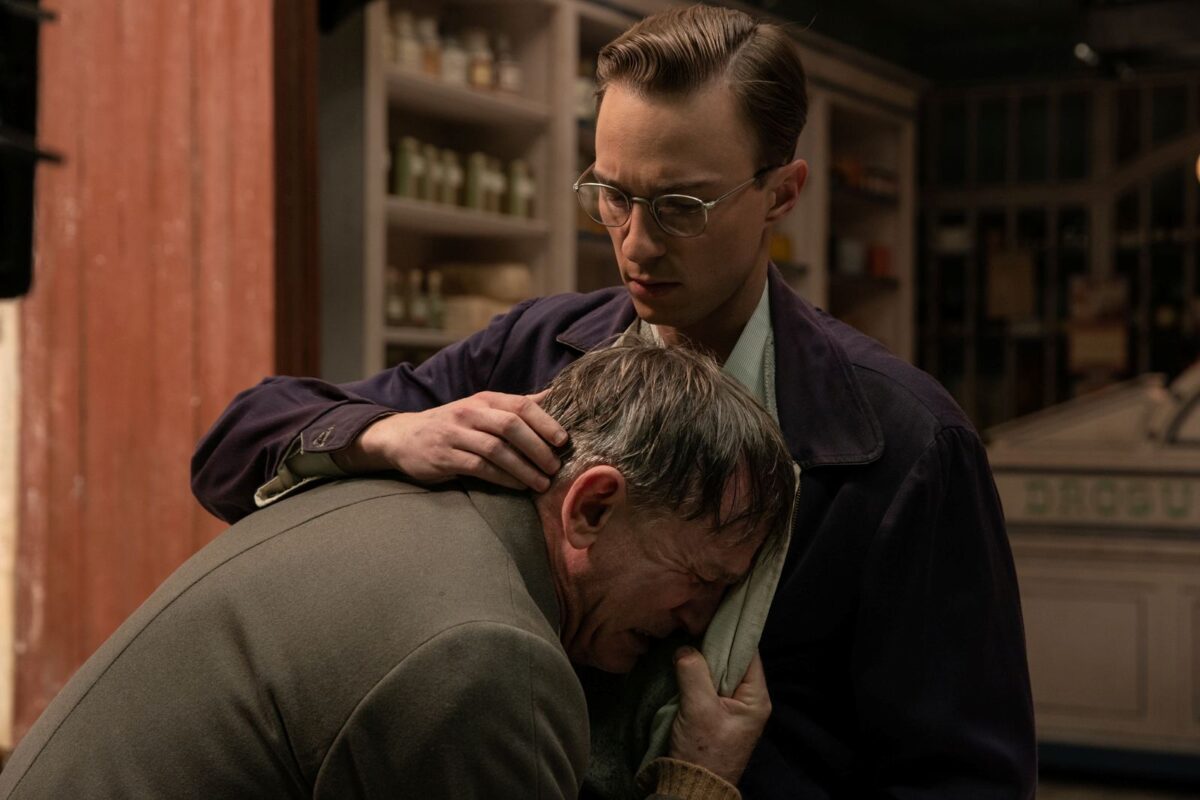
Adam (Andrew Scott) is a screenwriter in his forties, experiencing a creative slump. He leads a desolate, monotonous life in a creepy new apartment building in London. One night, Harry (Paul Mescal), a charming and enigmatic new neighbor, knocks on his door. Intoxicated and looking for company, Harry invites Adam to spend the night with him, but he refuses. Unable to stay home, Adam visits his old neighborhood and his childhood home, which is now empty. Inside, he encounters his parents, played by Jamie Bell and Claire Foy. They died in a car accident when he was just a child, and they stand there exactly as they did back then, as if not a single day had passed. From that moment on, Adam visits them several times.
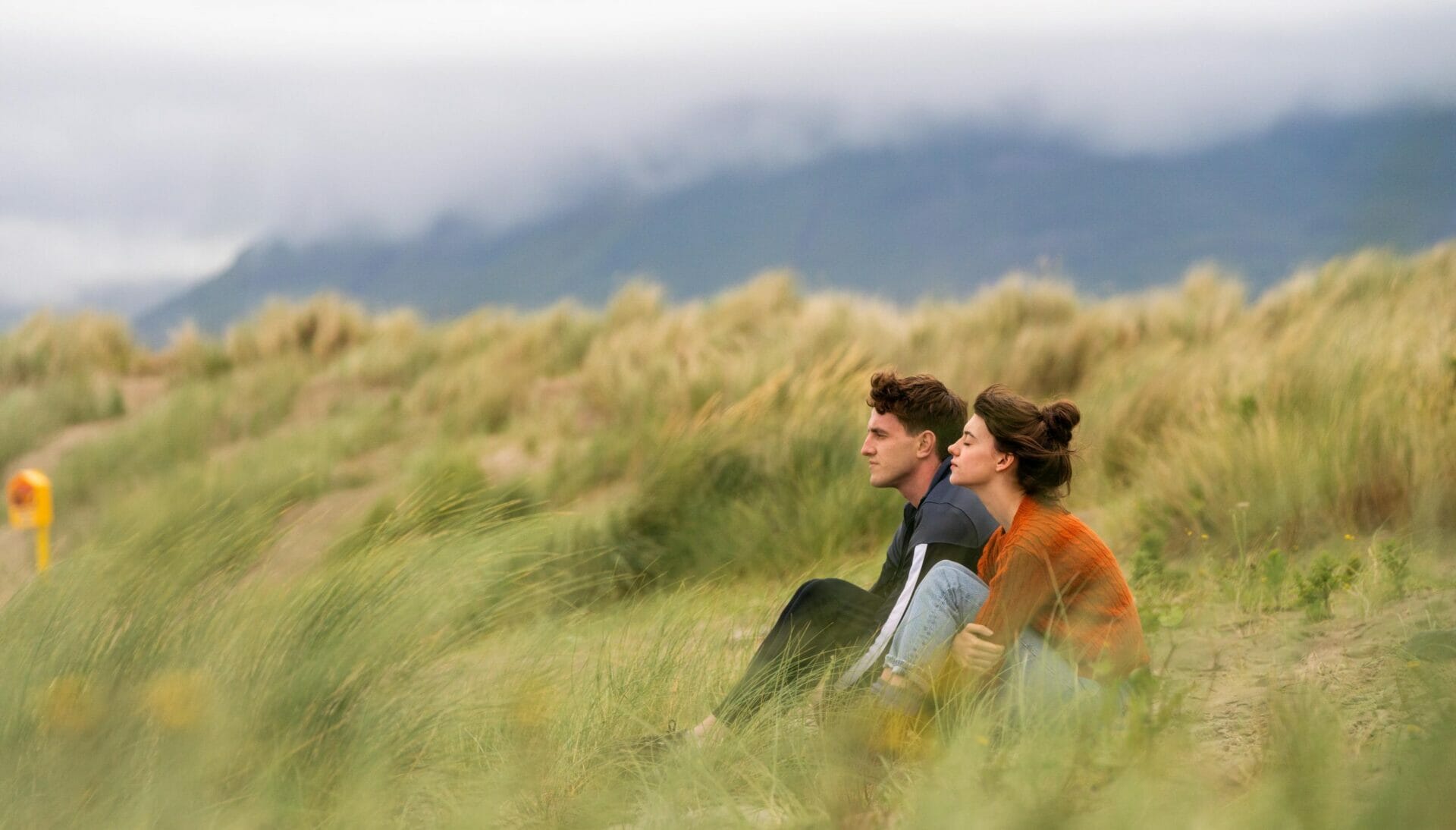
Back at his apartment, Adam runs into Harry again, and they end up spending the night together. They soon grow attached to one another. Their relationship gradually helps Adam lower the emotional barriers he has built over his life. He even finds the courage to come out to his parents and have an honest heart-to-heart conversation with them. His life finally seems fulfilling. Sooner or later, though, he’ll have to realize that he’s living inside a fantasy.
Between Neon Colors and Memories: The Visual Language of All of Us Strangers
Cinematographer Jamie D. Ramsay‘s work gave the film a distinctive aesthetic, for which he won the British Independent Film Award. His use of 35mm film, depth of field, analog and LED lighting, and tighter or longer lenses creates a suspended, dreamlike quality. The result evokes a constant sense of organic nostalgia through images that blend past and present, life and death, in a natural, harmonious way.
Colors mark the entrance into this dreamlike realm, hinting at Adam’s mental state and his path of self-discovery. Each shade fits the context. Neon colors and disco lights in nightclubs emphasize euphoria, while warm, nostalgic tones shrouded in ochre shadows evoke time spent with his parents. Scenes in Adam’s apartment are portrayed in cool colors, often shades of gray, reflecting Adam’s mood: of someone who feels dead inside, a passive observer of his own life.
There’s also a general inclination toward darkness, partly because many scenes take place after sunset. The Romantic poet Novalis associated the night sky with encounters between the living and the dead. Ramsey’s crepuscular lighting evokes that liminal space where recollection and reality quietly merge.
Ultimately, cinematography enables the director to shift between dimensions with remarkable ease. This lack of perceivable borders underscores Adam’s inability to escape his own mind and circumstances. The intimate narrative requires only four actors and a few extras, whose faces often remain out of frame. Furthermore, aside from the scene in which Adam meets Harry, he only interacts with those who no longer belong to the world of the living. The director’s choice serves as a metaphor for Adam’s struggle to establish a true relationship with the world.
From Frankie Goes to Hollywood to Ghostly Melodies: The Music of All of Us Strangers
Haigh considered the music so important that he refused to start production until he owned the rights to it. In an interview with IndieWire, he said that he had imagined the entire story with specific songs in mind, since All of Us Strangers also examines music’s ability to transport people back in time. The Power of Love by Frankie Goes to Hollywood was particularly meaningful to the British director since childhood, and he wanted the song to play a significant role in the film. Both this song and Always on My Mind by Pet Shop Boys shift from the diegetic to the non-diegetic dimension. They express a message while actively participating in the narrative and building the emotional landscape.
In addition to famous 1980s pop hits, the film features a haunting original score. Pianist and composer Emilie Levienaise-Farrouch collaborated closely with Haigh, spending time on the set. Although she drew inspiration from pop hits, her main goal was to compose melodies that reflected the story’s intensity. As she told Headliner Magazine: “I didn’t want to have a score that would be bombastic and huge and imposing. […] We wanted to manipulate the acoustic parts enough so that they were like a dream or a memory.”
Just as the human mind recalls fragments of a whole, Levienaise-Farrouch aimed to write a score without fully formed melodies. Rather, it had to sound like precise details that stick with the characters and the audience. She started her creative process with classical instruments, such as the piano, violin, and cello, but then added some synth sounds. She believed that only instruments played by humans could instill that kind of intensity; however, she also wanted an oniric, floating sensation.
Adam’s Isolation and the Loneliness of Queer Identity
In All of Us Strangers, Haigh crafts a fairly faithful adaptation of Yamada’s original story. Although some major plot elements have changed – in the novel, the protagonists are a man and a woman – Adam’s deeply authentic relationship with his parents remains consistent with the book and Eastern folklore. In those legends, spirits can drain one’s life force. Thus, Adam metaphorically loses his life by living mostly in a spectral realm. Beyond its ghost story, the film reflects one of the defining conditions of contemporary society: profound emotional isolation.
The phenomenon of hikikomori, which was once typical of Eastern societies, has spread worldwide. While it was originally associated with distress toward social rules and pressure, the situation has evolved considerably. Today, voluntary social withdrawal increasingly affects people of all ages, as they seek to avoid public judgment or to escape the demoralization of being unable to achieve personal goals.
In Adam’s case, however, emotional isolation is deeply tied to his difficulty accepting his homosexuality, and it reflects a widespread unease. Unable to confront the living, Adam finds emotional honesty only in conversations with the dead. He builds a wall around himself against anything that could harm him, thereby becoming increasingly alienated. Haigh’s portrayal of Adam’s evolution is true to life, rough, and tender, and it painfully illustrates the estrangement faced by the LGBTQI+ community throughout their lives. Set during the 1980s, the film also reflects the stigma and fears surrounding queer identity at the time.
When “What If?” Becomes a Safe Harbor: The Meaning of All of Us Strangers
Considered one of the best LGBTQI+ movies of the 2020s, All of Us Strangers is a dark, gut-wrenching love story, with a plotline that blurs reality and fantasy.
Despite being an English production, the narrative recalls the spirit of the original novel. Adam is almost a hikikomori and suffers from extreme, inescapable solitude. In Eastern legends, spirits are nearly tangible, and their interactions with the living are common. Adam’s inability to overcome his past leads him to fill his life with ghosts that make him feel accepted. However, by living in his mind, he becomes incapable of distinguishing between existence and the visions he has created for himself.
The director crafts a surreal atmosphere for his characters that also keeps the audience on the edge between two realms, which fits the plot perfectly. The director confirms his ability to collaborate with actors, keeping the focus on human bonds, communication, inner life, grief, and how people cope with it, even when they must embrace their darkest memories.
Sometimes, surviving means taking refuge in a place that exists only in memory. A place where those we have lost still seem capable of loving us, and reminding us who we once were. In All of Us Strangers, ghosts are fragile shelters built by grief. And like every shelter, they can protect us only for so long.
Tag