 Collections
 Magazine
 Exhibitions
 ITA version




The Spiral by Paolo Strippoli: The Horror Hidden Inside the Italian Family


Runtime
There is a certain comfort in believing that horror exists elsewhere. When danger comes from outside, we can run from it and find shelter beyond its reach. But what happens when fear takes hold of our own homes? Locked doors offer no protection when tension seeps into our closest relationships. The ground beneath our feet begins to crumble, leaving us nowhere to hide. In his latest work, The Spiral (L’Estranea), Italian filmmaker Paolo Strippoli locates horror within the domestic sphere, asking, “How much harm can we inflict while mistaking it for love?” The Spiral premiered in competition at the 83rd Venice International Film Festival and earned a ten-minute standing ovation.
The director often brings deeply personal yet universal dilemmas to the screen. Looking beyond the happiness people carefully display, he uncovers the pain and darkness hidden beneath. This unspoken suffering slowly eats away at us and can turn pain into self-destruction. This time, Strippoli examines the cost of social status and recognition, exploring how far people will go to maintain appearances, even at the expense of their families. At the same time, he exposes an all-too-Italian form of provincialism.
The Spiral now carries Italy’s hopes in the race for Best International Feature Film at the 99th Academy Awards. By capturing audiences’ and critics’ attention, Strippoli may help put Italian horror back on the map.

- The Spiral: A Family’s Descent Into Madness
- The Devil in Disguise: Horror and Social Prejudice
- Italian Horror and the Hypocrisy of Bourgeois Society
- The Symbolism of The Spiral: Water, Religion and Inherited Trauma
- The Social Critique Behind Paolo Strippoli’s The Spiral
- The Spiral and the Future of Italian Horror
The Spiral: A Family’s Descent Into Madness
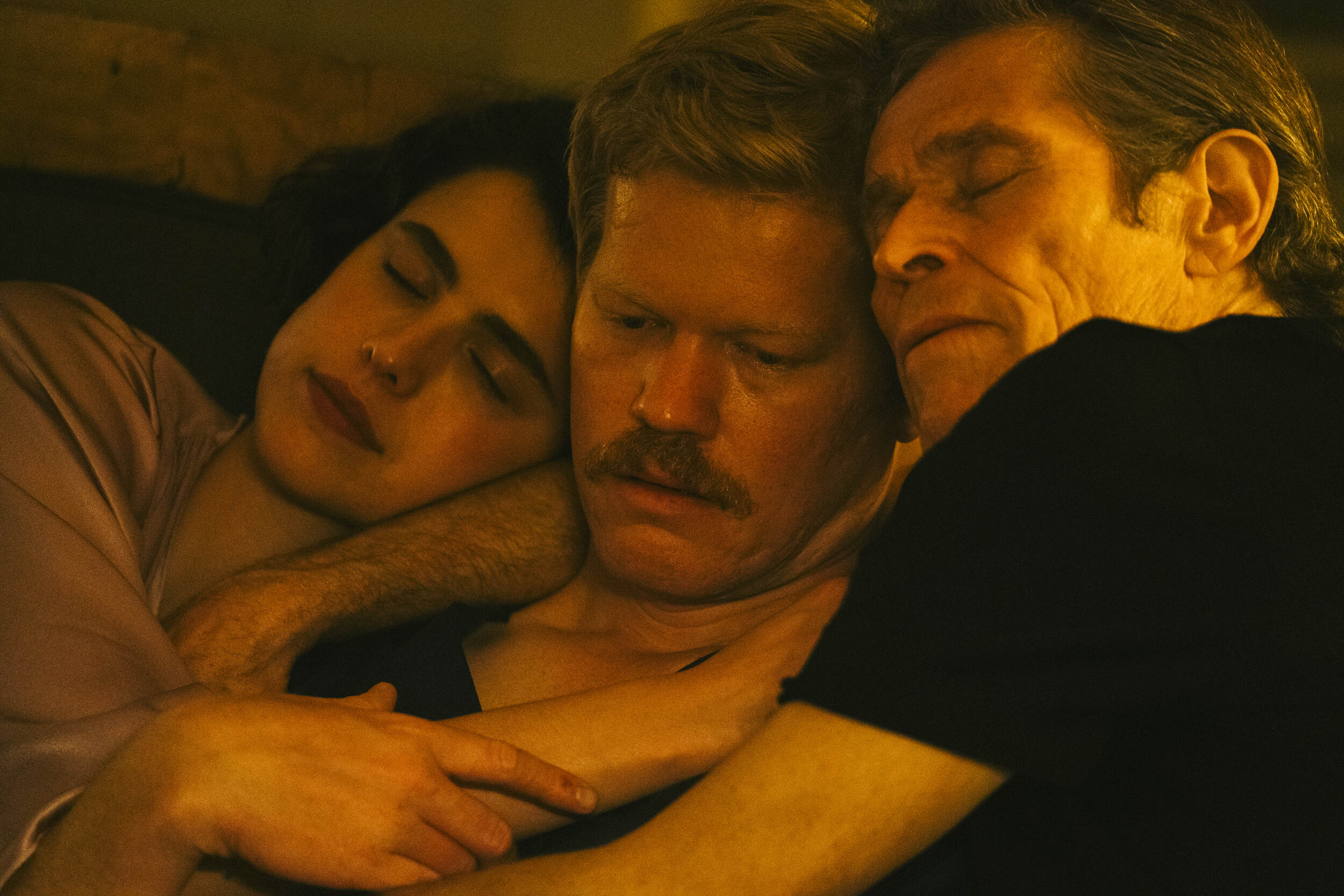
Starring Jasmine Trinca, Valeria Bruni Tedeschi, and Adriano Giannini, The Spiral portrays the gradual disintegration of an apparently picture-perfect family. The story spans from 1999 to the present day and unfolds across four compelling chapters, framed by a present-day conversation between a mother, Anna, and her daughter, Alice.
Following Flowing (2022) and The Holy Boy (2025), The Spiral concludes Strippoli’s Rain Trilogy. It brings back the natural element laden with symbolism that has accompanied his filmmaking throughout his career, with its intensity shifting according to its narrative significance. The story opens with an apocalyptic flood sweeping across Rome as Anna shows up unexpectedly at her daughter’s doorstep. She wants to tell her a different, darker version of their family’s history, even at the risk of being dismissed as delusional.
Alice, now a young woman in her twenties, embodies everything her mother never expected. Portrayed by Romana Maggiora Vergano, who rose to fame in Paola Cortellesi’s There’s Still Tomorrow (2023), Alice represents a generation determined to break free from inherited patterns of behavior and trauma that never quite heal. Alice has built a life far from her family, but the past refuses to let her go. It comes knocking at her door, forcing her to confront her roots and, more painfully, the person her mother always wanted her to be—a promise she never fulfilled.
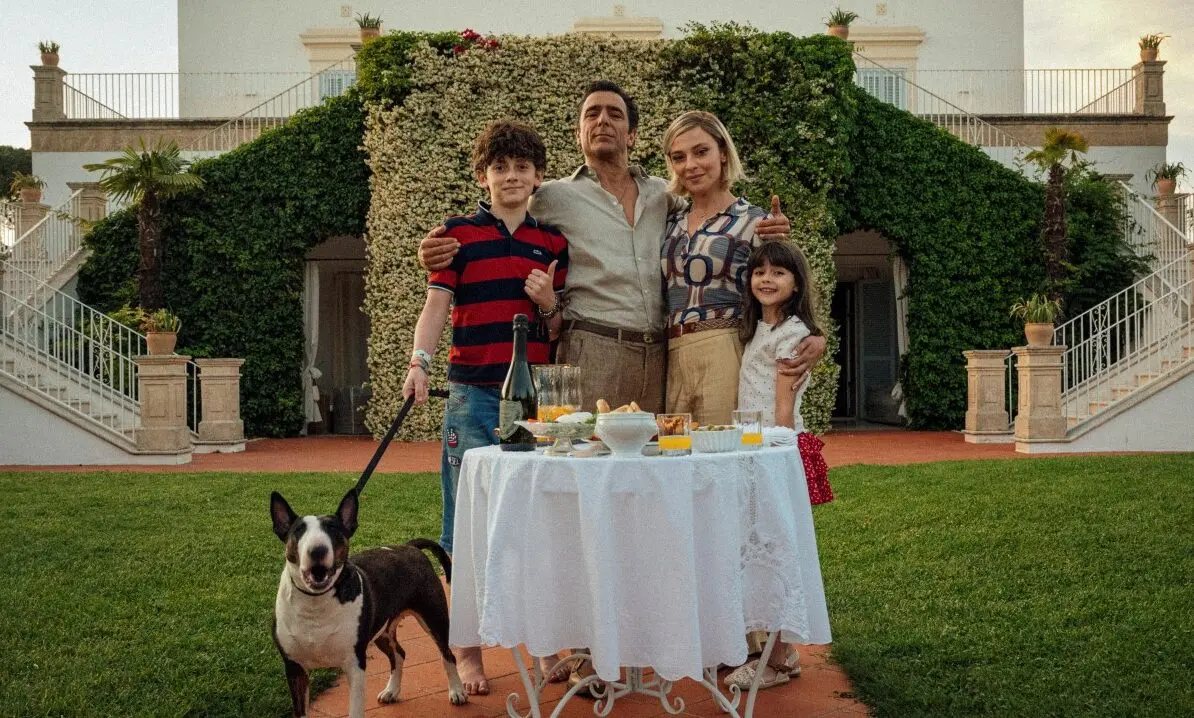
And so the story begins. It is 1999, and the Colonnas are a well-respected, middle-class family in Bari, a southern Italian city. Everything changes, however, during their mid-August Ferragosto celebration at their lavish villa. The all-white party is tainted with blood, forever staining the family’s carefully cultivated image.
Alice and Tobia are the Colonnas’ greatest source of pride. Alice is a promising young television star, and Tobia is a rising football talent, seemingly destined for success. However, when the family dog, Zuppa, nearly tears Alice’s leg apart, the cracks in the family’s seemingly perfect life become impossible to ignore. For the vain matriarch, as Variety describes Anna, this is more than a family tragedy; it signifies the end of her dreams of social prestige for her children. Then, a mysterious stranger appears with a chilling proposition: choose which child to sacrifice. Faced with this impossible decision, the mother begins to spiral into madness.
The Devil in Disguise: Horror and Social Prejudice
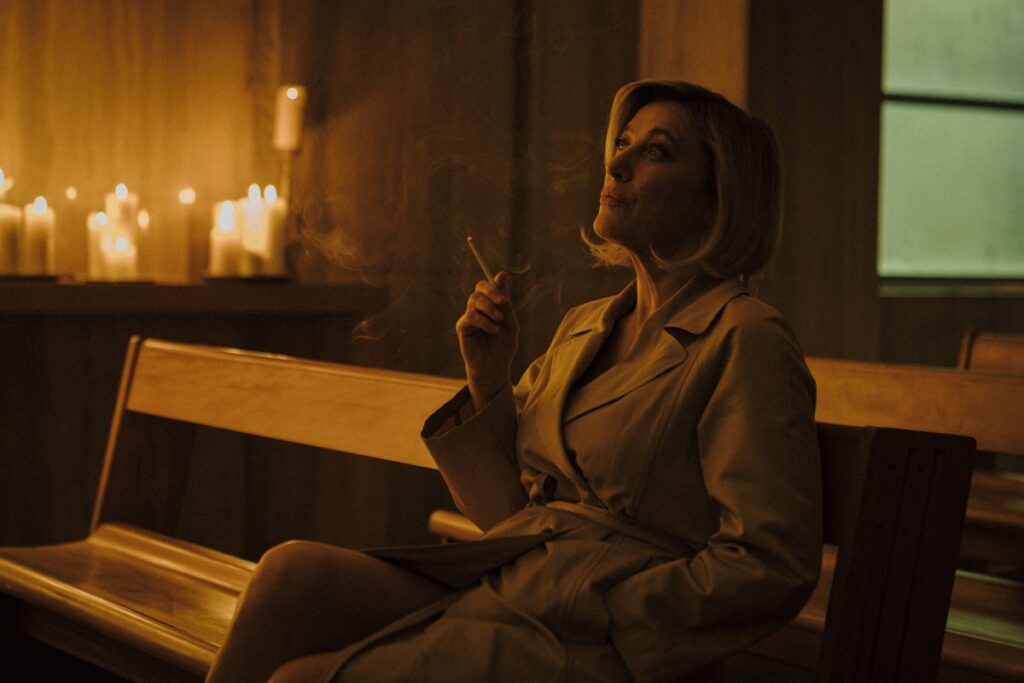
The stranger (Valeria Bruni Tedeschi) plays a twisted game of life and death. With every choice, she raises the stakes, pushing the family toward an unimaginable moral breaking point. In an interview with Screen Week, Strippoli admitted that he needed an actress who could deliver the most horrifying lines with an almost aristocratic lightness and a peculiar charm that Bruni Tedeschi seems to embody effortlessly.
With her long trench coat and cigarette perpetually burning between her fingers, the stranger is unmistakable. She announces her arrival by striking a match, then makes a theatrical, ritualistic gesture with her hands to begin her cruel game. She strikes a chord with Anna (Jasmine Trinca), a charismatic businesswoman whose confidence largely depends on appearances.
But as the world she has painstakingly built begins to fracture, Anna’s composure wavers, making her susceptible to manipulation. Caught between the devil in the trench coat and the darkness of her own mind, she gradually loses her grip on reality and, ultimately, herself. Trinca captures Anna’s gradual unraveling, both physically and psychologically. As her thoughts fragment, her appearance grows increasingly disheveled. The actress’s lost gaze reveals a woman desperately struggling to regain control of her carefully orchestrated life.
In terms of acting, the film clearly favors a theatrical style. The performances feature exaggerated facial expressions, dramatically delivered lines, and lengthy, declamatory monologues. This approach aligns with the film’s overall aesthetic, which embraces an elaborate visual and narrative language. However, the film’s excessive theatricality sometimes threatens to undercut the gravity of its subject and render its emotional core less convincing. Consequently, the main characters appear almost caricature-like, rigidly confined to their archetypes rather than emerging as nuanced individuals.
As for Anna and her husband, Walter (Adriano Giannini), they bring out the worst in each other. They mistake love for control and resent their children whenever the kids fail to live up to their expectations. Tobia bears the brunt of their frustration when he inexplicably begins gaining weight. His changing body makes him an easy target for school bullies. No longer the promising young athlete he once was, Tobia becomes a source of disappointment for Walter. Consumed by his obsession with appearances and social approval, he fears how others might perceive his family and makes Tobia pay the price.
The Spiral confronts deeply rooted forms of body fascism, distorted body image, homophobia, and racism through the dysfunctional microcosm of the Colonna household. These prejudices often persist beneath the polished surface of bourgeois families. The film exposes how these attitudes shape family relationships and dictate who children are expected to become. It also explores the generational trauma these attitudes leave behind and the desperate lengths the next generation will go to escape it.
Italian Horror and the Hypocrisy of Bourgeois Society
The sun-scorched landscape of southern Italy in 1999 is essential to the film’s distinctiveness. Drawing on a world deeply familiar to him, Strippoli holds up a mirror to the society he grew up in, exposing its ugliness and hypocrisy.
The Spiral is filled with pop culture references, making it easier for audiences to see themselves in the characters and the world they inhabit. The Ferragosto party, the unmistakable Nokia cell phone, and the song Narcotic by Liquido ground the story in a recognizable Italian cultural landscape and remind us that the Colonnas are not an isolated case. Their obsession with control and social respectability reflects a much broader mentality that may be closer to home than we would like to admit.
The Spiral reaches one of its most striking moments when Anna furiously drives through a jubilant crowd of soccer fans on the historic night Italy won the 2006 World Cup. In this evocative visual sequence, production designer Marcello Di Carlo seems to recreate the imagery of Eugène Delacroix’s painting Liberty Leading the People. A man, his entire body painted in the colors of the Italian flag, climbs onto Anna’s car and waves the Italian flag above the crowd. The scene captures a theatrical display of national pride and a shared sense of belonging, even in a more profane context.
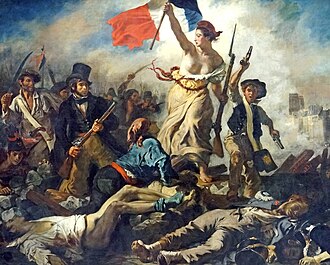
However, against the backdrop of Anna’s backstory, the episode takes on a somber undertone, exposing the antithesis between the collective euphoria and her private turmoil. The comparison must consider one fundamental difference. Strippoli’s scene lacks the original’s revolutionary fervor. It trades dynamism for a grotesque spectacle of tightly packed bodies where collective celebration borders on chaos.
With its exploration of family dynamics and the darker side of human nature, The Spiral evokes Yorgos Lanthimos’s The Killing of a Sacred Deer (2017) and Jordan Peele’s Get Out (2017). Like Lanthimos, Strippoli introduces an enigmatic outsider whose supernatural bargain turns parental love into sacrifice and moral responsibility. The connection with Peele, however, lies in the film’s social commentary. Like Get Out, The Spiral exposes the violence lurking beneath seemingly ordinary families. While Peele addresses the persistence of racism in American society, Strippoli focuses on social conformity and the prejudices passed down through generations that continue to shape Italian family life. Despite their different cultural backgrounds, all three films use horror to reveal disturbing truths beneath the familiar.
The Symbolism of The Spiral: Water, Religion and Inherited Trauma
Paolo Strippoli explores the inevitability of fate and the cyclical nature of inherited patterns by making the spiral the central symbol that condenses the narrative’s deepest message. The spiral conveys that some behaviors, beliefs, and traumas are never truly overcome; instead, they grow stronger as they pass from one generation to the next. The spiral reminds Anna that she cannot escape her suffering. No matter how hard she tries to untangle the knots of her life, she always ends up back where she started: trapped in an unwinnable game of chess against fate. Romana Maggiora Vergano reflects on this theme, suggesting that Anna’s illusion of control is not only deceptive, but also spirals into self-inflicted torture that drives her to madness.
Together with cinematographer Cristiano Di Nicola, Strippoli turns the spiral into the film’s underlying geometry, integrating it into the narrative’s structure. As the story plunges deeper into the Colonna family’s downward spiral, each chapter grows shorter, and its rhythm becomes increasingly frantic. The spiral also takes on a tangible visual presence in the camera’s circular movements during tense moments, the ants marching around their nest, the licorice wheels Anna keeps eating, the spiral symbol on the fire extinguisher, and, finally, the tornado looming over Rome during the film’s climactic moment of reckoning.
Water emerges as another defining element of Strippoli’s visual language. It appears in various forms, from trickling down the sink and gradually turning into blood to increasingly torrential rain. Instead of washing away the characters’ sins, water brings their deepest wounds to the surface, forcing them to confront truths they can no longer ignore.
As discussed, the story’s driving force is the stranger, who orchestrates a final judgment and assumes an almost divine authority. Blurring the boundaries between religion and the paranormal, the mysterious woman exploits Anna’s deeply ingrained Catholic guilt. It is no coincidence that many of their encounters take place inside churches. Traditionally associated with confession and redemption, these sacred spaces become unsettling places that expose the characters’ selfishness and hypocrisy. Before the Madonna, Anna’s prayers reveal her true priorities: she asks not for her family’s well-being, but for the return of their flawless public image, no matter the cost.
Although critics have praised Strippoli’s premise and the film’s message, some argue that his reliance on recurring narrative devices and heavy-handed symbolism risks wearing thin, weakening the film’s meaning. At its core, horror relies on a relatively straightforward narrative structure. Experimenting with the genre is an exciting way to explore its possibilities and push its boundaries, especially in the contemporary Italian film industry where horror is uncharted territory. However, if experimentation distracts from the story’s central focus, it may be worth taking a step back and removing unnecessary elements to deliver a cohesive, impactful message.
The Social Critique Behind Paolo Strippoli’s The Spiral
Drawing on classic horror conventions such as eerie sound design, unsettling imagery, and psychological disintegration, the film transforms domestic spaces into sites of terror. Like Bong Joon-ho’s Parasite (2019), Strippoli invites the audience to watch, with satisfaction, as a wealthy, well-established family falls apart. However, while Parasite centers on material collapse and the fragility of class privilege, The Spiral focuses on the disintegration of the conformist values upheld by bourgeois society.
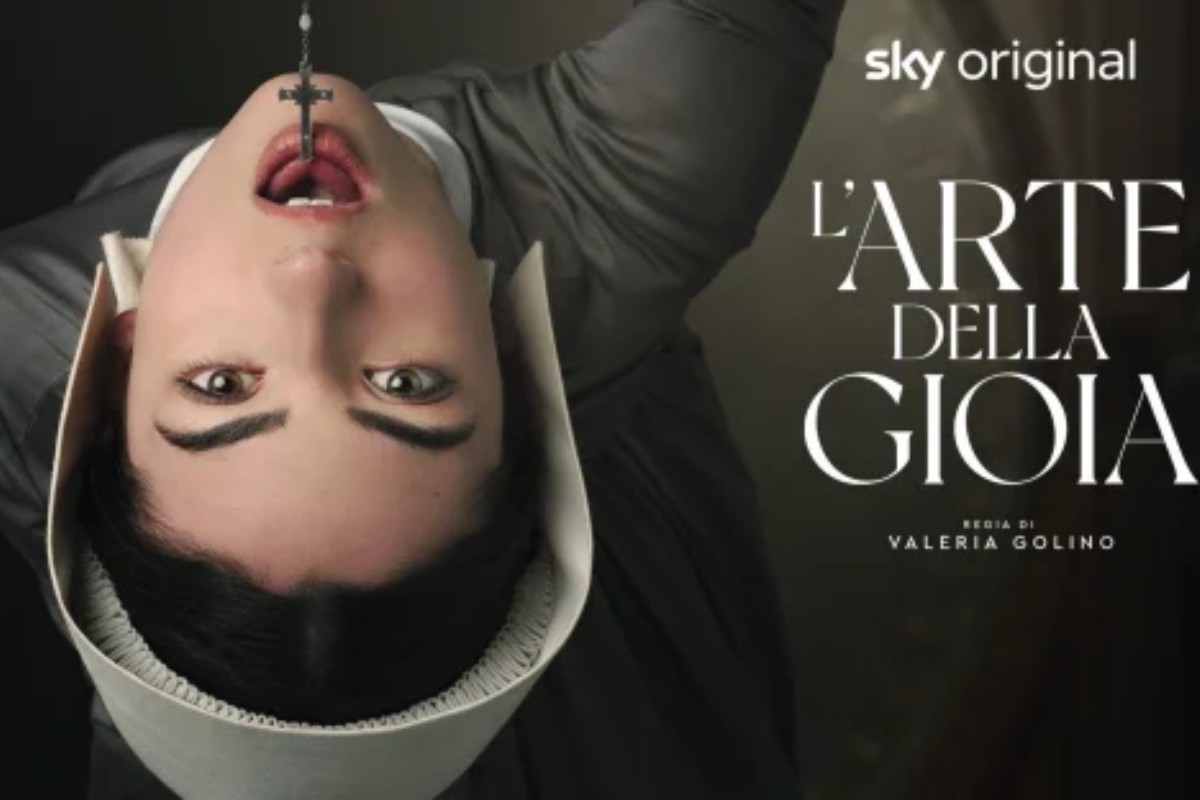
Strippoli and Salvatore De Chirico craft a script that is all the more unsettling because it blurs the boundary between reason and madness, grounding even its most chilling developments in realism. As the film’s torn poster suggests, The Spiral is shaped by recurring dichotomies. The blinding light and expansive spaces of the past give way to a suffocating, grayscale present that traps the characters in an increasingly claustrophobic world. The film brings together excess and intimacy. Using the collapse of a bourgeois family, it explores a much broader erosion of values for which we are all, in some way, responsible.
Strippoli clearly tells a story close to home, drawing on his surroundings and the social dynamics he has witnessed. This gives the film a distinctive character and a recognizable sense of place. However, his attempt to find a place in the international horror scene pulls him in different directions. This genre has indeed gained considerable momentum in popular culture in recent years, thanks in part to production companies such as A24.
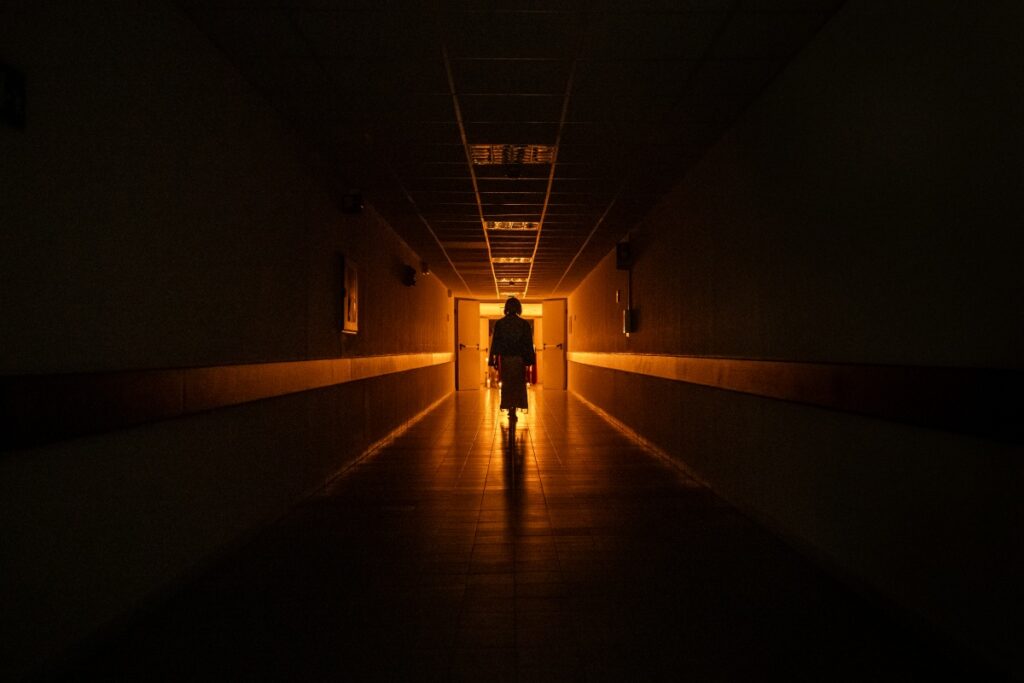
Yet, to appeal to an audience beyond Italy, he occasionally introduces elements that feel forced. Sudden jump-scare cuts, the screen turning red, and the camera’s spiral movement, which seems to wink at the iconic Saw franchise, are all familiar horror devices. However, used sparingly, they feel out of place in a film that otherwise aims to be an Italian family drama. Drawing on international horror traditions can enrich a film, but only if it weaves them more organically into its visual language. This would complement Strippoli’s stylistic identity without overshadowing it.
The Spiral by Paolo Strippoli“Respira a fondo, respira piano,
se chiudi gli occhi il male è lontano.
Uno, due, tre, dieci, cento,
è già finito questo momento.
Non ho paura, non posso star male
tutto passa perché deve passare.»“Breath deep, breath slow,
if you keep your eyes closed, the pain must go.
One, two, three, ten, a hundred,
this moment has already absconded.
I’m not afraid, I can’t feel blue,
this too shall pass, as it’s meant to do.”
The characters cling to this mantra, lulling themselves into believing that if they refuse to confront uncomfortable truths, those truths will eventually disappear. Yet, as the film repeatedly shows, the opposite is true. When left unaddressed, darkness slowly festers and eats away at everything we are. Strippoli offers no absolution for our contradictions. Nor does he let us look away. Instead, he invites us to acknowledge them, suggesting that the only way to overcome our darkest impulses is to first find the courage to face them.
In this respect, Valeria Bruni Tedeschi has found a deep connection with her character. The actress admitted that she is no stranger to forbidden, ugly, and misguided thoughts. She described portraying the demon as cathartic. The Spiral has a similar effect on its audience. Initially, viewers may easily condemn the characters and their choices. However, once the credits roll, that initial judgment gives way to more uncomfortable questions: What values do we hold onto, how far are we willing to go to defend them, and are they worth defending at all? By holding up a mirror to our contradictions, Strippoli makes it difficult to distinguish the characters’ flaws from our own.
The Spiral and the Future of Italian Horror
Although some critics have described Strippoli’s directorial style as rough around the edges, the 36-year-old has established himself as one of the most promising voices in Italian cinema. With each new film, he moves closer to his ambition of bringing elevated horror back to the Italian film landscape. The Spiral is not without its flaws. At times, it feels uneven in terms of both structure and style. Nevertheless, the film remains an impressive achievement for a filmmaker who is still finding his voice.
By leaving critics and audiences wondering whether the mysterious stranger is a physical entity or the personification of the devil on our shoulder, Strippoli delivers a film that demands long-overdue self-reflection. At a time when our moral compass seems increasingly adrift, both individually and collectively, The Spiral challenges us to reconsider the values that guide our choices, shape our relationships, and ultimately define our society.
Tag