 Collections
  Magazine
  Exhibitions
  ITA version












W.I.T.C.H. and the Birth of Euromanga | The Magic That Made Italian Comics a Global Phenomenon


Year
Length
By
In Italy in the early 2000s, there weren’t many comics for young girls to read. Young girls’ only options were entertainment gossip magazines; comics were mostly ‘for boys’. But that wasn’t actually the case, since girls did read comics. Then, the W.I.T.C.H. came out. When the first issue of W.I.T.C.H. was published in 2001 by Disney Italia, nobody expected great success, because it was believed that the audience would be minimal. Just three years later, however, that same comic series sold around 20 million copies worldwide each year.
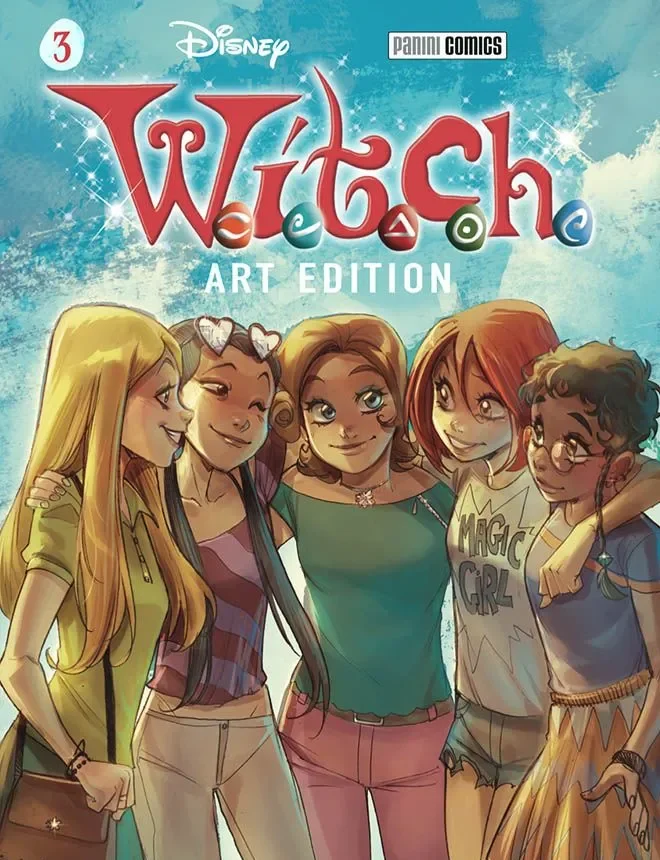
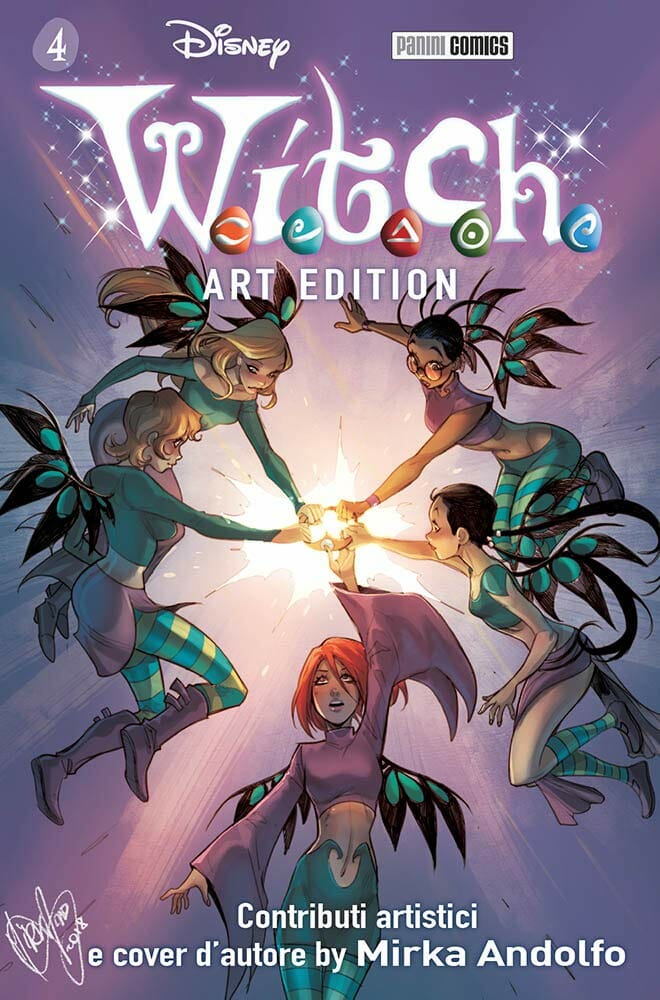
Created by Elisabetta Gnone and illustrated by Barbara Canepa and Alessandro Barbucci, W.I.T.C.H. follows five teenagers with magical powers: Will, Irma, Taranee, Cornelia, and Hay Lin. Mixing a coming-of-age story with fantasy elements, W.I.T.C.H. became representative of a generation.
Female Representation and Identification in W.I.T.C.H.
W.I.T.C.H. is not only about magic. It has played a fundamental role, as in works such as Harry Potter and Sailor Moon, which the Italian comic series drew inspiration from. But the main force of the comics was the possibility of identifying with the protagonists. The girls of W.I.T.C.H. are five girls, just as its readers could be. With problems at school or with the boys or with parents who, as every teenager would say, “don’t understand them”.
The protagonists are not stereotypically beautiful girls. There is actually a beautiful, blonde, and blue-eyed girl, but she’s just one of them, and she hides deep insecurities. There is the girl with glasses, the tomboy, the clown who seems not to take anything seriously, and there are people of entirely different builds and even ethnic groups. The W.I.T.C.H. group was a bit like the Spice Girls of the comics. Anyone could identify with them.
Adolescence, Friendship, and Growing Up Through Magic
The main plot is about their missions and adventures. Each of them controls a natural element (water, fire, earth, air), while only one, Will, is the guardian of the heart of Kandrakar. Kandrakar is a parallel dimension placed at the center of Infinity. Here live the wise men led by the Oracle. He is in charge of assigning the girls their missions to keep the peace between the worlds of the universe.
But actually, other than that, the topics ranged from bullying to self-discovery to accepting one’s differences with the rest of the world and one’s identity. The very first issue opens with Will, the eternal tomboy, who believes her style is no longer right after seeing her new schoolmates. She is disheartened, as her body hasn’t developed yet and therefore has no curves to show. Silly problems, apparently, but to a fourteen-year-old girl, they were as insurmountable as putting a conqueror of worlds back in his place.
More universally essential issues were also addressed, including love, contextualized sexualization, and even mourning: it’s the case of the deaths of Yan Lin’s grandmother or Will’s pet dormouse. All this, together with magic, is W.I.T.C.H., a product that accompanied its readers in their growth.
The Birth of Euromanga: How W.I.T.C.H. Redefined Comic Art in Europe
Aside from themes and audience, W.I.T.C.H. was an innovative comic in its drawing style. As a matter of fact, W.I.T.C.H. quickly became a great exponent of a rising and new kind of comics: the Euromanga.
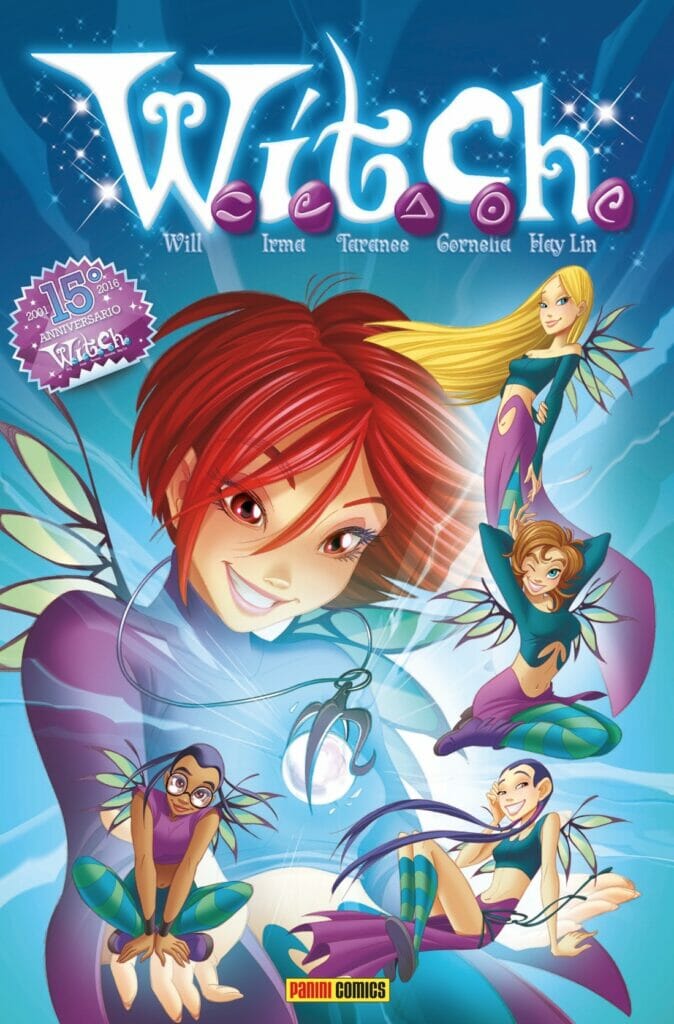
Sailor Moon was a clear source of inspiration, as well as other shōjo manga, especially those of the subgenre mahō shōjo manga, that combine fantasy, comedy, and romance elements. In Japan, there have been female-oriented comics for years, with a well-established readership. For this reason, they have been seen as a model for this new type of Western product. To be respectful towards Japan, where manga is an integral part of the culture, the European cartoonist decided to create a new name for the genre, such as Euromanga, rather than just borrowing the Japanese term.
Barbucci: “Initially, I had proposed girls in a steampunk, military style: I was a big fan of Tank Girl by Hewlett and Martin. Elisabetta Gnone told me that as a concept it was too “masculine” and proposed the five witches: from there we directly reconnected to the manga. In Disney Italia there were those who were afraid that, given the theme, it would lead to Satanism, but their biggest fear was manga-style eyes!
Canepa: For them it was inconceivable to think of publishing a comic even vaguely inspired by manga, which at the time were their direct competitors on the newsstands.”
Alessandro Barbucci and Barbara Canepa for the Heroica website
Barbucci and Canepa, illustrators of W.I.T.C.H., were among the leading exponents of Euromanga abroad as well, with their comic Sky Doll. And, also with Francesco Artibani, an author in turn of W.I.T.C.H., they adopted, working together, the Euromanga style for another Disney comic saga, Monster Allergy.
The Legacy of W.I.T.C.H.: A Creative Revolution by Disney Italy
More than twenty years have passed since the release of the first issue of W.I.T.C.H.. Years during which W.I.T.C.H. became a cross-media project, with the publication of novels, the creation of a television show, and countless merchandising items.
It is a series that has managed to tell something new by reaching a huge and, above all, transversal audience because reading the adventures of the five Witches were not only girls but also many boys.] The themes and language of W.I.T.C.H. were understandable in every corner of the world and the international success of the series proved it.
Francesco Artibani, author of W.I.T.C.H., for Nerdpool
At the far end of the 1990s, not even Disney would have expected such a triumph. After the success of PKNA and Mickey Mouse Mystery Magazine, Disney was looking for something to be exclusively for girls. But the focus was more on stories with Daisy Duck, which would’ve hardly anchored a pre-adolescent audience to the pages.

Thanks to its authors’ commitment and constancy (and a little intrigue), W.I.T.C.H. has not featured anthropomorphic animals but real girls to identify with. And, from only nine numbers that it should have been at the beginning, it has instead traveled around the world and contributed to making the history of a comic genre for kids.
Tag