 Collections
  Magazine
  Exhibitions
  ITA version













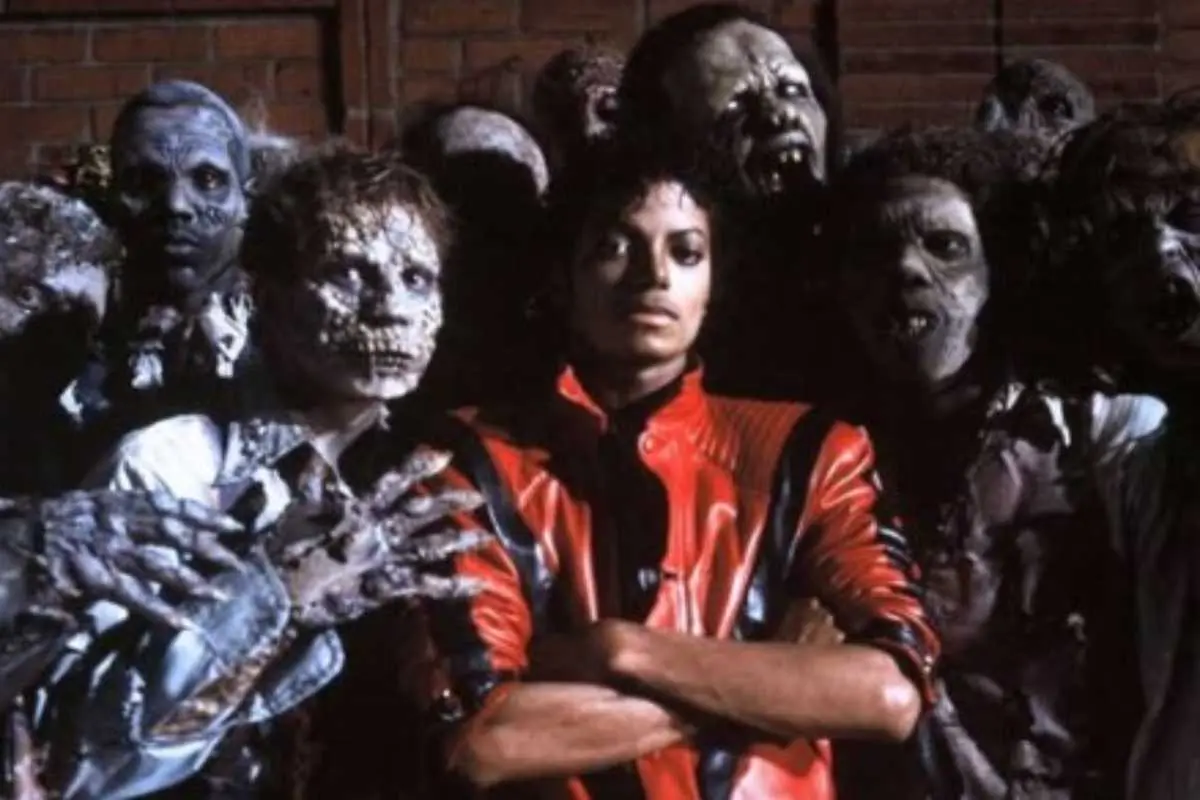
The Michael Jackson biopic, released in theaters this weekend, has rekindled the nostalgia for millions of MJ fans. His biggest hits are once again among the most-streamed songs on Spotify’s overall chart. But the story of the artist’s greatest moment also reveals how the pop star revolutionized the music video landscape.
In its first weekend in theaters, Michael has already made history. It broke all biopic box-office records, grossing over $217.4 million globally. Last November, when the Michael Jackson film trailer was released, it garnered over 116 million views in just 24 hours. It was already clear to critics that Jackson’s legend lives on even after his death on June 25, 2009. In the biopic, the American star is played by his nephew Jaafar Jackson.
How Thriller changed the history of music videos
The making of the Thriller music video is re-enacted as one of the few satisfying moments of the movie. In 1982, Michael Jackson decided that music wasn’t enough; videos were to become an unmissable part of his storytelling. Thus, Jackson revolutionized the history of music videos, bringing them into the world of cinema and rewriting their language and narrative.
Thriller remains the best-selling album of all time, selling over 100 million copies worldwide. But that’s not all: the album features three songs that are among the most-streamed in music history, three songs made even more famous by the music videos they inspired. Thriller, Beat It, and Billie Jean broke all the molds: music no longer merely accompanied the images. The music interacted with the scenes, redefining the roles of the artist, extras, director, and all the other actors involved in creating an imaginary world.
Behind the scenes of Thriller, the music video released by MTV
The story of the Thriller music video is worthy of a film on its own. The video’s broadcast on MTV was a momentous event. It marked a turning point for music, but also sent an important global message. For the first time, MTV broadcast the music video of a black singer. Michael Jackson overcame a crucial cultural barrier.
In the Michael biopic, Michael, accompanied by his agent, asks the head of his record company to persuade MTV to broadcast the Thriller music video at all costs. Jackson didn’t want promotion, interviews with journalists, or press conferences. He was convinced that simply broadcasting the video would be enough. The artist’s vision, once again, had proved prophetic. MTV aired it in December 1983: it doubled the album’s sales.

From Thriller to Black or White: Jackson videos with John Landis
When the King of Pop decided his music videos needed a cinematic twist, director John Landis was already well-established. The meeting between Jackson and Landis immediately lit a spark. Jackson, a horror fan, had been captivated by the movie An American Werewolf in London. Thriller was partly inspired by Landis’s film.
For Thriller, the Chicago director personally selected the makeup artists and choreographers. All were professionals with extensive film experience, some of whom had won Oscars. Thriller was Jackson’s first short film, made for approximately $550,000. The music video has racked up over half a billion views on YouTube. It was the first music video to be inducted into the National Film Registry.

Jackson and Landis worked together again in 1991, with Michael now a major pop star. The occasion was the filming of the music video for Black or White. Another 11-minute short film, it cost approximately $4 million. Distributed in 28 different countries, it reached half a million viewers. It remains one of the most viewed music videos of all time.

Scorsese, Fincher, and Spike Lee: the great directors who worked with Jackson
Bad (1987) is another of Michael Jackson’s greatest short films: 18-minutes long, it was inspired by a true story. Set in Brooklyn and Manhattan, it cost over two million dollars to make. For this film, Jackson worked with one of the greatest directors in cinema history: Martin Scorsese.
The music video also features a young Wesley Snipes as the leader of a gang of kids who oppose Jackson. The iconic scene of the short film is MJ’s dance routine in the Brooklyn subway. The artist, also famous for his style, wears a black jacket with buckles: it would become an iconic piece of clothing in the 1980s.

Remember the Time, the video with John Singleton
In this new, nearly 10-minute short film, Michael Jackson breaks another barrier. For the music video for Remember the Time, he chose to work with one of the youngest directors of the time, already highly regarded. It’s 1992. John Singleton, 24, is one of the few Black directors. Singleton agrees to work with Jackson but insists on an all-Black cast. Jackson, who is very sensitive about this issue, readily agrees.
An epic story is born, set in Egypt, with Eddie Murphy as the pharaoh and Iman as the queen. Magic Johnson also stars. It was a very delicate time for the NBA star, as he had recently revealed he was HIV positive. The video has nearly 1 million views on YouTube alone.

Who Is It: a short film directed by David Fincher
The choice of directors for his short films was never a coincidence. As with the creation of his songs, Michael Jackson was obsessive in his study of music and lyrics. The same is true for his short films. For Who is It, he chose to work with David Fincher, a director famous in the 1990s for his musical films. He would later become one of the world’s greatest directors.
Fincher pioneered a new narrative language in Jackson’s videos. The story, too, is different from his previous ones. This mini film, which lasts over six minutes, revolves around a love story gone wrong. A man discovers that his wife is leading a double life: she’s an escort. The video was shot in Neverland, and the lead actress is Yasmin Le Bon.

They Don’t Care About Us with director Spike Lee
A complex and controversial song, They Don’t Care About Us speaks out against the violation of human rights. There are three versions of the short film that accompany the song. The first was shot in Brazil, between the Santa Marta favela in Rio de Janeiro and Salvador, despite government resistance. The aim was to show the world the poverty and hardship of life in a harsh land obsessed with drug traffickers and criminal bosses. The second version was filmed in a prison and contains original footage of police repression of African Americans and many other instances where human rights were violated.

The third version, entrusted to Spike Lee, combines images from the video in Brazil and those from the prison. This final version also includes images of the Black Lives Matter movement. There was a deep bond between Spike Lee and Jackson. The director remembered the artist on many occasions after his death. He paid tribute to him with several documentaries on Jackson’s life and work: Bad 25 in 2012 and Off The Wall in 2016. Lee always remembered Michael as a “funny person.” From his days with the Jackson 5 to his rise to global stardom, Jackson always repeated one phrase: “I want to bring peace and joy into people’s lives.”

Jackson’s love of life was born from the suffering his father, the Jackson 5’s manager, subjected young Michael to a harsh and violent life. The artist always protected the child within him. He often reminded fans in interviews: “Follow your dreams. Whatever your ideals, you can become whatever you want.”