 Collections
  Magazine
  Exhibitions
  ITA version













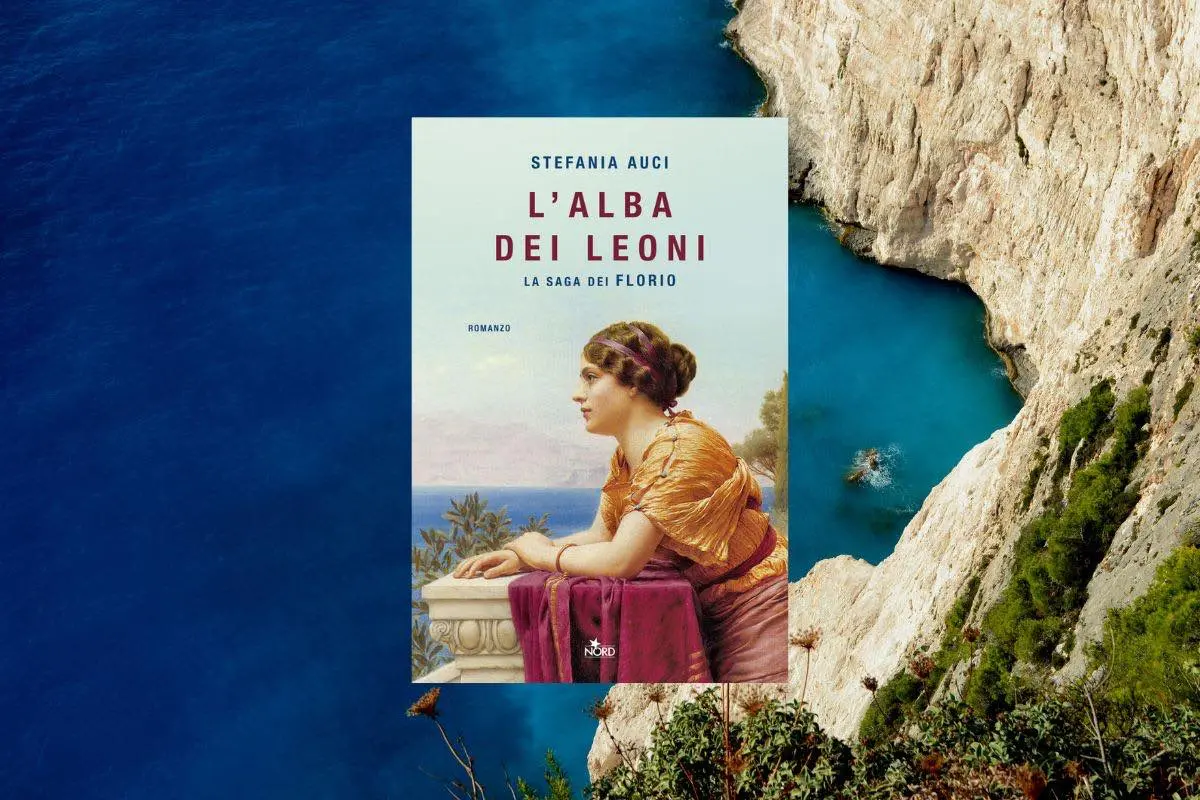
At the historical literature festival in Legnano, Italian author Stefania Auci discussed L’alba dei leoni, the new novel that expands the Florio saga, made internationally famous by The Lions of Sicily.
There comes a moment at literary festivals when literature stops being just something on the page and becomes voice, presence, something embodied. It happened at La storia tra le righe, the historical literature festival that from April 10 to 12, 2026, animated the Visconti Castle of Legnano. Among the most anticipated events of the festival’s fourth edition was the conversation with Stefania Auci, who arrived at the Palacastello on Saturday, April 11, to present L’alba dei leoni, the newest chapter in her saga devoted to the Florio family.
From Sicily to Disney+: The Success of The Lions of Sicily
Born in Trapani and raised between Trapani and Palermo, Stefania Auci taught for years before becoming one of the most recognizable voices in contemporary Italian publishing. Her breakthrough came in 2019 with The Lions of Sicily, the novel that turned the story of the Florio family into a publishing phenomenon with more than a million copies sold, international translations, and a television adaptation distributed by Disney+.
With L’alba dei leoni, a prequel exploring the family’s origins in Bagnara Calabra, Auci moves even further back: before the economic rise, before the legend. In conversation with journalist Adriano Monti Buzzetti, the author builds a narrative that integrates historical research and storytelling, never fully separating the two.

The Origins of the Florio Dynasty
“At the core, women were the backbone of this family,” Auci says at one point. The sentence lingers in the room, reframing a perspective already familiar to readers of the saga. If in the earlier novels the Florios’ entrepreneurial ascent was the visible engine, here the deeper structure shifts elsewhere: to figures like Rosa, rooted in their historical context yet far from passive. Women fully embedded in a patriarchal system, and yet capable of exercising a quiet, emotional, decisive form of power, one that does not assert itself openly, but holds things together.
The novel, Auci explains, begins from an absence: a lack of sources, contradictions in the historical record, and the void left by traumatic events such as earthquakes, most notably the devastating 1783 earthquake in Calabria, which erased entire archives, both material and symbolic. That is where writing intervenes: not to invent, but to interpret, to fill gaps without distorting them. “In the previous books, sources were more numerous and often aligned,” she notes. “Here, that wasn’t the case. It required a different kind of work.” One more exposed to uncertainty, and therefore more open to interpretation and to the possibilities of storytelling.
L’alba dei leoni is, first of all, a story of origins: a world of farmers and artisans from which figures like Vincenzo, Paolo, and Ignazio emerge. Men who share a common trait, a strong sense of work and duty, especially in the first generation, but who interpret success in different ways. At a certain point, being capable is no longer enough; one must own, accumulate, and demonstrate. Wealth, “roba“, as Giovanni Verga, a leading figure of Italian Verismo, might call it, becomes the means of entering the world before it becomes a means of mastering it.
Southern Italy Through the Story of the Florios
At this point, the Florio saga intersects with something broader: a historical moment in which social mobility becomes possible. The arrival of Napoleon, the rise of figures such as Joachim Murat, the son of innkeepers who would become King of Naples and a marshal of the Empire, political transformations, and the opening of new opportunities even in a South often described as static. Auci returns to this idea with insistence: “Discovering that the South was not as closed as we think” was, for her, one of the most striking revelations of her research. The Florios become emblematic of this shift, but not unique: a crack in the dominant narrative.
There is also entrepreneurship, of course. Intuition. The ability to recognize opportunity where others see limits: from tuna preservation to the trade in sumac, from forward contracts on Marsala wine to the creation of a shipping company. Less sheer enterprise than a combination of commercial instinct and an ability to read one’s time. And, as Auci suggests, a quality that fades in later generations, when accumulated wealth ceases to be a conquest and becomes an inheritance.
How Stefania Auci Discovered the Florio Family Story
The conversation with Monti Buzzetti leaves room for more personal questions. Where did this story begin? “A slow kind of falling in love,” one might say. The idea of a family saga, suggested by a close friend while Auci was working on another project that did not convince her, and initially inspired by The House of the Spirits by Isabel Allende, gradually intertwines with her discovery of the Florios, until it becomes a narrative necessity.
L’alba dei leoni came later, while the television adaptation was already underway. Auci recalls having the intuition during filming in Favignana. But writing it proved more difficult: fewer sources, contradictory documents, entire parts of history erased, even physically by the eighteenth-century earthquake that devastated Calabria. “It required much more intuition,” she admits, “but it remains a true story.”
Why the Florio Saga Still Resonates Today
Then comes the inevitable question of decline. Auci does not reduce the Florios’ fall to a single cause: individual mistakes, economic shifts, an inability to adapt, and even poor personal choices all play a role. There is no moralizing reading here, but rather an attempt to restore complexity to a story that, precisely because it is true, cannot be linear.
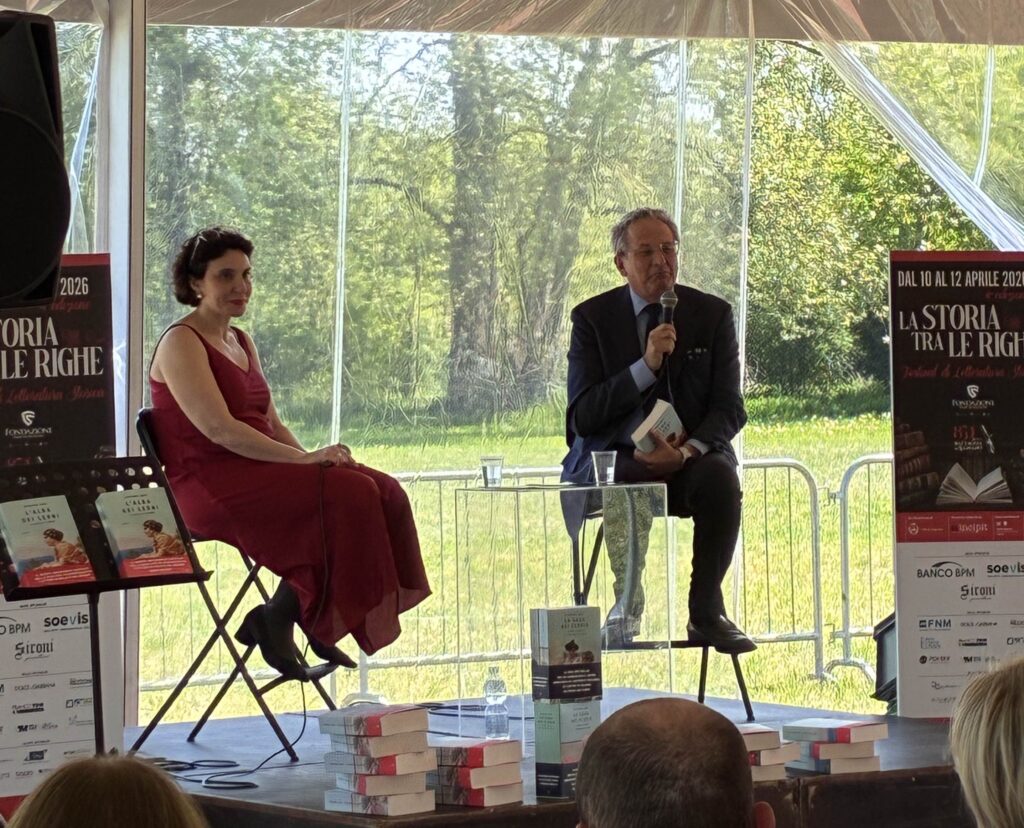
Toward the end of the conversation, a theme emerges that runs through the entire saga and may explain its contemporary resonance: the search for one’s place in the world. The century does not matter. The young Florios, with their restlessness, feel closer to today’s young people than one might expect. “The need to belong,” Auci says, “is still very strong.” Alongside it, the desire to break away from one’s origins, from family.
The festival concluded on Sunday, April 12, as part of a program tied to the celebrations marking the 850th anniversary of the Battle of Legnano. But something from that encounter remains: the sense that history, when told this way, is never entirely past. It becomes another way of speaking about the present and continuing to question it.