 Collections
  Magazine
  Exhibitions
  ITA version












Attack on Titan | Hajime Isayama’s Manga on Power and Freedom


Year
Length
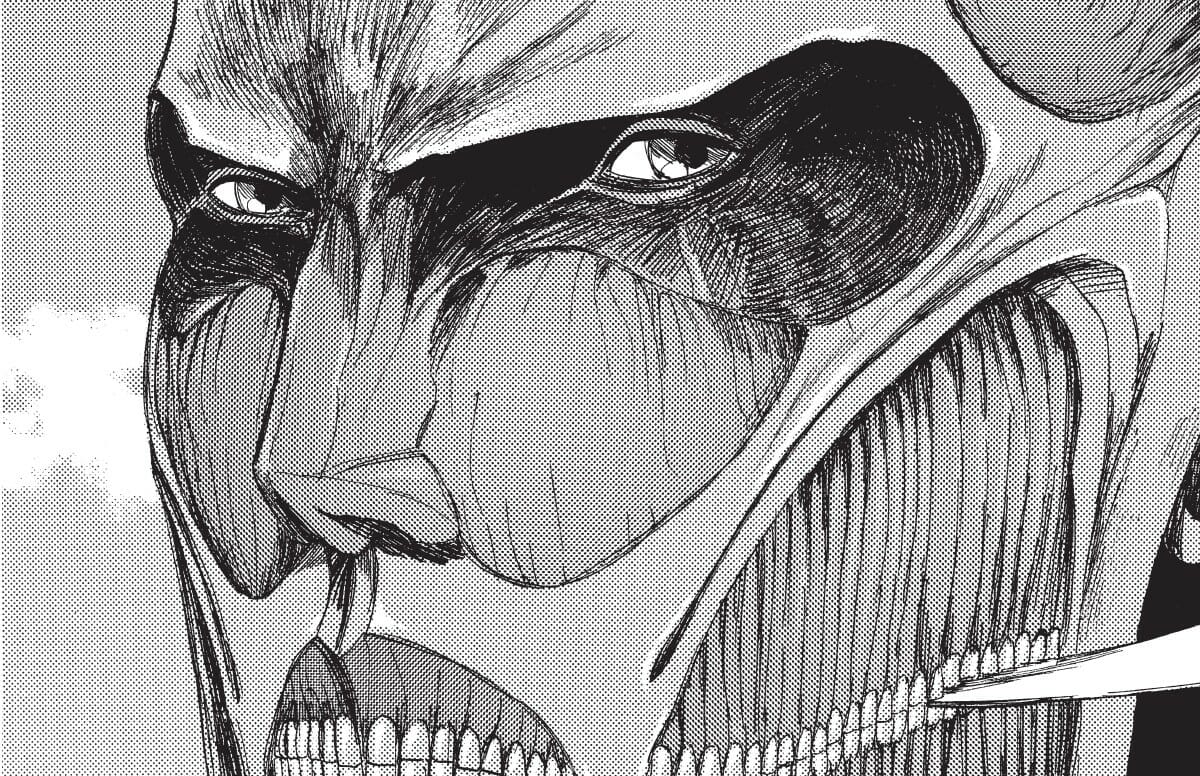
The protagonists of Attack on Titan are forced to live within walls, which symbolize the story. They immediately hint at the underlying themes, namely freedom and the power needed to obtain it. Hajime Isayama‘s manga immediately departs from the canon of teen comics, making room for complex themes and a gory atmosphere. The main characters, Eren, Armin, and Mikasa, soon find themselves caught up in the struggle for life between humans and titans, creatures that live outside the walls and prevent people from leaving. This conflict soon becomes a metaphor for the senselessness of evil and the consequences of war.
Eren and Friends: Confronting Life and Threats
Mankind almost faced extinction at the hands of the titans and now lives within three enormous city walls. When the menace strikes again after one hundred years, Eren decides to join the Survey Corps and kill all titans to avenge his mother. This military unit is the only one crazy enough to leave the city in order to fight titans and gather information about them.
First published in 2009, the manga Attack on Titan has been a worldwide phenomenon. It soon topped the sales charts and, also thanks to the animated adaptation (begun in 2013), it reached a huge audience. Technically, Attack on Titan targets young people, as do classics such as Dragon Ball, Naruto or One Piece. The main characters are teenagers facing their fears and looking for their place in the world. But the reader soon discovers a story pervaded by a sense of terror, immersed in a militarized setting and full of gory, political, and nuanced contents.
The Moral Weight of the Titans
The story starts with essential, but dramatic questions. Why does mankind have to live under the terrible threats of titans? What is the meaning of this absurd suffering? Aside from the danger they pose, titans symbolize an inexplicable evil that blindly strikes everyone. The constant presence of death and the rawness of the scene where titans devour humans is to be found in a few other manga, like Gantz.
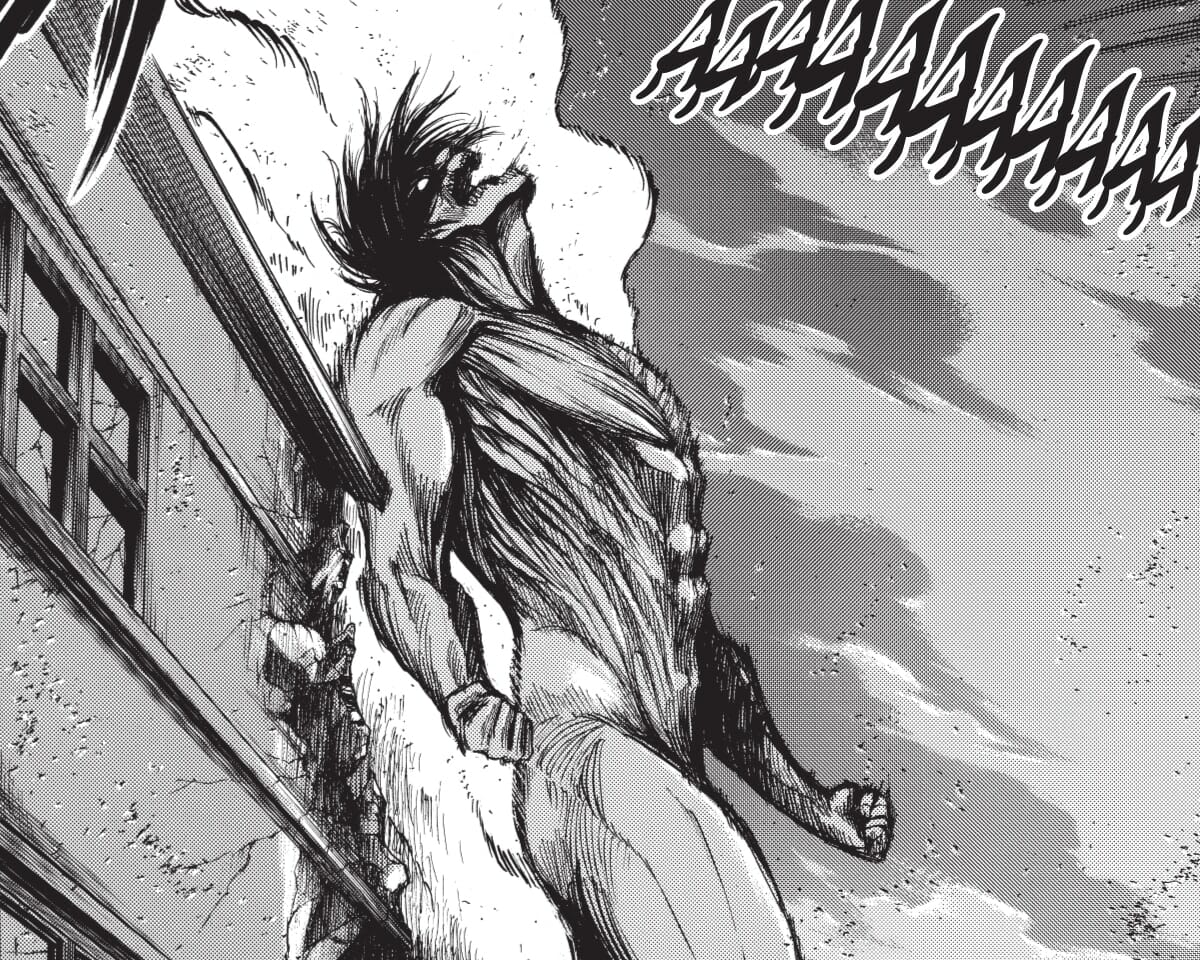
But there is also a mystery that drives the plot. What are titans, actually? Why do they exist? Eren and his comrades strive to find this answer, and when they do, the perspective is literally flipped upside down.
Plot Twists and Narrative Tension
The plot always keeps the reader’s attention on high, feeding them with exciting turning points. However, the structure of Attack on Titan is not always impeccable. The narrative smoothness is sometimes affected by the frequency of the flashbacks. The author relies heavily on them to unravel plot points or build the backgrounds of his characters. The characters themselves, at first, appear quite stereotypical. But the story continuously pushes them to their limits, allowing complex and convincing personalities to emerge.
However, the most famous flaw of the manga Attack on Titan is, for sure, the author’s drawing style. It is quite basic, and sometimes it is hard to discern one character from another. The author often publicly apologized for the quality of his visuals, but has actually managed to improve them year by year. In particular, the direction of the battle scenes became more and more incisive thanks to the dynamism and the framing of the illustrations.
Freedom and Its Consequences
The many connections and references to 20th-century history, especially the two World Wars, give the story a realistic atmosphere. The historical hints at terrible phenomena, like anti-Semitism, contribute to strengthening the cynicism of the political subplots. Nonetheless, even if all this resonates with the ruthless struggle for power of Game of Thrones, Attack on Titan never loses a highly idealistic touch.
As the reader progresses, they see characters dealing with complicated and harsh moral dilemmas. The author depicts a scenario where every fight, every war, even the ones that seem the most righteous, demands a heavy toll. There is no victory without suffering, without casualties, without your hands getting dirty. All characters will have to understand the price of the power necessary to obtain the freedom they are seeking. And that, sometimes, freedom is just unattainable.
A Global Phenomenon and Its Legacy
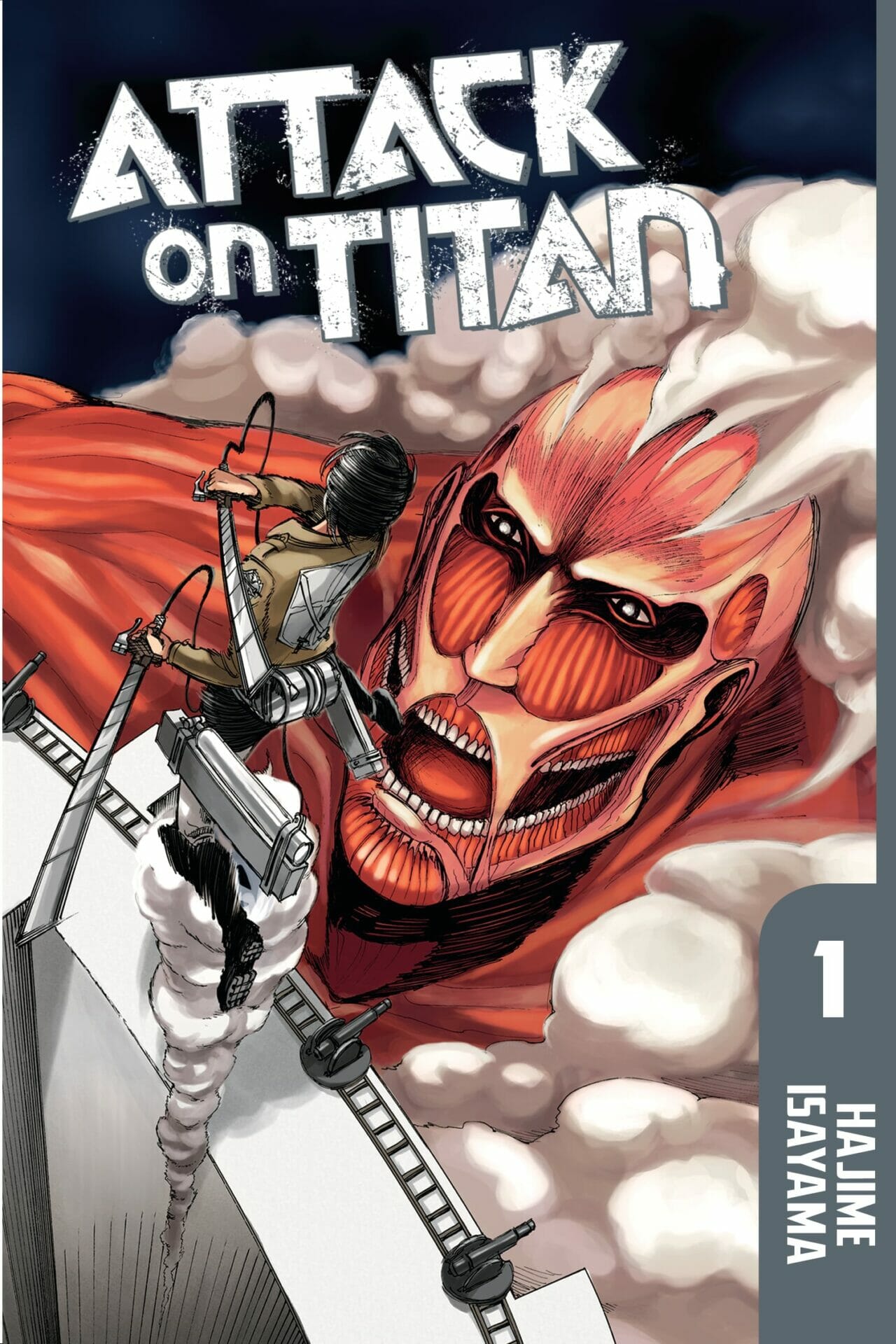
Attack on Titan won, among others, the Kodansha Manga Award as Best Shonen Manga in 2011. It became an actual brand, as it expanded with plenty of other products, like spin-offs (e.g., Attack on Titan – Before the fall, manga and light novels, and No Regrets, starring Captain Levi, one of the most popular characters), anime, and video games (e.g. Attack on Titan – Wings of Freedom).
Tag