 Collections
  Magazine
  Exhibitions
  ITA version













Kentucky Route Zero review | A surreal road trip through magical realism and modern America


Art Director
Lead Composer
Kentucky Route Zero unfolds along a road that does not appear on any map, yet it shapes an entire vision of modern America. A simple delivery gradually turns into a journey through fragmented landscapes where perception starts to blur, and the sense of reality becomes unstable. This haunting video game is the result of the work of three people: Ben Babbitt, Jake Elliott, and Tamas Kemenczy, aka Cardboard Computer. The title made its debut in 2011 through a Kickstarter campaign, and Annapurna Interactive published it between 2013 and 2020. It features 5 acts and 4 interludes, released separately during development and later combined into the TV Edition.
This unconventional structure is more akin to a tragedy than the hero’s journey, and it is no coincidence. A title inspired by theater and literature alike, it combines artistic performance and critique of modern America.

Kentucky Route Zero story: on the way to Dogwood Drive
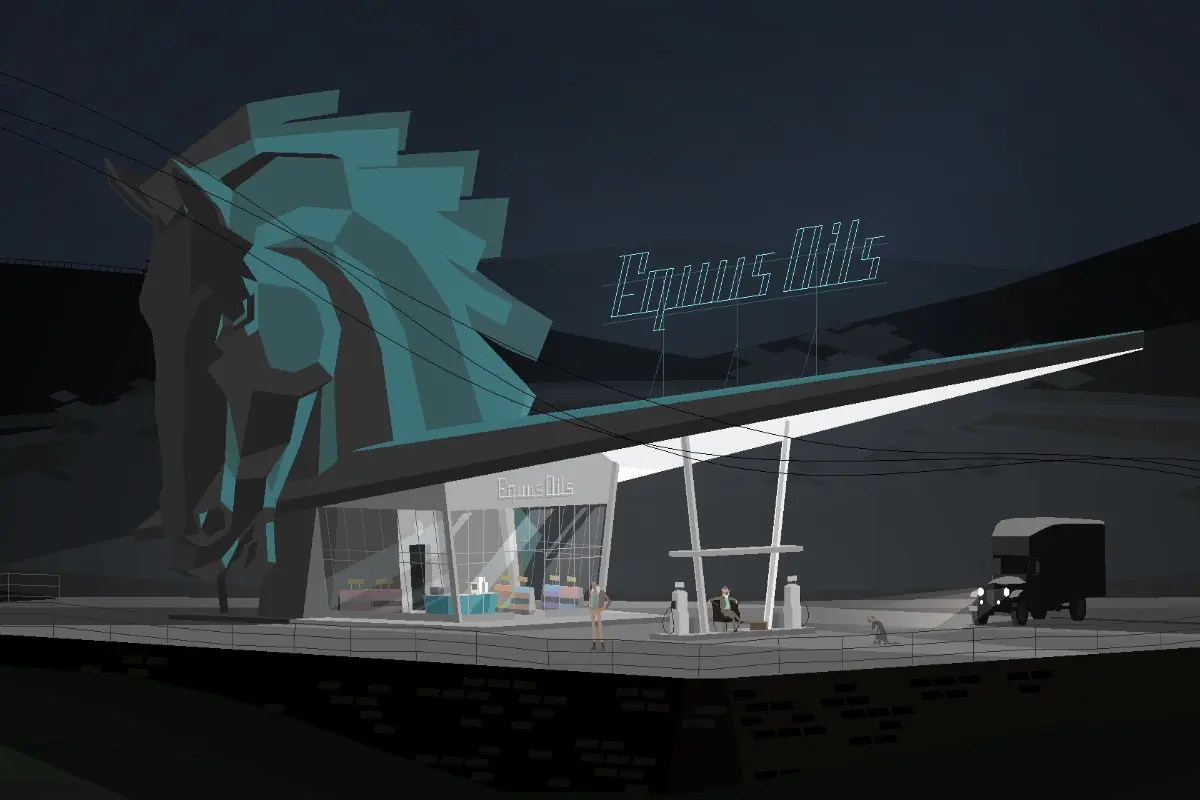
ACT 1, SCENE 1 – Equus Oils.
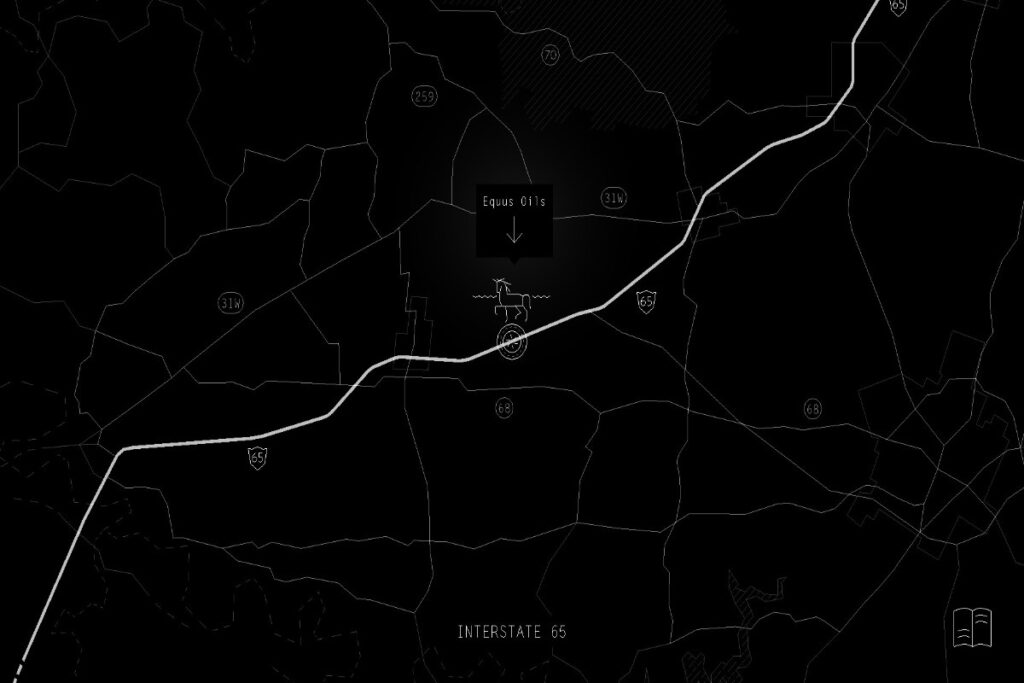
The story begins at sunset, as the silhouette of an old truck stops by the gas station Equus Oils. Off disembark two figures, a man named Conway and a scrawny hound wearing a straw hat. The reason for the stop is simple: Conway needs directions to complete his last delivery for Lysette’s Antique. His only indication is an address, 5 Dogwood Drive, that does not feature on any map. A chat with the station owner reveals that only one road can take him there: the Zero, a subterranean highway.
The delivery trip takes place in a singular night, during which reality gives way to the fantastical and multiple paths cross. First is Shannon, a TV repairwoman looking for her cousin, who joins Conway in an abandoned mine. Then there is Ezra, a young boy accompanied by a giant eagle, met on a museum rooftop. Last but not least are Junebug and Cricket, two android musicians on their way to a gig.
These and many more figures, both strange and familiar, populate the way to the Zero. Each of them has its own destination, but they all share the same journey.
Southern gothic and magical realism in Kentucky Route Zero
At its core, Kentucky Route Zero is a play about wandering: exploring the mysterious and forgotten side of America. The gameplay aspect of this point-and-click adventure is very straightforward, based on driving between locations along a road map. However, it enriches its narrative through the genre of magical realism, in which fantastical elements bleed into the mundane. It transpires first and foremost through the many places to visit along the way.
Such is the case for the Museum of Dwellings, which features an exhibition of houses complete with their inhabitants. Or the Hall of the Mountain King, a cave in whose depths burns a core of old computers. These scenarios feel dreamlike, but never out of place in the in-game universe. A gradual shift into the magical that is also present in the road trip of the graphic novel Are you Listening?.
The southern gothic atmosphere takes the nightly journey closer to the hazy confines of a dream, extending from the narrative into the visuals. From dialogues that sound like poetry to settings that recall scenography. The 3D art style, despite its minimalism, can conjure memorable visuals.
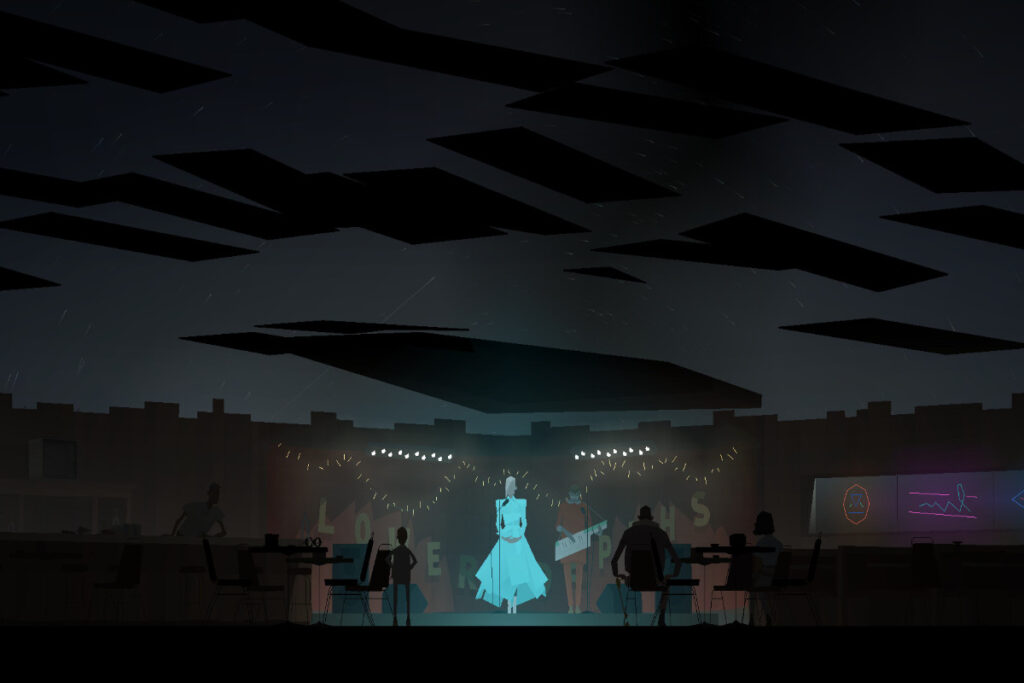
One of the most iconic scenes is Junebug’s performance. When the ceiling peels away to reveal a starry sky, the player chooses the lyrics of her song. All completed by the score – a mix of religious hymns and synthetic music – that breathes emotion into every scene. Through surrealism, Kentucky Route Zero delivers a message rooted in modern world problems.
The same way the comic book Troppo Facile Amarti in Vacanza, by Giacomo Keison Bevilacqua, denounces society’s corruption by portraying an Italy overrun by deadly sins.
Player choice in Kentucky Route Zero: the illusion of agency
In a lot of video-games the player’s choices – both in terms of action and dialogue – have an impact on the story. Through them one can access new information, affect the relationships between characters and even change the outcome of the adventure. Such is the case for RPGs like The Witcher or Baldur’s Gate 3, with the latter offering thousands of possible endings.
In comparison, Kentucky Route Zero’s approach to interactivity is diametrically opposite. First of all, the majority of choices are dialogue-related only. And through those conversations, it becomes clear that the player is not an agent of change, but rather an actor in a play. The plot is set and unfolds based on events beyond our control. However, that does not mean that the choices presented in the game do not matter. Instead, the player shapes the protagonists by building their characters.

Deciding who gets to answer a question, choosing which memories they hold dear – even what they name the dog – defines the kind of person that each character is. This is because Kentucky Route Zero is not about picking the “right” option, but the one that resonates the most. A mechanic that becomes even more relevant when taking into account that the protagonists are neither valiant heroes nor chosen ones. Rather, they are everyday people living in a world so complex that they – just like the player – cannot hope to impact on their own.
This kind of subversion has become more recurrent in modern video games, though already foreshadowed in early 2000s titles like Shadow of the Colossus. A commentary on the state of modern society and the loss of agency of individuals.
Capitalism and community in Kentucky Route Zero’s dystopian America
While Kentucky Route Zero‘s universe does not have a hero, it also lacks a conventional antagonist. And that is because the main force acting upon it is late-stage capitalism, so ubiquitous to almost go unnoticed. Its first representation is The Consolidated Power Company, which has acquired the majority of the land. Tied to it are the Elkhorn Mines, whose dismissal of safety measures caused the death of numerous workers. And then there is The Hard Times Distillery, an establishment run by skeletons that deals in both whiskey and debt.
The systemic issues that these companies embody – job insecurity, alcoholism, debt – all feature in the precarious economic state of this world. Many, if not all, characters are at their wits’ end, attempting to survive within a broken system that works them to death and beyond.
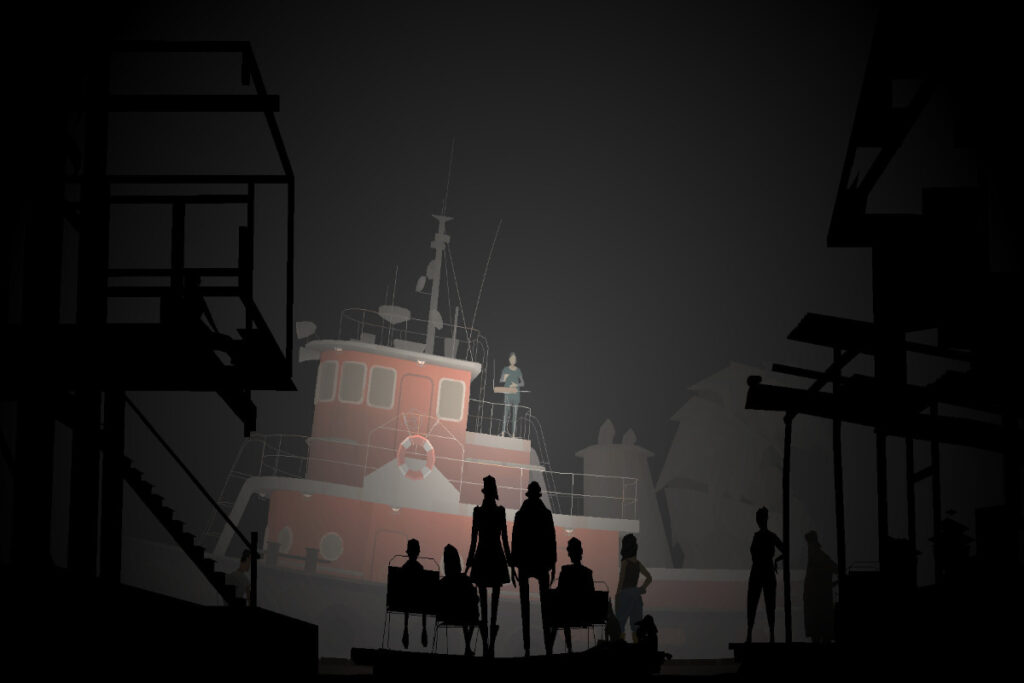
As such, it would be easy to dismiss Kentucky Route Zero as a mere bleak dystopia, not unlike INSIDE. And while it holds all the elements of a tragedy, it offers some hope in its message. The concept of community, which builds around Conway with each stranger met along the way, is just as present. The importance of building bonds and reclaimed freedom becomes a beacon for all those who are lost. Because if individuals alone are unable to stand up against alienating corporations, a community might. And when the American dream collapses into ruin, there lies the chance to build something new.
Renowned due to its immersive gaming experience and touching portrayal of modern society, this title represents a unique experimental narrative that pushes the limits of its medium.
Tag