 Collections
  Magazine
  Exhibitions
  ITA version












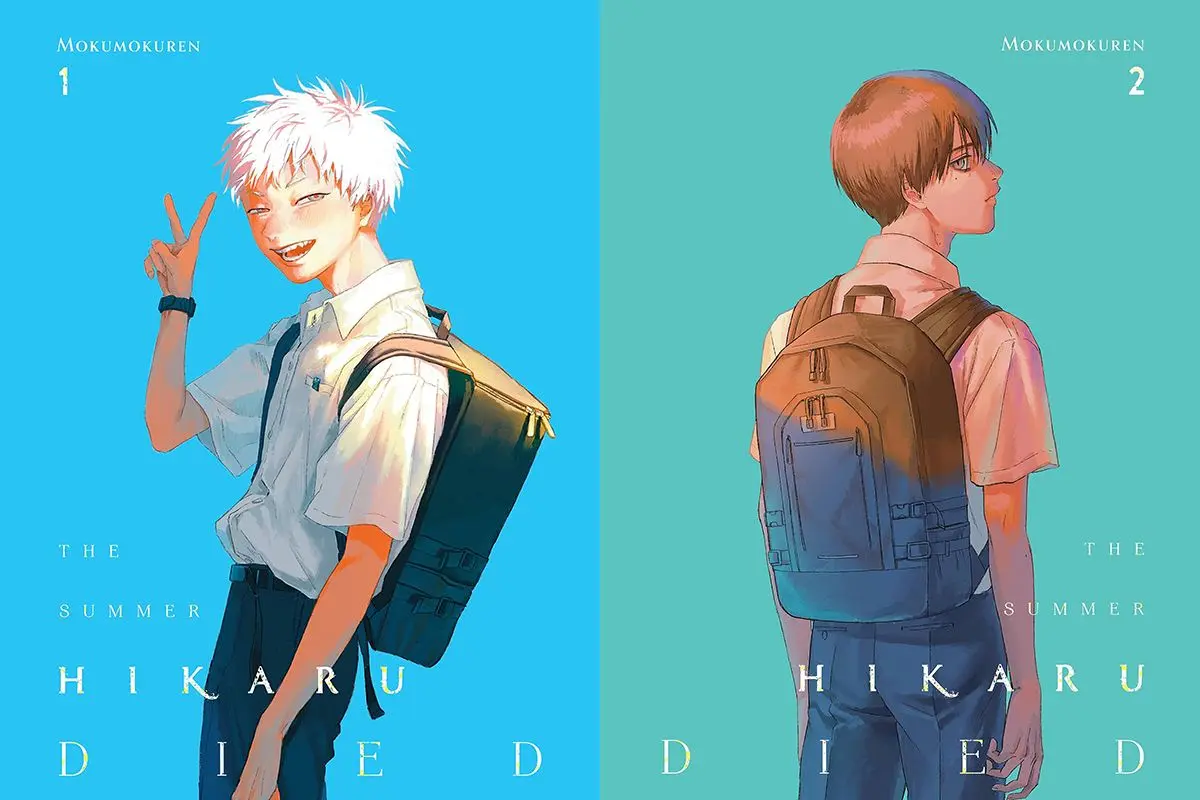
The Summer Hikaru Died | A Queer Coming-of-Age Horror About Identity and Loss


Year
Length
Who I am as a person and my body are both borrowed, but I really love you…
– Hikaru
What would you do if you discovered that an eldritch being possessed your childhood friend? Would you tell the world, condemning both the monster and yourself in the process? Or would you keep this dangerous secret, if it meant not to lose the most important person in your life?
This is the premise of The Summer Hikaru Died, which debuted online in 2021. However, the author, Mokumokuren, began conceptualising it long before while studying for their exams. Their online artworks caught the eye of the Young Ace Up editorial team, which offered them a serialisation. The manga proved successful in captivating both Japanese and Western audiences. By combining tenderness and dread, coming-of-age and supernatural elements, it shaped a narrative unique to modern manga.
A Monster Hiding in Plain Sight: The Story Behind The Summer Hikaru Died
On a hot summer day, Yoshiki and Hikaru are enjoying an ice cream on the way home from high school. Chatting and joking around as the cicadas buzz around them, it is a day like many others before. That is, until Yoshiki asks a question from which there is no turning back. “You are not Hikaru, are you?“. He is right: his friend died earlier that year in the mountains that surround the village. And the one who is now clinging to him, begging him not to tell a soul as his features melt in a writhing mass, is not human at all.
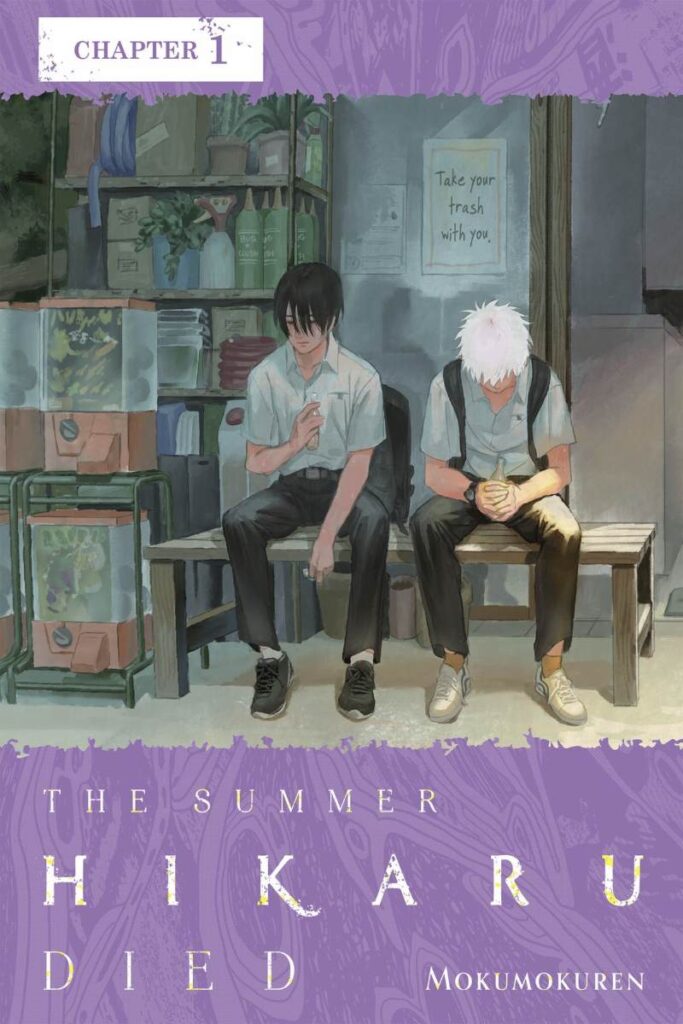
The story of The Summer Hikaru Died takes place in Kubitachi, an isolated village with a history rooted in mystery, dark rituals and death. The two protagonists will have to uncover its dark secrets to understand what “Hikaru” truly is. As the story progresses, the supernatural influence on the town grows. More spirits begin to appear as the ominous entity of the mountain now walks the earth in a human body. A sequence of events that casts a shadow over the illusion of normality that the boys are attempting to uphold.
Psychological Horror Meets Queer Love and Coming-of-Age
Horror has always held a specific resonance among the LGBTQI+ community. The reason lies in the very nature of the monsters that populate the genre. They are unnatural beings that do not fit into society’s standards, and as such are met with hatred. A prime example features in Mary Shelley‘s gothic novel Frankenstein. In the book, the creature faces rejection from his creator and humanity alike for his mere existence, despite craving acceptance. Queer audiences can relate to this sense of “otherness” that is often ostracised and vilified by society. The feeling of having to repress a side of themselves, not to scare away the people they hold dear.
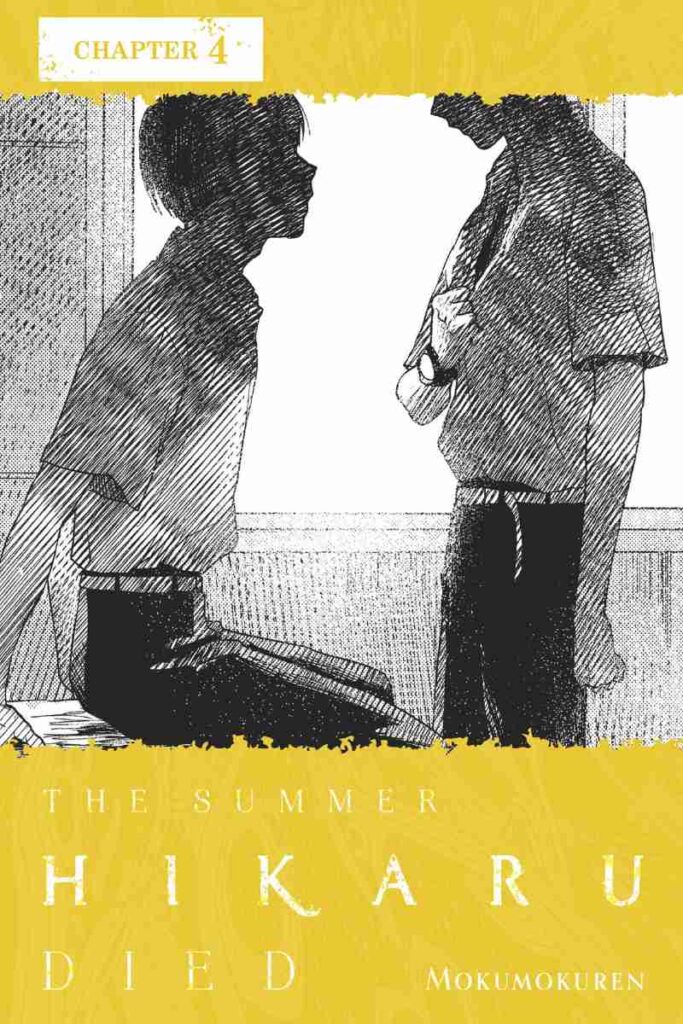
This trope reflects in both protagonists of The Summer Hikaru Died, with Hikaru being the physical embodiment. An eldritch monstrosity in disguise, desperate to experience life as a human. And willing to go as far as he needs to to keep his true identity a secret. On the other hand, there is Yoshiki, who represents the psychological aspect. A closeted homosexual who has been hiding from his friends and family in an attempt to fit in. A boy who dreams of a life away from the judgment of the townsfolk. And who now takes it upon himself to protect the new Hikaru from the eyes of society. All in the name of what he considers most monstrous: the love he never allowed himself to express.
Identity, Ethics, and the Swampman Paradox
The Summer Hikaru Died explores philosophical themes of identity, such as the Swampman paradox by Donald Davidson. Picture an entity that is the perfect replica of a person, identical in both appearance and memories. Can it be considered the same as the original it replaced? Or is it still something else altogether? The manga addresses these questions throughout its narrative. While Hikaru appears like a perfect copy to most, those close to him can tell that something has changed. Moreover, it is more than a simple copy. Like Sue, Elisabeth’s youthful alter ego in the movie The Substance, he has his own personality and desires. Despite having the memories of a life that is not his, he craves to experience it all firsthand.
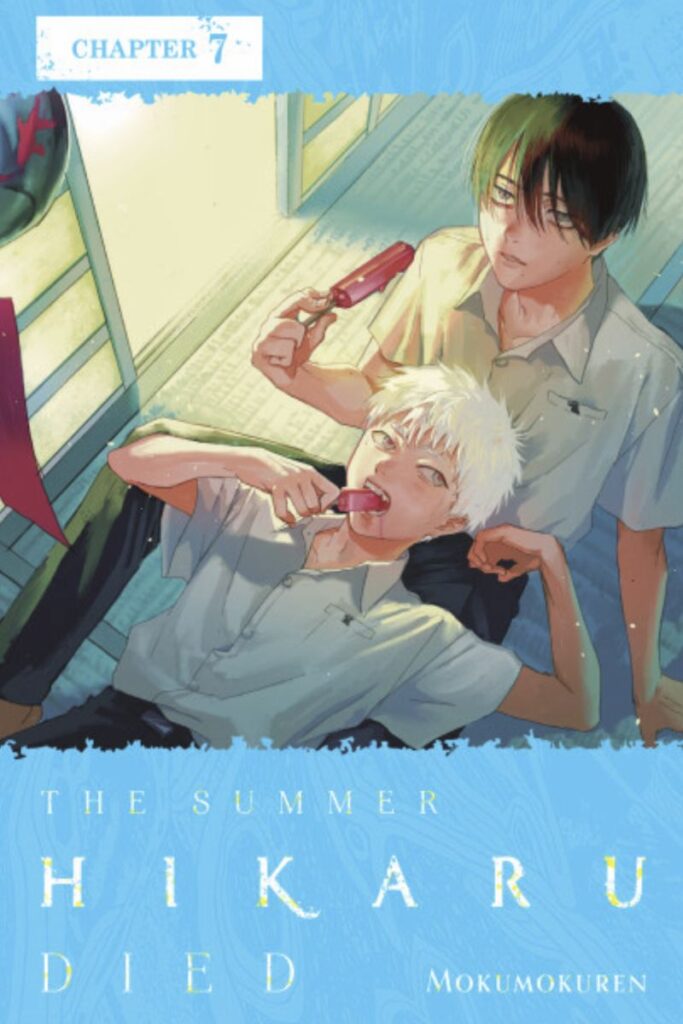
And in doing so, he learns what it means to be human – a concept also explored in depth in the manga Full Metal Alchemist. In a way, he is like a kid: still learning about the world and unable to grasp the full impact of his actions. While a stranger to emotions and even to the concept of life, to the point of killing without hesitation, Hikaru is driven by a strong affection towards Yoshiki. All he wants is to protect the one person at whose side he no longer feels alone. A display of fondness the likes of which Yoshiki had never experienced before. And that he cannot ignore when it comes to keeping the secret, even if it could doom the whole village. Similarly to the final decision that Max must face in Life is Strange: save Chloe or Arcadia Bay.
Grief, Denial, and the Emotional Core of the Manga
The manga delves into the effect that such dilemmas have on the people around Hikaru, first and foremost, Yoshiki. Faced with a loss that he cannot mourn, Yoshiki experiences over and over the denial towards his death. He is desperate to believe that nothing has happened and for life to continue as usual. At the same time, being the only one burdened by the truth, he is consumed by guilt. This rejection of grief pushes Yoshiki into selfishly choosing a comforting lie over the prospect of a life without Hikaru. The unresolved trauma and depression that follow are natural consequences, as also shown through Trigun‘s protagonist Vash the Stampede.
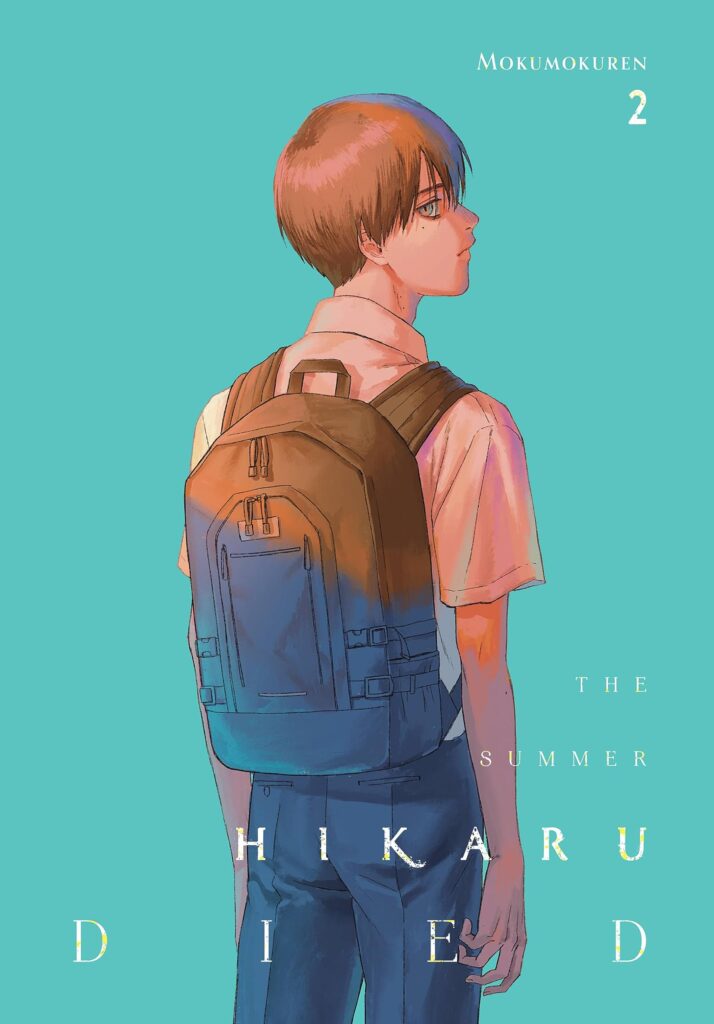
Throughout the story, his bond with the new Hikaru grows even deeper than the one shared with his childhood friend. In addition, the more Yoshiki lingers by “Hikaru”, the more his supernatural influence begins to rub off on him. This makes him a target for other spirits and shifts his moral compass. The ongoing dynamic between Yoshiki, “Hikaru”, and the real Hikaru, who, despite being dead, is still very present, is a pivotal core of the narrative. The concept of loss and the inability to accept it is what makes The Summer Hikaru Died resonate so strongly in its realism, even within its supernatural elements.
The Disturbing Visual Style of Mokumokuren
Mokumokuren’s art conveys and magnifies the horror of the narrative. Through lineart that bleeds into a drooping mass of ink, jarring 3D abstract panels and disturbing visuals, the sense of dread becomes tangible on the page. Its first example occurs when Hikaru’s illusion falters, and his true self manifests in a burst of abstract shapes. The boy’s features distort and almost engulf the space around him, leaking like an oil spill that threatens to consume the layout. It reminds one of the body horror of the bosses in Bloodborne, where humans transform into grotesque monsters.
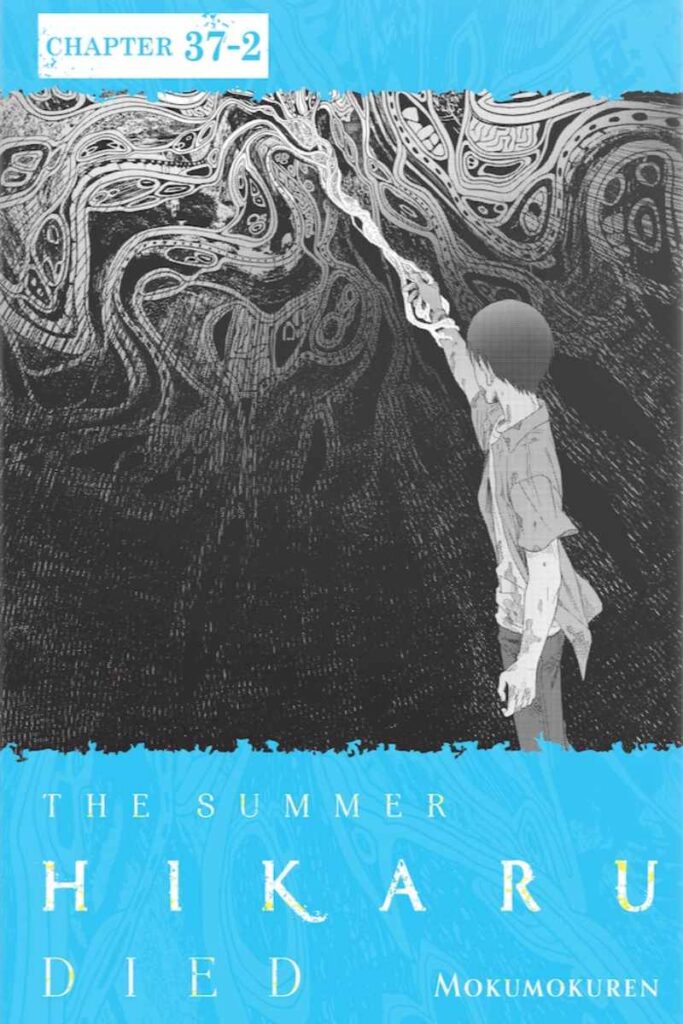
The same distortion applies to text as well. The onomatopoeia of cicadas almost drowns out the scenery, feeling as oppressive as the life in the village. Yoshiki’s thoughts balloon into hands that grasp his figure. Obsessive, panicked words repeat endlessly until the letters become illegible. And yet, Mokumokuren can depict idyllic slice-of-life moments with equal effect. Eating a slice of watermelon in the summer heat, enjoying fireworks with friends, and biking along the countryside. Each moment conveys the candour of such instants to the utmost. The result is an even more jarring contrast against the supernatural horror that lingers beneath it all. As in the horror manga Gegege No Kitaro, a well-crafted uneasy atmosphere is the key to conveying the otherworldly.

The Netflix Anime Adaptation: Bringing Hikaru’s Horror to Life
All these horror elements were elevated through sound design and animation in the first anime adaptation of The Summer Hikaru Died, which premiered on Netflix in the summer of 2025.
Tag