 Collections
  Magazine
  Exhibitions
  ITA version












Chainsaw Man Explained | The Tragedy of Denji in Tatsuki Fujimoto’s Manga


Year
Length
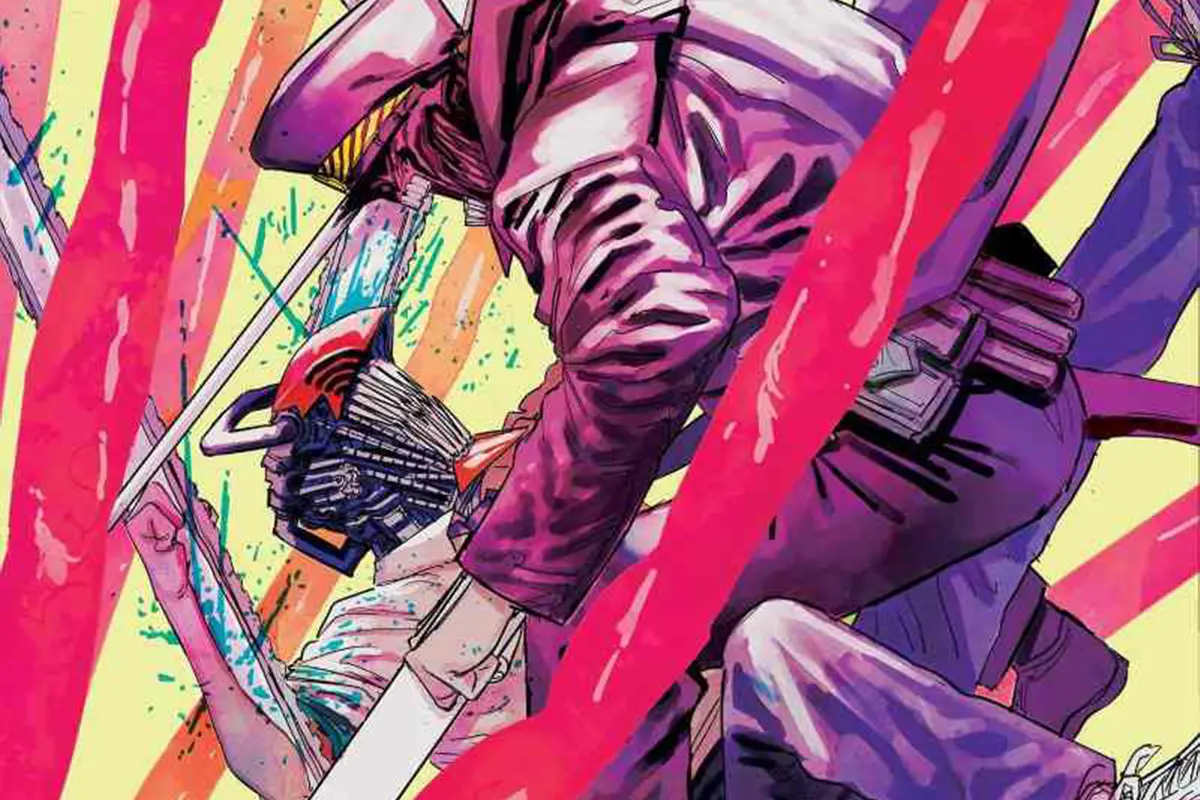
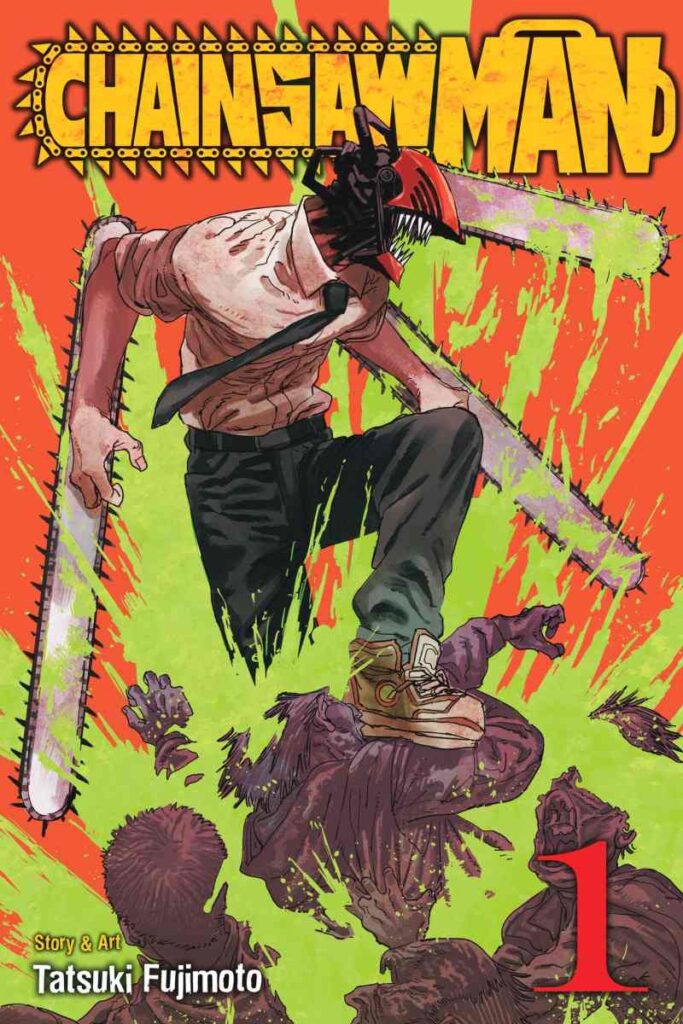
Tatsuki Fujimoto’s manga Chainsaw Man debuted on Weekly Shōnen Jump in 2018. In less than two years, it sold over 3 million copies. The series became iconic for its union of action, body horror and dark comedy – though the themes it tackles reveal a greater complexity than shock value.
38,040,000 ¥ is the amount Denji owes the yakuza. After selling his own organs, there is only one option left to pay off his father’s debt: devil hunting. Such a risky job will cost him his life, only to have him reborn as something new.
A boy and his dog against the world
Devils exist in the Chainsaw Man‘s universe. These supernatural beings embody concepts and are more powerful the more feared the concept itself is. To counter this threat, devil hunters emerged. Either privately or for the government, their duty is to kill devils – often making deals with them to gain the power needed to do so.
Denji was just a child when his drunken father died, leaving him alone with a crushing debt in this dangerous world. Since that day, the boy has been struggling for survival. Doing everything he can to gather the money he needs, lest the yakuza come after him. His sole friend in such a bleak existence is Pochita, a canine devil who aids him in his job as a private hunter.
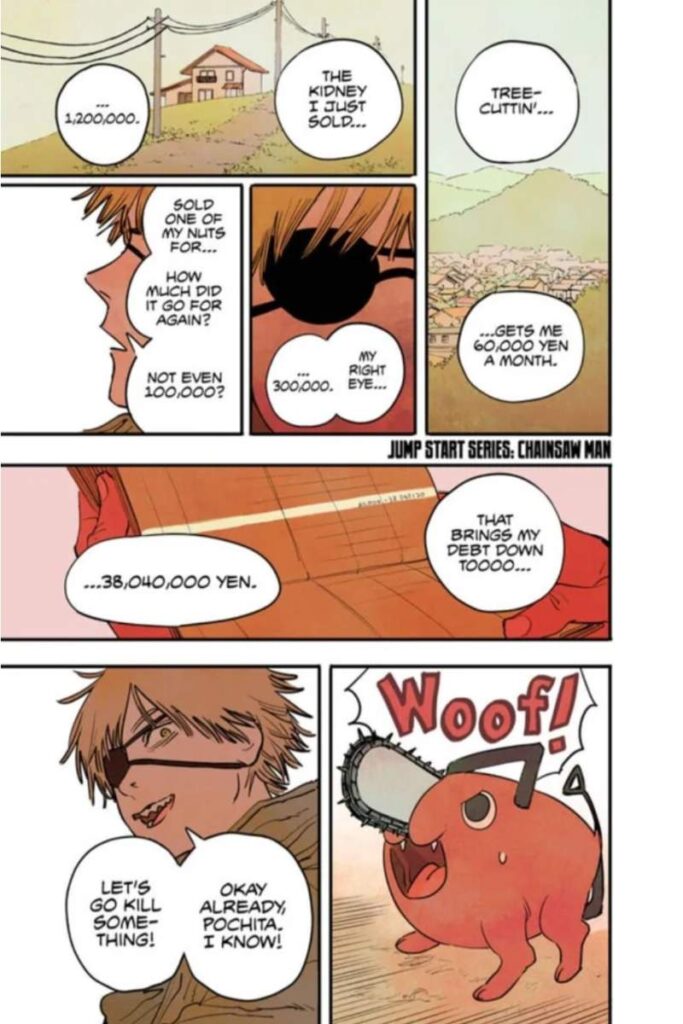
At 16, all he dreams of is a simple life where he can enjoy bread and jam and hug a girl. But when, during a hunt, the yakuza betrays and mauls him, that future seems destined to doom. However, it is not yet the end. Moved by his dreams, Pochita gives him its heart and wills him to continue living.
Thanks to this newfound contract, he becomes Chainsaw Man. A being of great powers that is neither human nor devil, and that catches the eye of Makima. She is the leader of the Public Safety Bureau, and employs him as one of its hunters. Once again, Denji has no choice: accept, or be slain like a devil. And with that notion, his new life begins.
The tragedy of Denji
Many shōnen manga feature protagonists with rough starts. Naruto is an outcast due to the Nine-Tails demon sealed within him. Midoriya is quirkless in the superhero world of My Hero Academia. However, through training and trials, they become heroes in their own stories. The same does not happen for Denji, who never stops being a tragic protagonist. Having worked for the mafia ever since he was a boy, he has never known family, friends, or normality. This contributes to his distorted perspective on life and nonexistent social skills. He is crass, dirty-minded, and uneducated. As such, he shows no interest in befriending his teammate Aki, whom he considers a rival. While he is unable to connect with male peers, he is very susceptible to female attention.
His relationship with women is skewed and unbalanced, also shaped by the lack of a motherly figure in his childhood. Having never experienced affection, now that he is a teen, he confuses sexual desire for emotional fulfillment, unable to realise that what he really needs is human connection. This is why he makes his life goal to touch breasts or to receive a kiss. And the reason why such goals always disappoint is that they are a temporary fix, incapable of filling the void within. Nonetheless, Denji is naive enough to risk it all for crumbles of attention, which makes him vulnerable to those he considers appealing. He is a prisoner in a vicious circle, where emotional manipulation twists his desperate need for a purpose.
The female figures of Chainsaw Man: from lead characters…
Fujimoto dedicates plenty of space to female figures, as seen in his previous works Fire Punch and Look Back, and Chainsaw Man is no exception. Despite being a manga aimed at a male audience, its characters play nuanced roles that go beyond the stereotypes of love interest and comic relief. The women of Chainsaw Man are complex, with flaws and the potential to be as unlikeable as the men are. Moreover, they are often the ones who set the plot in motion, starting with Makima.
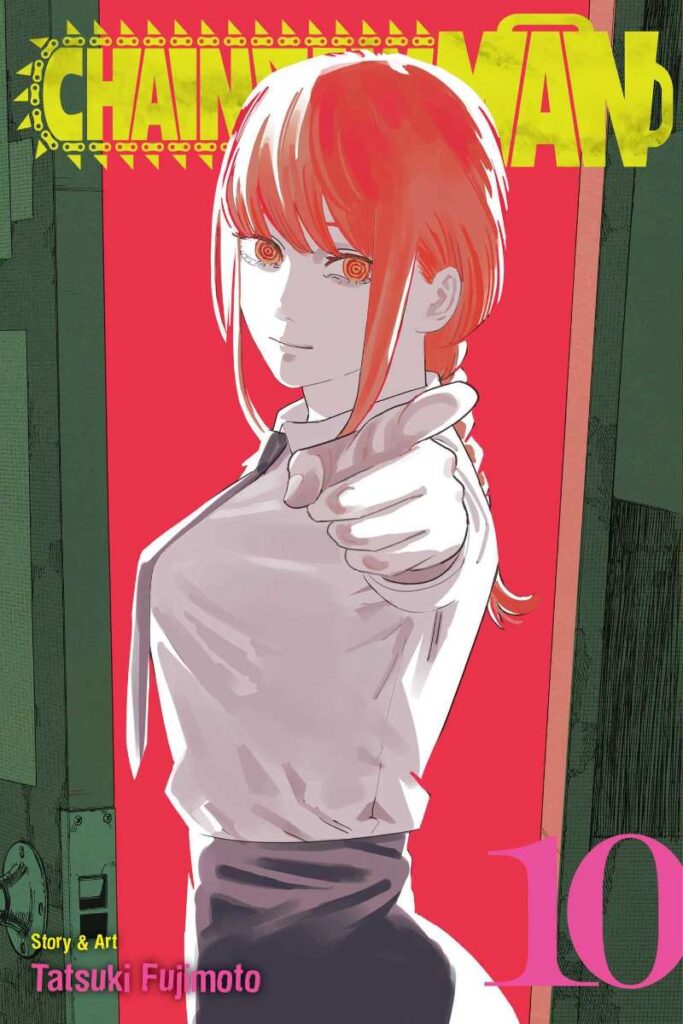
She is one of the main figures of this arc, and also the first girl that Denji meets. She offers him guidance and attention, giving him a sense of purpose when he feels lost. As such, she exerts a great power over him, and through it persuades him to find and fight the infamous Gun Devil. It is clear she holds an influence far greater than her role in the Bureau, and Denji is not the only one under her calculated manipulation. Notably so, character-wise, she is the most idealised of all the cast. Devoid of any main personality trait, but always posed, calm, and elegant. A facade that hides a much more disturbing truth.
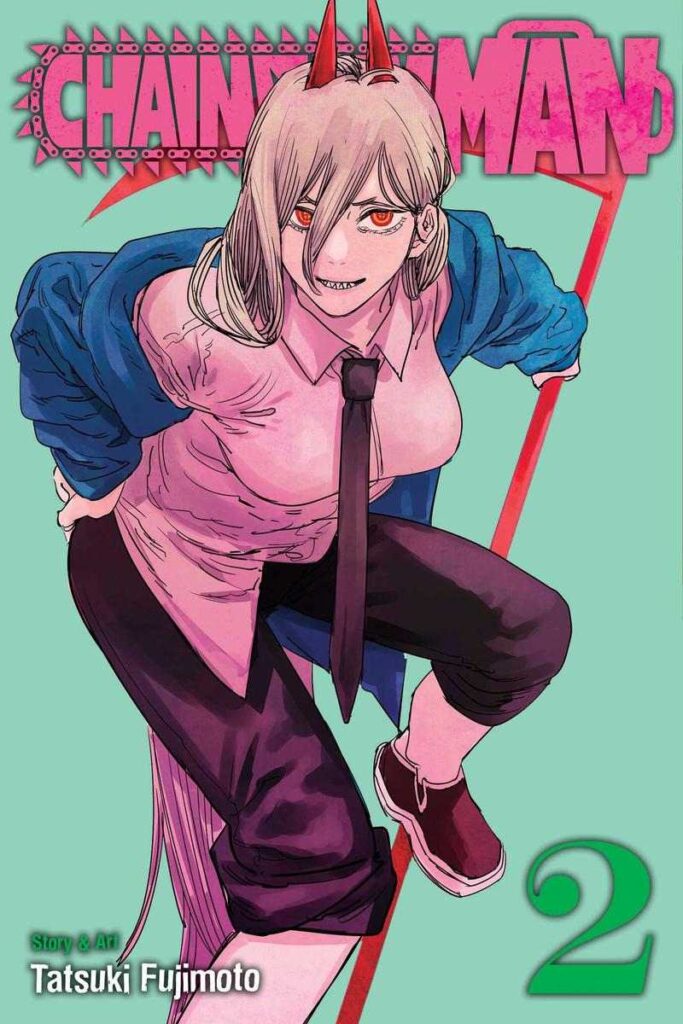
On the opposite side of the spectrum is Power. She is the Blood fiend (devil possessing a corpse) who joins Aki and Denji’s team. Behaving more like a wild animal than a person, she is not just the token female of the protagonist trio. She is an inherently flawed character; selfish and impulsive, independent and rude. As her personal story unfolds, the reader will be able to empathize with her. Denji himself does not harbor any romantic or sexual attraction towards her, but still chooses to prioritize her in times of need with a sibling-like protectiveness. And the initially strained relationship with her teammates will develop from unwilling alliance to genuine friendship.
…to supporting cast
Secondary characters can be just as pivotal, as shown by the graphic novel Paper Girls and its wide array of female characters. Among the Public Safety agents, two similar examples stand out. Himeno is Aki’s mentor, and reveals a controversial side. An alcoholic and a smoker, she does not hesitate to flirt with everyone. However, her actions do not exist solely to evoke a visceral reaction in the reader. Instead, such behavior is a product of a traumatized person who has seen countless partners die and turned to vices to cope.
Kobeni embodies another side of this reality. She is a young girl who was forced to join Public Safety by her abusive family. While her fearful demeanor makes her seem like comedic relief, it is a legitimate reaction from someone whose sanity is cracking in the face of horror. Both characters show the reality of taking on such a job and the toll that this world has on its inhabitants.
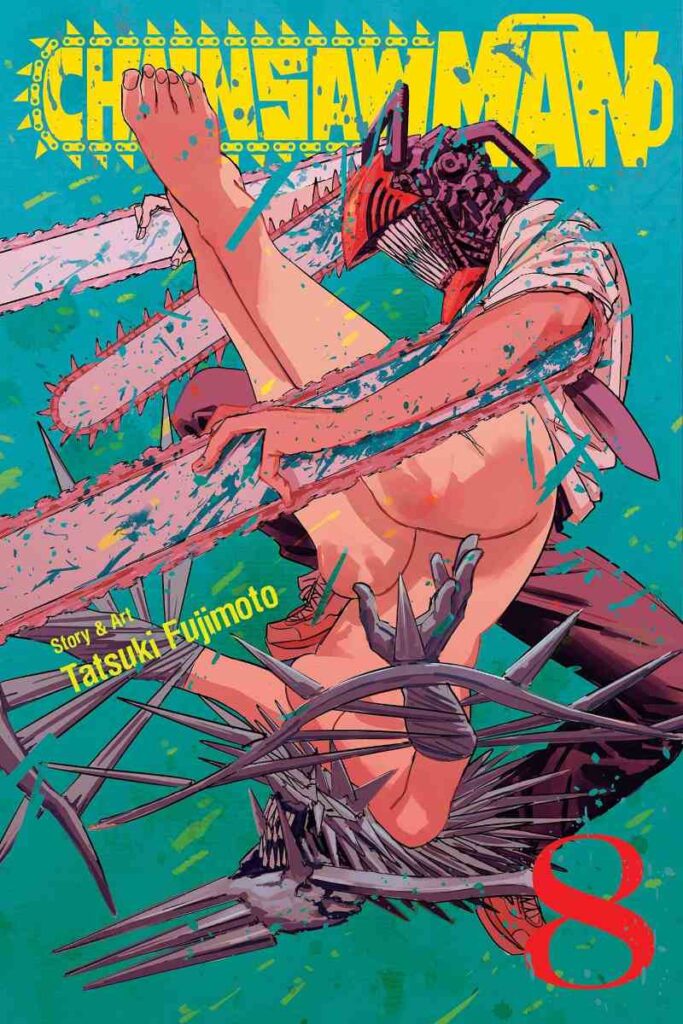
Last but not least are the antagonists. Like Reze, a hybrid (human fused with a devil) created by the Soviet Union. Her mission is to get Chainsaw Man’s heart, which she attempts to do by posing as a regular girl. As the two spend time together, she develops feelings that make them question their own existence. Despite being a villain, she shows a humane quality that pushes the audience to reconsider her role. Another hybrid is Quanxi, a Chinese devil hunter accompanied by her four fiend girlfriends. She stands out as a genderbend version of the harem trope that is commonly a staple of male characters. Personality-wise, she is pragmatic and indifferent, an approach stemming from the will to embrace ignorance as a means to a happier life. This choice echoes one of the main themes of the first arc.
Will the dog bite the hand that feeds it?
I expect “yes” or “woof” for answers. I don’t need a dog that says “no.”
– Makima
In a world as dangerous as Chainsaw Man’s, living a regular life is a luxury. As a result, the temptation to surrender one’s own agency in exchange for keeping an illusion of normality is almost understandable. Denji chooses not to question what happens – i.e., why must he fight the Gun Devil, what are Makima’s motives – because he does not wish for more suffering than what he has already endured. When he feels without purpose, when he doubts his own humanity, his trauma response is to repress. And he is not the only one. Aki obeys blindly, Himeno turns to alcoholism and smoking, and Quanxi chooses willful ignorance. Only some characters, such as Kishibe, among the few seasoned hunters to have reached adult age, begin to question the system in which they live. But it is no easy feat.
To do so means acknowledging that a true existence will never be devoid of fear, pain, and loss. Bad things are an inherent part of life, but are also what make the good aspects so precious. In particular, those joys that are not tied to passing whims but are born from cultivating genuine bonds. Denji himself is saved multiple times by those who love him – and love is the very same thing he had been needing from the start. In an idealistic world devoid of any evil, would one even be able to appreciate such aspects? The moment Denji finds the answer, his outlook on life and priorities change, allowing him to regain his agency and break free of manipulation.
How Chainsaw Man fits within the shōnen genre
The shōnen genre has seen a consistent evolution since the 80s, starting with Dragon Ball. This manga was a pioneer of the fighting subgenre, featuring a dynamic style, memorable transformations, and martial tournaments. Despite starting out quite gag-heavy, it developed a more defined storyline over time, all while establishing the foundation of its genre.
Later franchises such as Naruto, One Piece, and Bleach inherited its legacy, further developing its themes and stylistic traits. Then, in 2001, came Full Metal Alchemist, with its faceted cast and ethical dilemmas. Through alchemy and war, it introduced its audience to newfound themes. A further step of this evolution is Attack on Titan, which became a cult by combining shōnen tropes of dark topics typical of seinen titles. Such a change stems from the idea that its public is ready to engage with more complex narratives.

Chainsaw Man embraces this darker turn and continues to push the limits of its genre. First and foremost, through Denji, who is not a typical protagonist. Rather, he is an anti-hero: flawed and naive, good-spirited yet of questionable morals. Secondly, through the life he experiences: a constant battle, violent and gory – not unlike the mix of brutality and comedy of Dorohedoro. Then through the people he meets. Complex characters, each with their own agenda, trying to survive in a dog-eat-dog world. And lastly, through its art style: a mix of body horror, adrenaline-filled action, and cinematic-like sequences that enhance the narrative.
The series features two arcs and was adapted in one animated series and a movie. In addition, it also features a novel and a stage play. It won the Shōgakukan award in the shōnen category in 2020 and Best Manga at the Harvey Awards in 2021.
Tag