 Collections
  Magazine
  Exhibitions
  ITA version













Supergirl: Woman of Tomorrow Explained | The Comic Behind the Movie


Year
Length
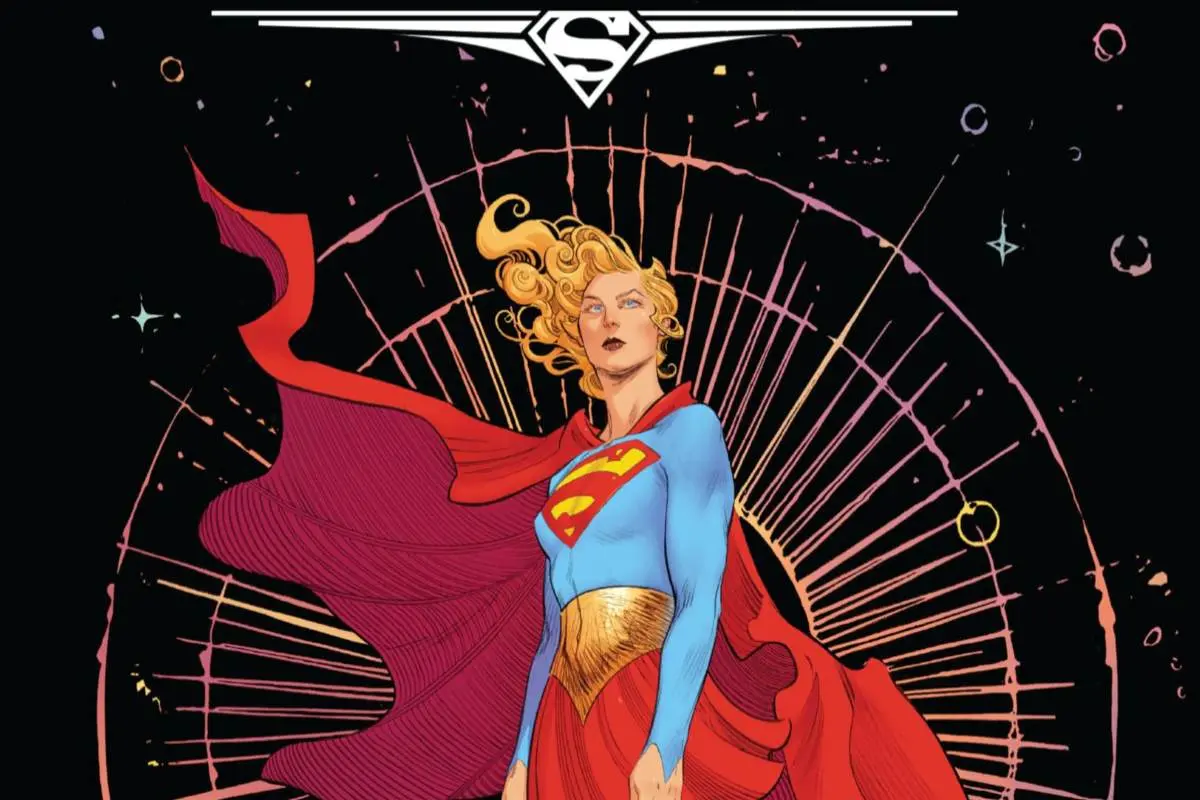
Supergirl: Woman of Tomorrow is a project born from Tom King‘s wish to delve into the potential of its titular character and to elevate her from the stale role of Superman’s female counterpart. The miniseries, published by DC Comics between 2021 and 2022, dabbles in a plethora of genres through the lenses of Bilquis Evely and Matheus Lopes‘ vivid art style.
As a standalone comic, the story is approachable even by those who are unfamiliar with the heroine, which contributed to its popularity. So much so that it inspired James’ Gunn 2026 film Supergirl. In only 8 issues, it leads the reader on a cosmic journey of both revenge and mercy, grief and acceptance.
Is Supergirl: Woman of Tomorrow an origin story?
Supergirl is often regarded as nothing more than a female version of Superman. While her origin does stem from Clark Kent’s success, her character has no less history. Kara Zor-El first appeared in 1959, created by Otto Binder and Al Plastino. Despite the popularity gained in the following years, in 1985, DC Comics’ executive editor decided to retcon her out of the canonical universe, believing that Superman should be the only Kryptonian survivor. However, this was not the end of Supergirl. She was reintroduced in 2004 along with her monthly comic series, and with it, her character became more refined and unique. In this more recent era, Supergirl: Woman of Tomorrow stands.
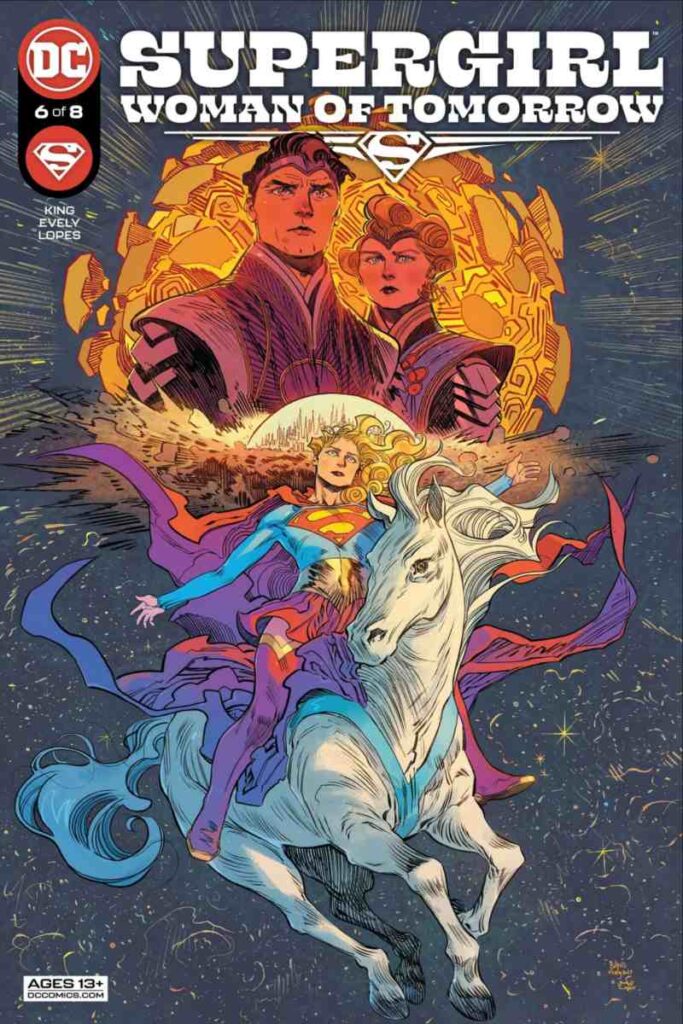
The current canon origin appears in the sixth issue of the series. Here Kara reveals how, as a 14-year-old girl, she witnessed the slow, painful end of her planet. How she saw her loved ones die around her, and how she could not stop it despite all her efforts. Contrary to Superman, who holds no memory of his home planet, she carries those phantoms everywhere she goes. This unique connection to Krypton makes her fundamentally different from her cousin. Supergirl is someone who has lost everything – even hope – and yet survived. A hero who continues on bringing forth the good that she stands for, even when she herself doubts it.
Why Supergirl: Woman of Tomorrow Feels Like a Space Western
Tom King took inspiration from the western True Grit for the plot of Supergirl: Woman of Tomorrow. In the novel – later adapted into a movie – Mattie Ross hires a strange duo to bring her justice. The prideful Texas Ranger La Boeuf and the ruthless Marshal Cogburn. Their mission is to capture the farmhand who murdered and robbed her father, now part of an outlaw gang. In its draft phase, the comic was also to feature a similar duo of co-protagonists. On one hand, the Kryptonian Kara and on the other, the Czarnian bounty hunter Lobo. However, the editors chose to scrap the latter as they felt the story should focus solely on Supergirl. Still, the infamous antihero makes his appearance in the movie adaptation, which takes place after the events of James Gunn’s Superman.

Despite this change, the manhunt of Supergirl: Woman of Tomorrow does follow the original premise. From Ruthye, the stubborn girl determined to have her vengeance, to Kara, the reluctant adult who rises to the challenge against their better judgment. But Western is not the only genre to influence this piece of media. The sci-fi setting resembles Star Wars, with intergalactic travels and buzzing alien taverns.
Meanwhile, Ruthye’s homeworld has a distinct fantasy inspiration. As do the knightly sword she carries, the galaxy-dwelling dragon they encounter, and the presence of magical artifacts like the Mordru Globe. Last but not least is the evolving relationship of the two female protagonists, which ranges from buddy comedy to the lone wolf and cub dynamic. A combination shared also by Ellie and Joe in the TV series The Last of Us.
Supergirl: Woman of Tomorrow Plot Explained
Kara Zor-El is spending her 21st birthday on a remote planet, with the sole company of her dog Krypto. However, the celebrations are cut short when a young alien girl named Ruthye begs for her help. She is on a quest to find Krem of the Yellow Hills, the kingasgent who killed her father. But during the fight that ensues, the unthinkable happens. Krem flees with Kara’s spaceship, but not before injuring Krypto with a poisoned arrow. The only way to save him is finding the antidote, and to do so, they must first find Krem.
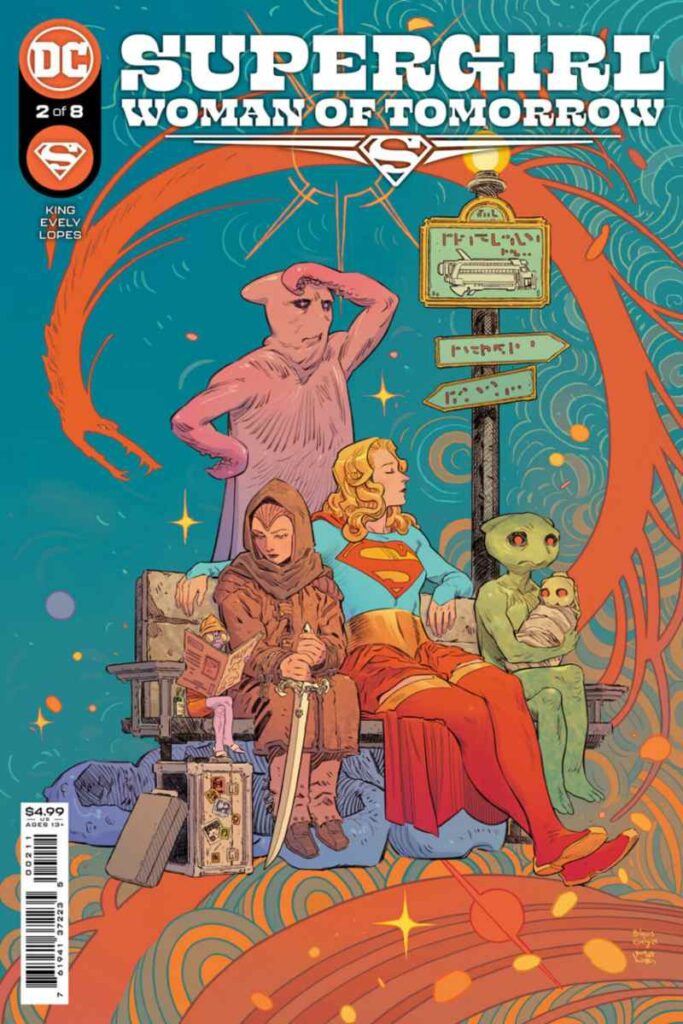
And so begins Kara and Ruthye’s adventure through all corners of the universe. During the many stops of their travel, the bond between the two matures from unlikely strangers to kindred spirits. In this journey – which is as real as it is introspective – they will face both past trauma and newfound hardships, and ultimately emerge as new individuals.
What Makes Kara Zor-El Different from Superman
You see, what is not well understood about the daughter of Krypton is that her power was not one of action but one of restraint, endurance, and passion.
– Ruthye
Despite the many influences, the message of Supergirl: Woman of Tomorrow is its own. While staying true to the premise of a tale of revenge, at the core is a message of mercy. The main reason why Kara chooses to take Ruthye under her wing is to dissuade her from vengeance. She knows the dark places to which loss can lead, and she wants to spare her such a fate. And that is because Kara Zor-El hides a tragic figure behind the carefree facade, one that is hinted at from her first appearance. Choosing to spend her birthday on a solar system that weakens her, so she can drown her memories in alcohol. For even the almighty Kryptonian falters under the weight of sorrow.
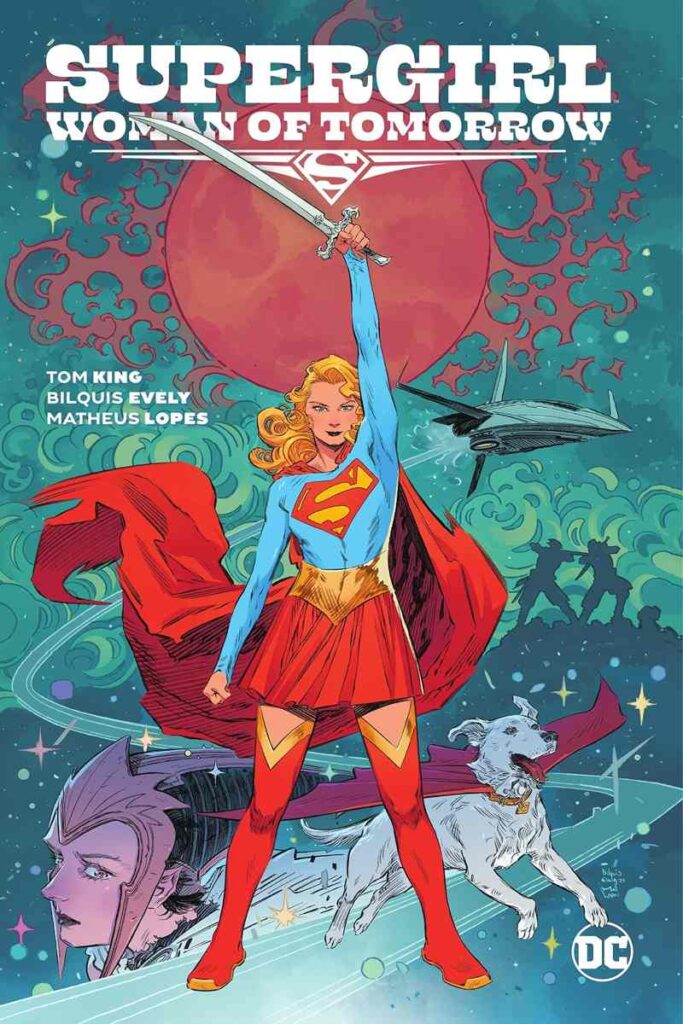
The miniseries shows the other side of the superhero, the humane behind the wonder. A popular theme among modern media, explored both in the manga My Hero Academia and the video game Dispatch. Despite her innate abilities – or rather, because of them – Supergirl lives a life of struggle. The power within her is so great that she could easily inflict harm if not careful. Thus, Kara must always measure her strength, holding back with every gesture despite the pain it causes her.
As such, the reader witnesses her greatness not through the foes she defeats, but the innocents she aids. Like the child that she rescues from the ruins of a raided world, the sick survivor she helps feed. Or in one of the most tender scenes of the comic, when she teaches Ruthye how to wash her hands by gently taking them in her own. Kara’s kindness comes at a cost, but she still chooses it time and time again.
The Writing and Artwork Behind Supergirl: Woman of Tomorrow
Supergirl: Woman of Tomorrow stands out thanks to both its narrative and striking visuals. First of all, it is a story within a story, recalled by Ruth in her older age, and the writing reflects this meta approach. The narrator’s prose is solemn and literary, almost clashing with Kara’s foul mouth and unconventional methods at first. Though as the adventure unfolds, the feats she accomplishes reach the heights of an epic poem, culminating in the stand against Krem and the genocidal Barbond’s Brigands.
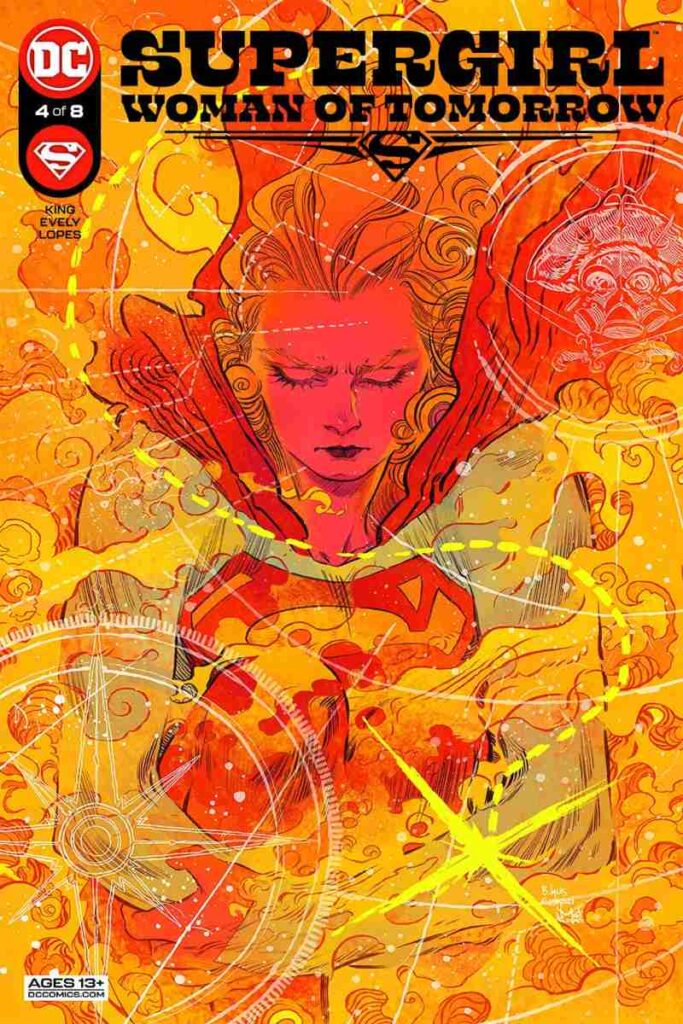
Furthermore, Supergirl’s mythos takes life on the page thanks to the work of illustrator Bilquis Evely and colorist Matheus Lopes. Together, the two artists create an Art Nouveau-like style, with detailed visuals and vivid colors that give the sci-fi setting a fantastical feeling. A dreamy atmosphere akin to the graphic novel Are you listening?, which also revolves around a journey of transformation. From futuristic cities to natural settings, every scene is rich in detail, balanced with a dynamic composition that avoids overbearingness. In particular, the splash pages give space to the grandeur of space and to Kara’s splendor.
Supergirl: Woman of Tomorrow is a compelling tale that manages to reinvent a known character in a cohesive and fresh way. Paired with the visual impact of an art style that merges classical art and European comics, it represents a gem of recent comic history.
Tag